

George Orwell, in Politics and the English Language, wrote that “Political language – and with variations this is true of all political parties, from Conservatives to Anarchists – is designed to make lies sound truthful and murder respectable, and to give an appearance of solidity to pure wind.” And so it is with the concept of the death penalty, for me. I realize this is a personal issue, not unlike abortion (ironic how much the two have in common) and elicit powerful emotions on both sides of the debate.
Today, the jury in Colorado could not agree on a penalty for the shooter in the July 20, 2012, Aurora theater shooting which claimed the lives of Jonathon Blunk, age 26; AJ Boik, age 18; Jessie Childress, age 29; Gordon Cowden, age 51; Jessica Ghawi, age 24; John Larimer, age 27; Matt McQuinn, age 27; Micayla Medek, age 23; Veronica Moser-Sullivan, age 6; Alex Sullivan, age 27; Alexander Teves, age 24; and Rebecca Wingo, age 32 and injured another 70 resulting in a default penalty of life in custody without the possibility of parole. The toll might have been significantly higher had his 100 round drum magazine not jammed on his assault rifle or his boobie-trapped apartment detonated as planned.
And yet, with all of that, I still do not feel that the death penalty would have been appropriate. For one thing, it triggers an immediate and almost mandatory appeal. Many of the objections rendered by the defense during the trial were simply for the record in order to reference for the appeal process. The thought of making the families go through another trial is sickening. While time may scab over some of our horrible memories, I do not believe in “closure” and I do not believe these scabbed over wounds can ever heal. The likelihood of an appeal for a penalty of life without parole is significantly reduced.
Furthermore, there is ultimately no “relief” in a lethal injection for the families. There would have been no pain during his execution, no agony, no prehistoric carnal retribution, if that’s what you were looking for. No eye for an eye. The people in the theater suffered, those that died suffered, those that were injured suffered. Those that were uninjured were terrified. No one there will ever be the same. Ever.
In fact, we treat the worst criminals better than we treat the terminally I’ll. The shooter would be given a gentle drug to put him to sleep and then another to stop his heart. As I type this, I am sitting at my desk watching my wife suffer the end effects of breast cancer as it seeks to conquer her lungs, liver, pancreas, abdominal wall, and probably brain. She struggles for each breath and there is nothing she can do about it. Where is her dignity? Where is her justice? Where is her gentle drug cocktail?
No, I do not believe in the death penalty. I believe this jury got the penalty correct. His penalty should match that of the survivors and remaining family members who have to carry on each day without their loved ones or with life-changing injuries or with the PTSD associated with that event three years ago. They too got life without parole. Orwell was right. You cannot make murder respectable.


 In 1868, German physician Karl von Vierordt published a book on his experiments into the psychology of time perception. In it included what became known as Vierordt’s Law “a robust phenomenon in time estimation research that has been observed with different time estimation methods.” Essentially, it states that “short” amounts of time tend to be overestimated and “long” amounts of time tend to be underestimated. This has been the basis of our summer. The clock has barely moved while the calendar has flown.
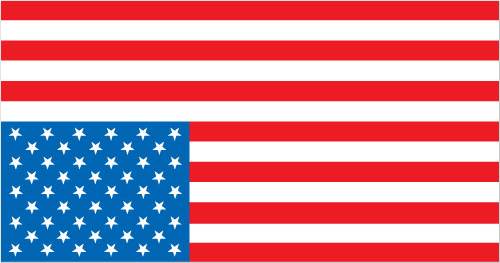
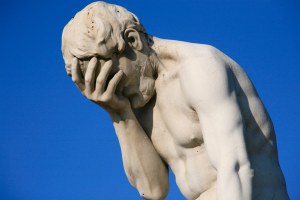 There is a saying in the lottery industry when the public will not purchase tickets for a seemingly high jackpot called “jackpot fatigue.” It is caused by the ever increasing and ever publicized jackpots always available to the public. The public has seen it all before and heard it all before and nothing new can be said about the jackpot total to get them to the convenience store to purchase a ticket. It’s all been done before.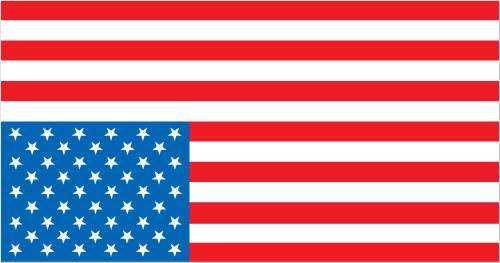

 Oscar Wilde wrote, “A flower blossoms for its own joy,” and while he is one of my favorite authors, I disagree with this quote. Flowers can neither enjoy their own fragrance nor know their own beauty or the joy they bring to others.
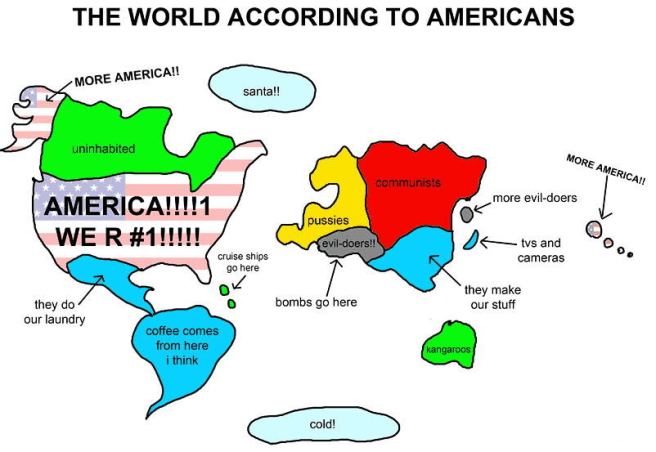


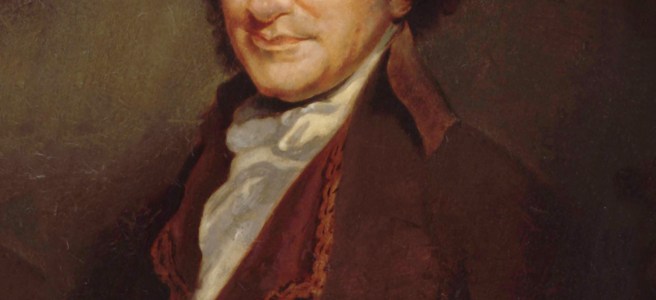
 In 1789, Thomas Paine wrote Rights of Man as a rebuttal to Edmund Burke’s Reflections on the Revolution in France. One of Burke’s arguments, and one he spends over 100 pages writing about, is how the English Parliament of 1688 granted certain rights “for themselves, and for all their posterity, for ever.” Paine takes exception with this and in the first few pages of Rights of Man refutes Burke’s assumptions brilliantly.

 Thoughts at Large