Inhuman

PainPublilius Syrus in the first century B.C. wrote “when Fortune flatters, she does it to betray.” Plutarch reinterpreted this as “I see the cure is not worth the pain.” Somewhere over the past two thousand plus years we have lost the connection between humanity and the humane.

Setting religion aside and ignoring the politics and ethics of Dr. Kevorkian, it is, none the less, barbaric how we treat our loved ones at the end of their lives.

We have somehow bridged the moral abyss with compassion for our beloved pets by “humanely” putting our beloved pets out of their senseless misery, ending their meaningless pain, answering their pleading eyes with the selfless, heartrending compassion of euthanasia.

We have somehow sanitized capital punishment of the worst criminals from fatal and barbaric corporal punishment to a “humane” (although still debatably barbaric) dream-like sleep out of existence.

And yet, we allow our loved ones to face “natural” death filled with a fear, pain and confusion making anything that happened at Abu Ghraib look like Walt Disney World.

This suffering is multifaceted. Of course, there is the physical pain, which is no better controlled today than it was 50 years ago. The opioids still rule as the best we have to offer. The problem is that they are systemic, meaning that they travel throughout the entire body. If the pain is in the hip, the hip gets the morphine, but so, too, do the little finger, the ear lobe and the brain. The result is that the little finger and ear lobe are no better or worse, the hip suffers an incomplete relief of pain and the brain suffers the confusion, paranoia, nausea and narcolepsy unnecessary to treatment. This is the best medicine has to offer in 2014? The other suffering it brings is to the family members who must endure watching the physical suffering of those they love hampered by the incomplete relief of pain. Meaningless suffering is the worst kind. Love of another means the willingness to shoulder their burden. The helplessness felt by the family member watching their loved one jerk in pain or crying out as they try to move them or comfort them is an indelible stain on their soul.

The suicidal mission of cancer adds to the frustration. Bent on destroying its host, even at its own annihilation, cancer never rests. To paraphrase Siddhartha Mukherjee from his book The Emperor of All Maladies, cancer cuts the brake lines of some cells and jams the gas pedals of others, stopping the natural cell regulation process and sending the cancer cells into a proliferating frenzy steamrolling every other cell in its path. In his or her clearer moments, so too, the cancer patient undergoes a civil war; one side, engrained in all of us, pulls us to live, to continue fighting, while another force, armed with logic, understanding and ultimately love, forces the patient to begin facing the inevitable truth with no regrets and peace.

In his book Man’s Search for Meaning, concentration camp survivor and psychologist Victor Frankl describes inmates of the camps as surviving long stretches if they could find meaning in their suffering.  Some held on to the hope of outlasting the Nazis and returning to their loved ones (should any of them have survived), others found peace looking up at the sky and imagining conversations with their loved ones wherever they might then have been. Life was worth living if they held a kernel of meaning in their suffering.

I have searched and considered and yet find no meaning in the suffering loved ones endure at the end of their lives given the current state of medicine. Pain is pain and on a scale of 1 to 10, anything above a 1 means the medical field has failed. The root word of both humane and humanity is human, from the Latin humanus. However, we reserve those words for our treatment of pets and prisoners, not our loved ones. For them, and for ourselves, it is inhuman what we put them through, for them and for us it is nothing short of torture.

Mother’s Day

Mothers Day


In honor of my mother, my wife, my sister and all of the mama bears of Moms Demand Action, here are a few quotes on mothers. In short, thank you.


“A mother is the truest friend we have, when trials heavy and sudden fall upon us; when adversity takes the place of prosperity; when friends desert us; when trouble thickens around us, still will she cling to us, and endeavor by her kind precepts and counsels to dissipate the clouds of darkness, and cause peace to return to our hearts.”

Washington Irving


 “I realized when you look at your mother, you are looking at the purest love you will ever know.”

Mitch Albom, For One More Day


 “Perhaps it takes courage to raise children..”

John Steinbeck, East of Eden


 “He didn’t realize that love as powerful as your mother’s for you leaves its own mark.”

J.K. Rowling, Harry Potter and the Sorcerer’s Stone


“My mother is a poem that I could never write”

Unknown


“Pride is one of the seven deadly sins; but it cannot be the pride of a mother in her children, for that is a compound of two cardinal virtues — faith and hope.”

Charles Dickens, Nicholas Nickleby


“My mother said the cure for thinking too much about yourself was helping somebody who was worse off than you.”

Sylvia Plath, The Bell Jar


“If I were asked to define Motherhood, I would have defined it as Love in its purest form. Unconditional Love.”

Revathi Sankaran


“Sometimes when you pick up your child you can feel the map of your own bones beneath your hands, or smell the scent of your skin in the nape of his neck. This is the most extraordinary thing about motherhood – finding a piece of yourself separate and apart that all the same you could not live without.”

Jodi Picoult, Perfect Match


“If evolution really works, how come mothers only have two hands?”

Milton Berle


“Having kids — the responsibility of rearing good, kind, ethical, responsible human beings — is the biggest job anyone can embark on”

Maria Shriver


“The phrase “working mother” is redundant.”

Jane Sellman


“With children the clock is reset. We forget what came before”

Jhumpa Lahiri, The Lowland


“My most important title is still “mom-in-chief.” My daughters are still the heart of my heart and the center of my world.”

Michelle Obama


“I am sure that if the mothers of various nations could meet, there would be no more wars.”

E.M. Forster, Howards End


“A mother’s arms are made of tenderness and children sleep soundly in them.”

Victor Hugo


A Conversation With My Daughter

feminist


“Taught from their infancy that beauty is woman’s sceptre, the mind shapes itself to the body, and roaming round its gilt cage, only seeks to adorn its prison.”

Mary Wollstonecraft, A Vindication of the Rights of Woman

I am lucky. As a heterosexual, white, American man, I found, out of the millions of available women, the best. Does that sound right? “I,” “I found,” “I am lucky.” Let me try to rephrase that. A strong, compassionate, brilliant woman, a woman with talent and brains and limited tolerance for fools, a woman destined to positively impact the lives of countless people, chose me. Better. Although I was right, I was/am lucky.

I had the most incredible conversation with my 19 year old daughter last night. It was a text message conversation, but, in many ways, the technology was not a barrier to thought or feelings, but an aid. Perhaps it is the inherent delay in responding or the necessity to distill thoughts into typed words. Whatever the cause, the effect was blinding, pure logic bathed in compassion. The subject: Feminism.

Again, I’m a guy. But that does not preclude me from discussing or even embracing feminism. Ultimately, feminism is one wavelength within the light spectrum of equality.

Plato wrote in The Republic,“If women are expected to do the same work as men, we must teach them the same things.” That was in 380 B.C.

On October 9, 2012, Malala Yousafzai was shot in the head by the Taliban on her school bus for having the audacity to think, “Let us pick up our books and our pens,” I said. “They are our most powerful weapons. One child, one teacher, one book and one pen can change the world.” (I Am Malala: The Girl Who Stood Up for Education and Was Shot by the Taliban)

Clearly, in 2,392 years we have done little to evolve as humans. Why do some (males and females) see feminists as the enemy? Why have some vilified them as militant, anti-men?

To help answer this question, I need to back up to a 30,000 foot view of “civilized society.” My daughter is an artist, and the best kind. She is infused with talent, an incredible work ethic blended with a strong desire to learn and stirred by passion; truly a recipe for greatness, both as an artist and as a compassionate human. As we chatted last night we wandered into a metaphor that, I think carries some veracity. The idea that while seeing all issues in pure black and white is easy (read: requires little or no thought), it is boring and excludes the rainbow of colors that make life (and art) joyful. Seeing (or rather acknowledging) the gray in an issue requires us to pause and consider differing opinions, perspectives and, potentially, shaking the ledge upon which we base our morals. It is neither comfortable nor easy, but it is necessary and should be required! Somewhere along the line, Descartes argument cogito ergo sum (I think therefore I am) has been bludgeoned into “I am, therefore I need not think.” How sad.

Feminism is not the charge of a select group of women but rather the obligation of all rational thinkers, therefore, all of humankind. Where it is the weak minded and threatened man who disdains feminists, so too is it the weak minded and male-oriented, society-molded female who defends organized subjugation. To subjugate one is to imprison all. Eleanor Roosevelt said it best, “”No one can make you feel inferior without your consent.” Our willing abdication of thought may inevitably lead to an Orwellian future of newspeak, doublethink, thoughtcrimes and perpetual war. How far down this road are we already? Who wants to drive?

I am proud of my daughter. She is strong-willed, passionate and compassionate, thinks for herself and wants to make the world a better place. If that is the definition of a feminist, sign me up.

Gold

Gold barsWe live in a disposable economy; neither secret nor revelation there! We also live in a society where we, through technology and media, demand instant gratification and are easily bored with work and distracted by shiny objects. It is easier to walk away from a problem than wrestle with it, but seldom right. It is easier to think of oneself rather than another, but rarely without consequence. We eschew effort as well as personal responsibility and popular culture celebrates this behavior. The existentialist will tell you that we are all, in fact, islands; that no one can truly appreciate what we, as individuals, think or feel. At the same time, however, we are all cogs in the various and intricate machinery we know as society.

Many of us, either through nature or nurture, seek to live our lives with the company of another; to see if the teeth on our cog mesh with those of another’s, thereby (it is hoped) creating a larger, stronger organism. It is often a disruptive union, calling on an island to expose its perceived weaknesses to another in hopes of reuniting Pangaea and weathering life’s storms together. Marriage forces two individuals to add the moniker “couple” to themselves, making each participant defend the ethos of the other before society while at the same time trying to maintain their own sense of self. And therein, lies one of the two reasons these unions fail. Statistics tell us that half of marriages fail. Maybe “fail” is not the right word. When reduced to basics, the individual cogs simply do not work together, despite love’s miasma and an individual’s sometimes tortuous effort. There are many different reasons for these failures, not all of them assignable to one party or the other. However, “facts is facts.” According to the 2010 census, only 82% of Americans who married reached their 5 year anniversary. Sixty-five percent made it to 10 years. Fifty-two percent made it to 15 years.

Of course, divorce is not the only reason that couples fail to reach these milestones. The other way that marriages end is through the death of one partner. You needn’t look at an actuarial table to see that as people get older the overall number of them still living decreases. You may have graduated 43rd in your high school class, but with enough luck and a genetic lottery winning ticket, someday you will be 1st! George Burns wasn’t the tallest in his high school at graduation, but by living to 99 he assumed that title from all those who were taller but preceded him in death. Consequently, the number of couples reaching higher milestones drops significantly as the years pass. Only 33% of couples reach their 25th anniversary, again, through a combination of avoiding death and divorce. Only 20% of couples reach their 35th anniversary. Of course, while only two things can end a marriage, either divorce or death, not even death can hold sway over love. The remaining cog may still turn as part of society but it forever misses the other.

This September, I will celebrate my 25th wedding anniversary with the woman whose cog fit mine; who softened the rough teeth of my cog and kept our machine moving where teeth on my cog were missing or broken. To reach such a height is to know the wonder, pain, strength and suffering that sharing your life with another affords. Experience can neither be taught nor bequeathed and, for those who make it through, would not be traded for all the world’s gold. The tapestry we have woven together, comprised of the countless threads we call memories, warms me, comforts me and leads me toward tomorrow’s challenges armed with confidence.

Tomorrow also marks a milestone fewer than 5% of couples attain. My parents celebrate their 50th wedding anniversary. In a society where we are encouraged to trade our gold for cash, it is nice to see a couple whose determination to face life’s challenges as one reach their Golden Anniversary, a milestone more treasured than treasure; something forged in life’s furnace like no one else’s, answerable to no one else and more precious than cash. No life is easy, no journey without challenges, but it is the challenges that create character and we celebrate couples who have weathered these challenges and persevered. Thanks to my wife, and the story we are still writing, and my parents whose own book is now gold gilded, I understand a quote from Dr. Seuss today better than yesterday and hope to appreciate it better tomorrow than today.

 “You know you’re in love when you can’t fall asleep because reality is finally better than your dreams.”

Happy anniversary to my parents and Lisa, I love you.

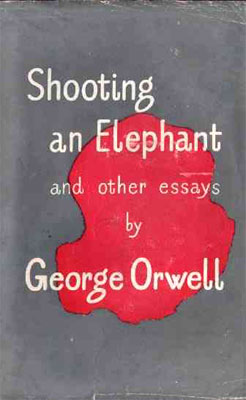
Shooting an Elephant – Again and Again

ShootingAnElephantIn 1936, George Orwell penned the following article in the autumn of 1936 for New Writings magazine in London. While rife with political analogies, the story, at face value, is compelling and disturbing. Having recently read it, I re-post it here in light of NBC’s decision to air the inhumane hunting show Under Wild Skies and the recent news that 90 of these gentle animals were poisoned with industrial cyanide in Zimbabwe by poachers eager for their tusks. Please read it and consider the consequences.

Shooting an Elephant

In Moulmein, in Lower Burma, I was hated by large numbers of people — the only time in my life that I have been important enough for this to happen to me. I was sub-divisional police officer of the town, and in an aimless, petty kind of way anti-European feeling was very bitter. No one had the guts to raise a riot, but if a European woman went through the bazaars alone somebody would probably spit betel juice over her dress. As a police officer I was an obvious target and was baited whenever it seemed safe to do so. When a nimble Burman tripped me up on the football field and the referee (another Burman) looked the other way, the crowd yelled with hideous laughter. This happened more than once. In the end the sneering yellow faces of young men that met me everywhere, the insults hooted after me when I was at a safe distance, got badly on my nerves. The young Buddhist priests were the worst of all. There were several thousands of them in the town and none of them seemed to have anything to do except stand on street corners and jeer at Europeans.

All this was perplexing and upsetting. For at that time I had already made up my mind that imperialism was an evil thing and the sooner I chucked up my job and got out of it the better. Theoretically — and secretly, of course — I was all for the Burmese and all against their oppressors, the British. As for the job I was doing, I hated it more bitterly than I can perhaps make clear. In a job like that you see the dirty work of Empire at close quarters. The wretched prisoners huddling in the stinking cages of the lock-ups, the grey, cowed faces of the long-term convicts, the scarred buttocks of the men who had been flogged with bamboos — all these oppressed me with an intolerable sense of guilt. But I could get nothing into perspective. I was young and ill-educated and I had had to think out my problems in the utter silence that is imposed on every Englishman in the East. I did not even know that the British Empire is dying, still less did I know that it is a great deal better than the younger empires that are going to supplant it. All I knew was that I was stuck between my hatred of the empire I served and my rage against the evil-spirited little beasts who tried to make my job impossible. With one part of my mind I thought of the British Raj as an unbreakable tyranny, as something clamped down, in saecula saeculorum, upon the will of prostrate peoples; with another part I thought that the greatest joy in the world would be to drive a bayonet into a Buddhist priest’s guts. Feelings like these are the normal by-products of imperialism; ask any Anglo-Indian official, if you can catch him off duty.

One day something happened which in a roundabout way was enlightening. It was a tiny incident in itself, but it gave me a better glimpse than I had had before of the real nature of imperialism — the real motives for which despotic governments act. Early one morning the sub-inspector at a police station the other end of the town rang me up on the phone and said that an elephant was ravaging the bazaar. Would I please come and do something about it? I did not know what I could do, but I wanted to see what was happening and I got on to a pony and started out. I took my rifle, an old .44 Winchester and much too small to kill an elephant, but I thought the noise might be useful in terrorem. Various Burmans stopped me on the way and told me about the elephant’s doings. It was not, of course, a wild elephant, but a tame one which had gone ‘must’. It had been chained up, as tame elephants always are when their attack of ‘must’ is due, but on the previous night it had broken its chain and escaped. Its mahout, the only person who could manage it when it was in that state, had set out in pursuit, but had taken the wrong direction and was now twelve hours’ journey away, and in the morning the elephant had suddenly reappeared in the town. The Burmese population had no weapons and were quite helpless against it. It had already destroyed somebody’s bamboo hut, killed a cow and raided some fruit-stalls and devoured the stock; also it had met the municipal rubbish van and, when the driver jumped out and took to his heels, had turned the van over and inflicted violences upon it.

The Burmese sub-inspector and some Indian constables were waiting for me in the quarter where the elephant had been seen. It was a very poor quarter, a labyrinth of squalid bamboo huts, thatched with palmleaf, winding all over a steep hillside. I remember that it was a cloudy, stuffy morning at the beginning of the rains. We began questioning the people as to where the elephant had gone and, as usual, failed to get any definite information. That is invariably the case in the East; a story always sounds clear enough at a distance, but the nearer you get to the scene of events the vaguer it becomes. Some of the people said that the elephant had gone in one direction, some said that he had gone in another, some professed not even to have heard of any elephant. I had almost made up my mind that the whole story was a pack of lies, when we heard yells a little distance away. There was a loud, scandalized cry of ‘Go away, child! Go away this instant!’ and an old woman with a switch in her hand came round the corner of a hut, violently shooing away a crowd of naked children. Some more women followed, clicking their tongues and exclaiming; evidently there was something that the children ought not to have seen. I rounded the hut and saw a man’s dead body sprawling in the mud. He was an Indian, a black Dravidian coolie, almost naked, and he could not have been dead many minutes. The people said that the elephant had come suddenly upon him round the corner of the hut, caught him with its trunk, put its foot on his back and ground him into the earth. This was the rainy season and the ground was soft, and his face had scored a trench a foot deep and a couple of yards long. He was lying on his belly with arms crucified and head sharply twisted to one side. His face was coated with mud, the eyes wide open, the teeth bared and grinning with an expression of unendurable agony. (Never tell me, by the way, that the dead look peaceful. Most of the corpses I have seen looked devilish.) The friction of the great beast’s foot had stripped the skin from his back as neatly as one skins a rabbit. As soon as I saw the dead man I sent an orderly to a friend’s house nearby to borrow an elephant rifle. I had already sent back the pony, not wanting it to go mad with fright and throw me if it smelt the elephant.

The orderly came back in a few minutes with a rifle and five cartridges, and meanwhile some Burmans had arrived and told us that the elephant was in the paddy fields below, only a few hundred yards away. As I started forward practically the whole population of the quarter flocked out of the houses and followed me. They had seen the rifle and were all shouting excitedly that I was going to shoot the elephant. They had not shown much interest in the elephant when he was merely ravaging their homes, but it was different now that he was going to be shot. It was a bit of fun to them, as it would be to an English crowd; besides they wanted the meat. It made me vaguely uneasy. I had no intention of shooting the elephant — I had merely sent for the rifle to defend myself if necessary — and it is always unnerving to have a crowd following you. I marched down the hill, looking and feeling a fool, with the rifle over my shoulder and an ever-growing army of people jostling at my heels. At the bottom, when you got away from the huts, there was a metalled road and beyond that a miry waste of paddy fields a thousand yards across, not yet ploughed but soggy from the first rains and dotted with coarse grass. The elephant was standing eight yards from the road, his left side towards us. He took not the slightest notice of the crowd’s approach. He was tearing up bunches of grass, beating them against his knees to clean them and stuffing them into his mouth.

I had halted on the road. As soon as I saw the elephant I knew with perfect certainty that I ought not to shoot him. It is a serious matter to shoot a working elephant — it is comparable to destroying a huge and costly piece of machinery — and obviously one ought not to do it if it can possibly be avoided. And at that distance, peacefully eating, the elephant looked no more dangerous than a cow. I thought then and I think now that his attack of ‘must’ was already passing off; in which case he would merely wander harmlessly about until the mahout came back and caught him. Moreover, I did not in the least want to shoot him. I decided that I would watch him for a little while to make sure that he did not turn savage again, and then go home.

But at that moment I glanced round at the crowd that had followed me. It was an immense crowd, two thousand at the least and growing every minute. It blocked the road for a long distance on either side. I looked at the sea of yellow faces above the garish clothes-faces all happy and excited over this bit of fun, all certain that the elephant was going to be shot. They were watching me as they would watch a conjurer about to perform a trick. They did not like me, but with the magical rifle in my hands I was momentarily worth watching. And suddenly I realized that I should have to shoot the elephant after all. The people expected it of me and I had got to do it; I could feel their two thousand wills pressing me forward, irresistibly. And it was at this moment, as I stood there with the rifle in my hands, that I first grasped the hollowness, the futility of the white man’s dominion in the East. Here was I, the white man with his gun, standing in front of the unarmed native crowd — seemingly the leading actor of the piece; but in reality I was only an absurd puppet pushed to and fro by the will of those yellow faces behind. I perceived in this moment that when the white man turns tyrant it is his own freedom that he destroys. He becomes a sort of hollow, posing dummy, the conventionalized figure of a sahib. For it is the condition of his rule that he shall spend his life in trying to impress the ‘natives’, and so in every crisis he has got to do what the ‘natives’ expect of him. He wears a mask, and his face grows to fit it. I had got to shoot the elephant. I had committed myself to doing it when I sent for the rifle. A sahib has got to act like a sahib; he has got to appear resolute, to know his own mind and do definite things. To come all that way, rifle in hand, with two thousand people marching at my heels, and then to trail feebly away, having done nothing — no, that was impossible. The crowd would laugh at me. And my whole life, every white man’s life in the East, was one long struggle not to be laughed at.

But I did not want to shoot the elephant. I watched him beating his bunch of grass against his knees, with that preoccupied grandmotherly air that elephants have. It seemed to me that it would be murder to shoot him. At that age I was not squeamish about killing animals, but I had never shot an elephant and never wanted to. (Somehow it always seems worse to kill a large animal.) Besides, there was the beast’s owner to be considered. Alive, the elephant was worth at least a hundred pounds; dead, he would only be worth the value of his tusks, five pounds, possibly. But I had got to act quickly. I turned to some experienced-looking Burmans who had been there when we arrived, and asked them how the elephant had been behaving. They all said the same thing: he took no notice of you if you left him alone, but he might charge if you went too close to him.

It was perfectly clear to me what I ought to do. I ought to walk up to within, say, twenty-five yards of the elephant and test his behavior. If he charged, I could shoot; if he took no notice of me, it would be safe to leave him until the mahout came back. But also I knew that I was going to do no such thing. I was a poor shot with a rifle and the ground was soft mud into which one would sink at every step. If the elephant charged and I missed him, I should have about as much chance as a toad under a steam-roller. But even then I was not thinking particularly of my own skin, only of the watchful yellow faces behind. For at that moment, with the crowd watching me, I was not afraid in the ordinary sense, as I would have been if I had been alone. A white man mustn’t be frightened in front of ‘natives’; and so, in general, he isn’t frightened. The sole thought in my mind was that if anything went wrong those two thousand Burmans would see me pursued, caught, trampled on and reduced to a grinning corpse like that Indian up the hill. And if that happened it was quite probable that some of them would laugh. That would never do.

There was only one alternative. I shoved the cartridges into the magazine and lay down on the road to get a better aim. The crowd grew very still, and a deep, low, happy sigh, as of people who see the theatre curtain go up at last, breathed from innumerable throats. They were going to have their bit of fun after all. The rifle was a beautiful German thing with cross-hair sights. I did not then know that in shooting an elephant one would shoot to cut an imaginary bar running from ear-hole to ear-hole. I ought, therefore, as the elephant was sideways on, to have aimed straight at his ear-hole, actually I aimed several inches in front of this, thinking the brain would be further forward.

When I pulled the trigger I did not hear the bang or feel the kick — one never does when a shot goes home — but I heard the devilish roar of glee that went up from the crowd. In that instant, in too short a time, one would have thought, even for the bullet to get there, a mysterious, terrible change had come over the elephant. He neither stirred nor fell, but every line of his body had altered. He looked suddenly stricken, shrunken, immensely old, as though the frightful impact of the bullet had paralysed him without knocking him down. At last, after what seemed a long time — it might have been five seconds, I dare say — he sagged flabbily to his knees. His mouth slobbered. An enormous senility seemed to have settled upon him. One could have imagined him thousands of years old. I fired again into the same spot. At the second shot he did not collapse but climbed with desperate slowness to his feet and stood weakly upright, with legs sagging and head drooping. I fired a third time. That was the shot that did for him. You could see the agony of it jolt his whole body and knock the last remnant of strength from his legs. But in falling he seemed for a moment to rise, for as his hind legs collapsed beneath him he seemed to tower upward like a huge rock toppling, his trunk reaching skyward like a tree. He trumpeted, for the first and only time. And then down he came, his belly towards me, with a crash that seemed to shake the ground even where I lay.

I got up. The Burmans were already racing past me across the mud. It was obvious that the elephant would never rise again, but he was not dead. He was breathing very rhythmically with long rattling gasps, his great mound of a side painfully rising and falling. His mouth was wide open — I could see far down into caverns of pale pink throat. I waited a long time for him to die, but his breathing did not weaken. Finally I fired my two remaining shots into the spot where I thought his heart must be. The thick blood welled out of him like red velvet, but still he did not die. His body did not even jerk when the shots hit him, the tortured breathing continued without a pause. He was dying, very slowly and in great agony, but in some world remote from me where not even a bullet could damage him further. I felt that I had got to put an end to that dreadful noise. It seemed dreadful to see the great beast Lying there, powerless to move and yet powerless to die, and not even to be able to finish him. I sent back for my small rifle and poured shot after shot into his heart and down his throat. They seemed to make no impression. The tortured gasps continued as steadily as the ticking of a clock.

In the end I could not stand it any longer and went away. I heard later that it took him half an hour to die. Burmans were bringing dash and baskets even before I left, and I was told they had stripped his body almost to the bones by the afternoon.

Afterwards, of course, there were endless discussions about the shooting of the elephant. The owner was furious, but he was only an Indian and could do nothing. Besides, legally I had done the right thing, for a mad elephant has to be killed, like a mad dog, if its owner fails to control it. Among the Europeans opinion was divided. The older men said I was right, the younger men said it was a damn shame to shoot an elephant for killing a coolie, because an elephant was worth more than any damn Coringhee coolie. And afterwards I was very glad that the coolie had been killed; it put me legally in the right and it gave me a sufficient pretext for shooting the elephant. I often wondered whether any of the others grasped that I had done it solely to avoid looking a fool.

1936

THE END

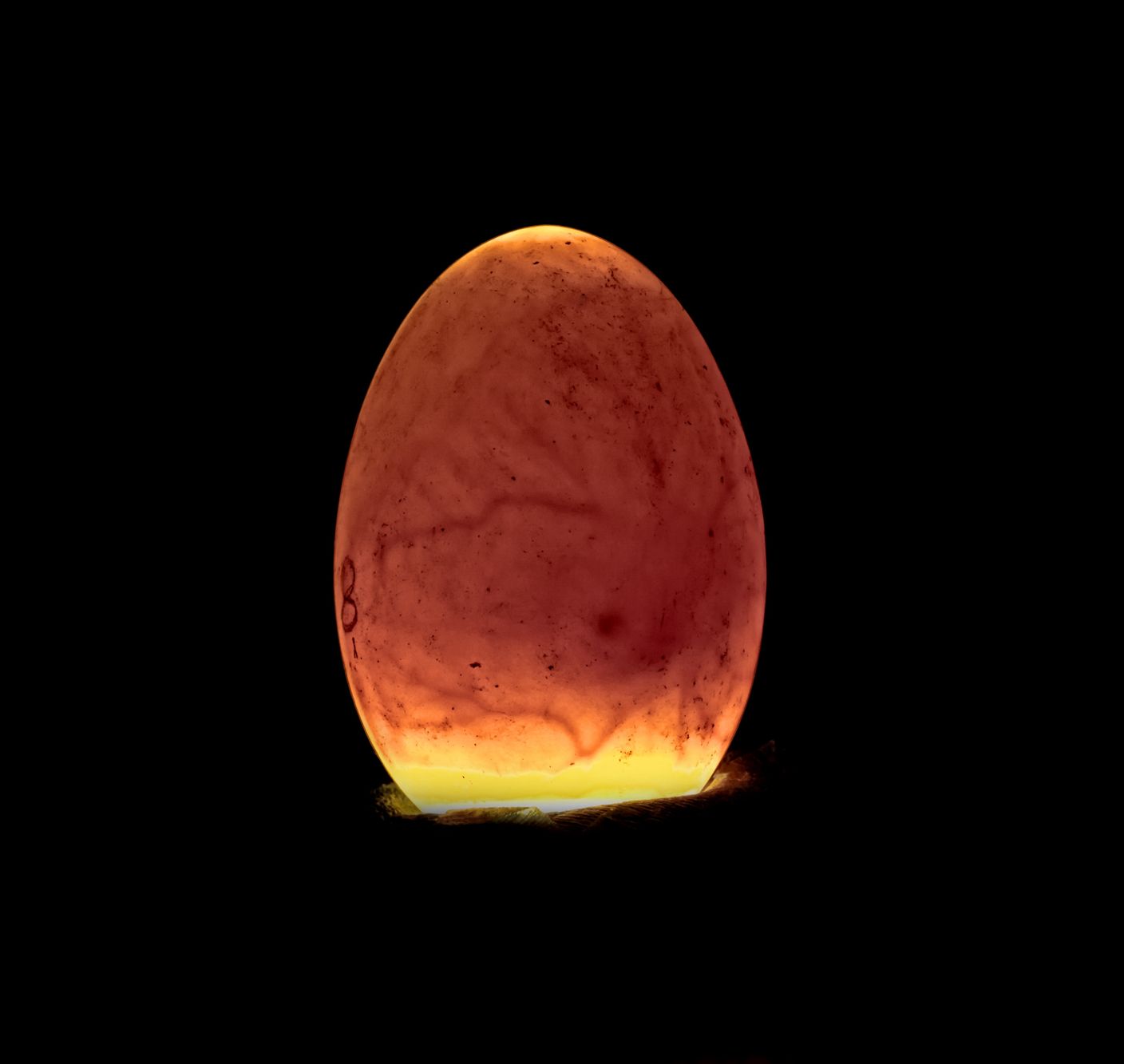
Character Candling

candling egg

From Merriam Webster:

candle (transitive verb): to examine by holding between the eye and a light; especially : to test (eggs) in this way for staleness, blood clots, fertility, and growth

Have you ever looked at a word you’ve written a thousand times as though it couldn’t possibly be spelled that way? You doubt yourself, double check it in the dictionary and carry on. I have recently had the opportunity to reassess personal relationships I’ve held sacred, but upon examination found I have done so without a compelling reason.  No longer a child, I held up these individuals to the same light of reason, logic, compassion and magnanimity  to which I would hope to be judged, not unlike candling an egg. Rather than record my observations, I sought insight from those more intelligent. Here are my thoughts via their appropriated words, alpha by author:

“Children’s talent to endure stems from their ignorance of alternatives.”     Maya Angelou

“Beware the man of a single book.”     St. Thomas Aquinas

“Never let your sense of morals prevent you from doing what is right.”     Isaac Asimov

“The basic stimulus to the intelligence is doubt, a feeling that the meaning of an experience is not self-evident.”     W.H. Auden

“I think we risk becoming the best informed society that has ever died of ignorance.”     Reuben Blades

“If you think education is expensive, try ignorance.”     Derek Bok

“There is no such uncertainty as a sure thing.”     Robert Burns

“The evil that is in the world almost always comes of ignorance, and good intentions may do as much harm as malevolence if they lack understanding.”     Albert Camus

“Never underestimate the power of stupid people in large groups.”     George Carlin

“The IQ and the life expectancy of the average American recently passed each other in opposite directions.”     George Carlin

“I prefer tongue-tied knowledge to ignorant loquacity.”     Marcus Tullius Cicero

“I am not ashamed to confess I am ignorant of what I do not know.”     Marcus Tullius Cicero

“He only employs his passion who can make no use of his reason.”     Marcus Tullius Cicero

“To live is to think.”     Marcus Tullius Cicero

“Confidence is ignorance. If you’re feeling cocky, it’s because there’s something you don’t know.”     Eoin Colfer

“Real knowledge is to know the extent of one’s ignorance.”     Confucius

“Ignorance is the night of the mind, a night without moon or star.”     Confucius

“The essence of knowledge is, having it, to apply it; not having it, to confess your ignorance.”     Confucius

“He who knows all the answers has not been asked all the questions.”     Confucius

“Where ignorance is our master, there is no possibility of real peace.”     Dalai Lama

“Ignorance more frequently begets confidence than does knowledge: it is those who know little, not those who know much, who so positively assert that this or that problem will never be solved by science.”     Charles Darwin

“And, in fine, of false sciences I thought I knew the worth sufficiently to escape being deceived by the professions of an alchemist, the predictions of an astrologer, the impostures of a magician, or by the artifices and boasting of any of those who profess to know things of which they are ignorant.”     René Descartes

“Military guys are rarely as smart as they think they are, and they’ve never gotten over the fact that civilians run the military.”     Maureen Dowd

“He who joyfully marches to music in rank and file has already earned my contempt. He has been given a large brain by mistake, since for him the spinal cord would surely suffice.”     Albert Einstein

“The measure of intelligence is the ability to change.”     Albert Einstein

“You are not entitled to your opinion. You are entitled to your informed opinion. No one is entitled to be ignorant.”     Harlan Ellison

“Fear always springs from ignorance.”     Ralph Waldo Emerson

“There are many things of which a wise man might wish to be ignorant.”     Ralph Waldo Emerson

“If we encounter a man of rare intellect, we should ask him what books he reads.”     Ralph Waldo Emerson

“Talk sense to a fool and he calls you foolish.”     Euripides

“Anger exceeding limits causes fear and excessive kindness eliminates respect.”     Euripides

“The test of a first-rate intelligence is the ability to hold two opposed ideas in the mind at the same time and still retain the ability to function.”     F. Scott Fitzgerald

“Stupidity lies in wanting to draw conclusions.”     Gustave Flaubert

“Being ignorant is not so much a shame, as being unwilling to learn.”     Benjamin Franklin

“The doorstep to the temple of wisdom is a knowledge of our own ignorance.”     Benjamin Franklin

“The only thing more expensive than education is ignorance.”     Benjamin Franklin

“We are all born ignorant, but one must work hard to remain stupid.”     Benjamin Franklin

“I wash my hands of those who imagine chattering to be knowledge, silence to be ignorance, and affection to be art.”     Kahlil Gibran

“There is nothing more frightful than ignorance in action.”     Johann Wolfgang von Goethe

“Point me out the happy man and I will point you out either extreme egotism, selfishness, evil — or else an absolute ignorance.”     Graham Greene

“If you’re gonna be stupid you gotta be tough.”     John Grisham

“The greatest enemy of knowledge is not ignorance, it is the illusion of knowledge.”     Stephen Hawking

“Man’s mind, once stretched by a new idea, never regains its original dimensions.”     Oliver Wendell Holmes Sr.

“The recipe for perpetual ignorance is: Be satisfied with your opinions and content with your knowledge.”     Elbert Hubbard

“God will not look you over for medals, degrees or diplomas but for scars.”     Elbert Hubbard

“The learned man knows that he is ignorant.”     Victor Hugo

“The tax which will be paid for the purpose of education is not more than the thousandth part of what will be paid to kings, priests and nobles who will rise up among us if we leave the people in ignorance.”     Thomas Jefferson

“Those who never retract their opinions love themselves more than they love truth.”     Joseph Joubert

“The only means of strengthening one’s intellect is to make up one’s mind about nothing — to let the mind be a thoroughfare for all thoughts.”     John Keats

“People demand freedom of speech as a compensation for the freedom of thought which they seldom use.”     Søren Kierkegaard

“Nothing in the world is more dangerous than a sincere ignorance and conscientious stupidity.”     Martin Luther King, Jr.

“A fool can easily be known by what proceeds from his or her mouth.”     Adedayo Kingjerry

“Living is easy with eyes closed.”     John Lennon

“Having children makes you no more a parent than having a piano makes you a pianist.”     Michael Levine

“I do not think much of a man who is not wiser today than he was yesterday.”     Abraham Lincoln

“A good head and good heart are always a formidable combination. But when you add to that a literate tongue or pen, then you have something very special.”     Nelson Mandela

“Military intelligence is a contradiction in terms.”     Groucho Marx

“A book lying idle on a shelf is wasted ammunition.”     Henry Miller

“We have now sunk to a depth at which restatement of the obvious is the first duty of intelligent men.”     George Orwell

“I would prefer an intelligent hell to a stupid paradise.”     Blaise Pascal

“And whenever anyone informs us that he has found a man who knows all the arts, and all things else that anybody knows, and every single thing with a higher degree of accuracy than any other man –whoever tells us this, I think that we can only imagine him to be a simple creature who is likely to have been deceived by some wizard or actor whom he met, and whom he thought all-knowing, because he himself was unable to analyze the nature of knowledge and ignorance and imitation.”     Plato

“A little learning is a dangerous thing; Drink deep, or taste not the Pierian spring; There shallow draughts intoxicate the brain, And drinking largely sobers us again.”     Alexander Pope

“There is no reply to the ignorant like keeping silence.”     Proverb

“Discussion is an exchange of knowledge; an argument an exchange of ignorance.”     Robert Quillen

“When ignorance gets started it knows no bounds.”     Will Rogers

“The fundamental cause of the trouble is that in the modern world the stupid are cocksure while the intelligent are full of doubt.”     Bertrand Russell

“A stupid man’s report of what a clever man says can never be accurate, because he unconsciously translates what he hears into something he can understand.”     Bertrand Russell

“Two things are to be remembered: that a man whose opinions and theories are worth studying may be presumed to have had some intelligence, but that no man is likely to have arrived at complete and final truth on any subject whatever. When an intelligent man expresses a view which seems to us obviously absurd, we should not attempt to prove that it is somehow true, but we should try to understand how it ever came to seem true. This exercise of historical and psychological imagination at once enlarges the scope of our thinking, and helps us to realize how foolish many of our own cherished prejudices will seem to an age which has a different temper of mind.”     Bertrand Russell

“Ignorant people see life as either existence or non-existence, but wise men see it beyond both existence and non-existence to something that transcends them both; this is an observation of the Middle Way.”     Seneca

“There is no darkness but ignorance.”     William Shakespeare

“A knavish speech sleeps in a fool’s ear.”     William Shakespeare

“The fool doth think he is wise, but the wise man knows himself to be a fool.”     William Shakespeare

“The shortest route to courage is absolute ignorance.”     Dan Simmons

“There is only one good, knowledge, and one evil, ignorance.”     Socrates

“It’s an universal law– intolerance is the first sign of an inadequate education. An ill-educated person behaves with arrogant impatience, whereas truly profound education breeds humility.”     Aleksandr Solzhenitsyn

“It is better to remain silent at the risk of being thought a fool, than to talk and remove all doubt of it.”     Maurice Switzer

“The stupid neither forgive nor forget; the naive forgive and forget; the wise forgive but do not forget.”     Thomas Stephen Szasz

“Ignorance and inconsideration are the two great causes of the ruin of mankind.”     John Tillotson

“We can know only that we know nothing. And that is the highest degree of human wisdom.”     Leo Tolstoy

“All you need in this life is ignorance and confidence, and then success is sure.”     Mark Twain

“Ignorance is a virus. Once it starts spreading, it can only be cured by reason. For the sake of humanity, we must be that cure.”     Neil deGrasse Tyson

“He must be very ignorant for he answers every question he is asked.”     Voltaire

“The more I read, the more I acquire, the more certain I am that I know nothing.”     Voltaire

“If your brains were dynamite there wouldn’t be enough to blow your hat off.”     Kurt Vonnegut

“Irony is wasted on the stupid.”     Oscar Wilde

“The public have an insatiable curiosity to know everything, except what is worth knowing.”     Oscar Wilde

“He had just about enough intelligence to open his mouth when he wanted to eat, but certainly no more.”     P.G. Wodehouse

“Ignorance is not bliss – it is oblivion.”     Philip Wylie

“Rich people have small TVs and big libraries, and poor people have small libraries and big TVs.”     Zig Ziglar

Which quote is your favorite?

Mine?

“Many wearing rapiers are afraid of goosequills.”     William Shakespeare.

Although you may recognize it as:

“The pen is mightier than the sword (or gun).”

Summertime Thoughts

And now for a few thoughts:

I always wonder what my dog is thinking when he gets inside an elevator. We go into a small room, he looks out at the room we just left, watches the strange doors close and sees a completely different world when the strange doors open. What happened to the other world? What happened?

Is there anything better than a home grown tomato?

Nothing says summer better than hydrangeas in bloom.

In a perfect world, everything would smell like gardenias.

I love how time dissolves when I’m gardening.

Too bad I rarely get the chance.

Too bad it’s 150 degrees outside when I do get the chance.

Summer is going by too fast.

2013 is going by too fast.

My life is going by too fast. I still have a to-do list from when I was six that I can’t seem to get to.

I can’t think of anything so profound I would have to have it as a tattoo. And I can’t imagine any tattoo that isn’t an Oscar Wilde quote. Or George Orwell.

I love driving.

I hate other drivers.

I love to watch airplanes. I always wonder where they are going or from where they have come. What vacation stories are waiting to be discovered or retold. Take me with you.

I feel like my dog in an elevator when I fly. I go to the airport, sit in an aluminum tube for a few hours and exit into a totally different culture. Wonderful!

The older I get, the more I love my wife.

The older my children get, the more I love my wife.

The older my wife gets, the more I love life.

What’s next?

Year One

blog

I started this blog one year ago tomorrow. Not that I expected anybody to read it, but as a way for me to pour burning liquid emotion onto my keyboard in hopes of having it coalesce on the screen into something resembling understanding, logic or rationality in order for me to carry on. All too often, I have failed.

My first post was simply a reposting of a blog entry made by Jessica Redfield who had escaped a mass shooting at the Eaton Center in Toronto. She had posted it on June 5th. One year ago tonight, she was one of twelve murdered and 58 wounded at the Century movie theater in Aurora, Colorado during a midnight screening of The Dark Knight Rises. Here, frozen forever, is her last Twitter post:

JessicaRedfield Twitter

Having been cast to live in Texas as a result of the world-class medical facilities at the University of Texas M.D. Anderson Cancer Center and seeing them as the best chance we had to fight my wife’s rare and aggressive breast cancer, I had become increasingly angry at the cavalier attitude Texans have with their guns. The “Come and Take It” crowd, most of them displaying Zimmerman-like bravado (when armed with a firearm), hiding anatomic shortcomings (if shoe size is a true indicator and not some urban legend) and compensating by driving the tallest, most ridiculous looking monster-trucks legal to drive on public roads.  The shooting in Aurora drove me to write. It was a cathartic exercise.

Mixed with equal parts sarcasm, anger, depression and pomposity, I put down in words my boiling rage. A few comments popped up, although in the vast universe of the internet I have no idea how these people tripped over my little blog. And so it went. Until December 14th.

I was sitting at the hospital while my wife was being restaged when the first news reports began to flash about a shooting at an elementary school in Connecticut. A shooting at an elementary school will be very traumatic for the children, I thought, assuming that the victim(s) would be adults involved in a deadly dispute of some kind. Slowly the details emerged. Children were among the victims and their numbers kept climbing. Like most of the world, I read the reports in disbelief, hoping for a clarification from the news outlets of a terrible mistake. Instead, the numbers continued to climb. More children were injured; more children were among the dead.  Like many other dates that are seared into our collective consciousness, I will never forget where I was when I heard the news. My wife and I made the hour drive home from the hospital that evening, although I cannot remember actually steering the car. That night, I shook.

The next day I told my wife that I needed to do something, anything to try to change the world in which I had sentenced my children to live. I was ashamed for my previous inaction and tacit acceptance of gun violence; I was ashamed for the country. The rest of the world looked upon America as a land populated by blood-thirsty renegades armed better than Dirty Harry with a fuse shorter than a Bruce Willis’s hair. Surely, after this mind-skewing, paradigm shift, Washington would act responsibly? Americans would demand it! Politicians would push and shove their way to the front of the line to co-sign responsible gun legislation! Unaware of any grassroots organizations and devoid of any previous political activism, I reached out to the one group I knew with a history of fighting the gun lobby, the Brady Campaign.

“I haven’t had a representative in the Houston area for three years,” said the head of the Texas Brady chapter. Roll that around in your head for a second. Houston is the country’s fourth largest city with a population of over 2 million people and the Brady Campaign has no local chapter? Hell, Connecticut has three!

And yet, in spite of my newly embraced activism, it all still seemed a little remote. I could still only partially allow myself to invite in the nightmare of what it would have been like if it had been my children. Emotionally, as a parent, as a human, it was a door I was only willing to open a crack, lest the devastating emotion behind it drown me. That all changed on a conference call.

The head of the Texas chapter of the Brady Campaign invited me to participate in a call with hundreds of other members and a guest speaker. It was scheduled for Monday, January 7th at 5:00. Because I was still at work, I stayed late and joined the call already in progress. There was a woman speaking with intimate knowledge of the shooting in Aurora. I listened intently, but removed and muted. However, as I listened, I began to piece together who the speaker was. At the moment my mind made the connection, she spoke the words that will forever haunt me. It was Jessica Redfield’s mother, and she was describing, in vivid detail, the events of that night and how, where and why her daughter had been murdered. I could no longer prevent that nightmarish door from opening. Jessica Redfield’s mother was telling me how that door had been ripped from its hinges and cast into space. Suddenly, it was all very real. I had come full circle. What I had started in July as an angry blog by simply cutting and pasting an entry from a theater shooting victim had brought me to listening to the mother of that same victim on a January night. Surreal. Emotional. Devastating. Goose bumps. Real.

I assumed I would write a few articles and make a few calls on behalf of the Brady Campaign. However, soon, word spread and I was being asked to speak at local area democratic clubs. Then I was asked to debate a state representative on a local PBS television program. (The Tea Party twit backed out at the last minute!) Immediately, armed with logic, a rational ethos and compassion, my inner Toby Ziegler/Josh Lyman/Josiah Bartlet took over. I carried photos of the Sandy Hook victims in my wallet. My speech ballooned to 45 minutes. I was able to scan the crowd, in front of whom I was soon to speak, and pick out the planted RWNJ’s itching to ask me to define an assault weapon. It became my personal goal to piss off at least one person in the crowd at each speech, although living in Texas, that was not a lofty challenge. Panel discussions followed and more speeches.

But soon, I found that while the name “Brady Campaign” got me in the door to speak, they did little else locally. I believe the Brady Campaign in Washington continues to do wonderful things standing up to the vitriol of the NRA and battling in state legislatures across the country. However, I needed to belong to something at the local level. What I found was my gender shutting me out of the most amazing group of people I had met in this fight.

It seemed that whenever I was asked to speak, so too was a rotating posse of equally exorcised and like-minded members of the Houston chapter of the newly formed Moms Demand Action for Gun Sense in America, or just Moms Demand Action. These women were phenomenal. Educated, passionate and ready to go toe-to-toe with any gun rights wing nut, this group of similarly accidental activists bolstered my spirits and strengthened my resolve. Fuck not with a mama bear protecting her cubs, lest you unleash her limitless wrath. Enrage 100,000 of them and I pity the NRA. In short, they were the grassroots organization I longed for. I longed to be an “honorary Mom.”

We saw each other everywhere. From speech to speech, there they were. They were on-stage at a rally on the steps of the state capitol in Austin where I managed to get into a verbal confrontation with a RWNJ who tried to crash the proceedings (with his young grandson in tow). They were at a protest outside the Houston-hosted, annual paranoia jamboree (officially known as the NRA Annual Conference) where, again, I got to piss off a different RWNJ. It was there that I saw Neil Heslin, father of Jesse Lewis. Jesse was just one of the 20 children murdered at Sandy Hook. I stood ten feet from Mr. Heslin and wanted to speak to him, but my brain could conceive of no combination of words that could pacify him or rally him. What could I say that didn’t sound shallow, condescending or meaningless?  His eyes conveyed a pain, a hollowness that seemed to match the emptiness he must have felt inside, an ember and ash hole where his heart had once lived, a void which Jesse once filled.  I also saw Erica Lafferty, daughter of Dawn Hocksprung, principal of Sandy Hook and one of the first killed on that still inconceivable day. Ms. Lafferty had the same look of pain, but also a sense of fury behind her eyes that I wanted to bottle. And the Moms were there at a press conference with United States Representative Sheila Jackson Lee outside the Rothko Chapel commemorating Dr. Martin Luther King, Jr. and beseeching the Senate not to filibuster the Manchin-Toomey amendment. This was a cause with character (and characters). I was not alone in this. There were now faces and voices with which I could bond.

And so, it has been one year since Aurora and 217 days since Newtown. The challenges that lie before us are still all there. Washington is still lethargic and paralyzed. The Texas legislature has passed 14 laws weakening gun laws. Countless assault rifles have been sold to those paranoid “patriots” convinced that the president will come knocking on their door to confiscate their guns. And the American public, with their fruit fly length memory and fickle attention span have moved on to other more current atrocities, shifting their outrage to a new target, resigned to the fact that their demand for gun control legislation (within the confines of our instant gratification society) was not fulfilled.

 Brady Fact Sheet

It has been one year since Aurora. One year, but for me, this is only Year One. We haven’t done enough. But we are not alone and we are not dissuaded. In a country awash in guns, there will be another mass shooting. Americans will again display their transient outrage and, maybe, Washington will listen. It is a long road through an unfair and uneven process, but change will come. We will be here fighting for those who cannot. And when change does come, ask yourself, “What did I do?” Let this be your Year One.

Shadows

I suppose it is tempting, if the only tool you have is a hammer, to treat everything as if it were a nail.      – Abraham Maslow, The Psychology of Science: A Reconnaissance (1966)

A hungry stomach cannot hear.    – Jean de La Fontaine, Fables, IX, The Kite and the Nightingale (1678-1679)

The hungry are forgiven for thinking of nothing but food. Consider the cartoons of your childhood where the starving predator sees something (prey or any inanimate object) and it transforms, in his mind, into a sizzling pork chop or a talking fried chicken leg. So, too, the cancer patient can think of nothing but disease. Every cough, every twinge, every sniffle conjures up images of metastasizing evil reaching its suicidal fingers into new corners of their betraying body. However, unlike hunger, cancer has the ability to cloud the perception of those who love and care for the cancer patient.

Such was the case of our beloved dog Delbow. Stung by the appearance of a cancerous tumor in the muscle on the right side of his neck last year, an incomplete resection of the area was followed by cautious but deliberate irradiation of the area in 21 sessions over three weeks, concluding last spring. As with my wife, whose ongoing war with breast cancer leaves her with scars and nightmares, our dog, blissfully oblivious to the prognosis and baffled by the ongoing medical attention carries the painful reminders of his ordeal.  Suffering from increasing head tremors and restricted head mobility, coupled with teeth gnashing (a new manifestation), we sought answers from his veterinary oncologist.  Examinations were made and tests were run, all in our endless quest for information. Nothing was found to account for the changes.

We were referred to the neurologist, who suggested a myriad of horrible conditions which “may” be responsible for his symptoms. Again, tests were run, information was gathered but conclusions eluded us. Finally, the prospect of a temporomandibular joint condition was proposed and we were referred to the veterinary dentist. As my son and I waited (as my wife was too ill following another round of systemic poison being administered to her), the dentist informed us that it appeared the cancer had returned. In concert with the oncologist (with whom the dentist and neurologist are colleagues in a multi-specialty veterinary clinic), it was revealed that there were at least two, one half centimeter tumors on the back side of his neck. In addition, there was an inflammation in the area of his optic nerve within the orbit of his left eye and a huge mass pushing the lens out of position. The tumors on his neck were excised and sent for a biopsy and we returned home with a beloved family member lethargic from sedation and partially shaved with a four-inch, sutured incision on his neck.

The next few days saw his demeanor change, his energy decrease, confusion increase and us wondering if the end was nigh.  Cancer had again forced every other consideration of our lives to the very distant background. Sadness fought with anger for position as the overwhelming emotion we faced. Like walking out into an August day in Houston from the conditioned atmosphere of our home, the concept of life without Delbow hit us in the face within moments of awakening every morning. Sicknesses, such as cancer, have a way of forcing us to prioritize our lives, jettisoning the trivial matters eating up precious brain activity in favor of the immediate and irreversible concepts surrounding mortality. However, while this is true in the long-term (or even the mid-term) it is not true in the immediate aftermath of learning such news. Rather than prioritize the various weighted obligations we face, all other considerations (all other thought) drown in the dissonant din of this cancer-caused, immediate threat.

Weary from these considerations and exhausted from a lack of sleep caused by us each holding Delbow in shifts throughout the night because of his almost constant, semi-conscious leaps of pain (followed by a desire to stand alone in a corner with ears down, tail down and a sad, empty stare), our arms held him tight against us like living seatbelts, our voices soothing as we spoke tender deceits of everything being “ok.”  A week passed like this and we were finally scheduled to return to the oncologist to review the findings of the biopsy. Unable to convince Lisa to stay home, the four of us and our little, fluffy, white ball of radiating love made the trip together.

The first indication that this would not be just another doctor’s visit came to us upon entering the examination room. Rather than the exam table locked into place like a deployed, closet ironing board center, complete with rubber-backed bath mat for the patient’s comfort, there were simply five chairs in the room. It seemed that any pretense of medical art had been dispensed with and a consultative, group therapy session was about to ensue. What followed was unexpected, bordering on unfathomable.

The biopsy of the tumors from his neck came back as benign, dermatopath lesions, non-cancerous. However, the inability to conduct a biopsy of the optic nerve enlargement left the physicians dubious of its construction or intent. That, coupled with what was originally thought to be a massive, mature cataract on the CT scan was now believed to be a suspected soft tissue ciliary body tumor. One step forward, two steps back. Because of Delbow’s extensive medical history (exclusive of his cancer and treatment), including two TPLO surgeries, one on each back leg, and an emergency retinal reattachment surgery four years ago, it was thought that his ophthalmologist might be able to provide some (if you’ll forgive me the word) “insight” into Delbow’s visual condition. This was at 11:30AM. A quick, frantic call to his ophthalmologist, where I simply needed to drop Delbow’s name (as everyone who knows him finds him beautiful, adorable and memorable), and we were scheduled to meet with the ophthalmologist at 1:00, thanks to a double booking trick of the office staff.

The benefit of having a background in the health insurance field is that no generational or geographical biases prevent us from seeking out the best practitioners (we moved from Rhode Island to Texas to obtain treatment at M.D. Anderson and took Delbow to Chicago to have eye surgery). The “benefit” of having a two inch thick file on Delbow at the ophthalmologists (I put benefit in quotes because to amass such a file necessitates ongoing physical conditions requiring medical treatment) is that this history provides benchmarks against which current issues can be gauged.

It turns out that the enlarged shadow the oncologist saw on the CT scan near Delbow’s optic nerve has always been there (or in the words of the ophthalmologist, “he most likely came that way from the factory”). As for the huge, globular mass distorting the normal position of his lens, it is simply the silicone oil injected into his eye four years ago as part of the retinal reattachment surgery he had in Chicago. It appears as a mass because the silicone oil is now sharing the area inside the eyeball with accumulated tears, and, as we know, oil and water don’t mix.

So, it turns out that sometimes a shadow on a CT scan is just a shadow and not an exposed, nefarious shade. A good lesson and a difficult one to learn outside the painful necessity of experiencing it, the thumping warning signals, the paranoid expectations of the other shoe dropping are not fleeting.  No, but while we’re not out of the woods yet (we still don’t have any plausible explanation for his ongoing pain and behavior changes) we no longer see the forest before us as raw lumber in search of a nail in search of a hammer.

Two Inches

Light travels at 671 million miles per hour. The sun is 93 million miles away from the earth. That means that if the sun exploded, we would not see it for 8 minutes and 19 seconds. A light year is the distance that light can travel in one earth year. This equates to 5,878,625 million miles, or roughly 6 quadrillion miles. The universe is estimated at about 93 billion light years across. How insignificant do you feel?

An electron is less than 1/1000 the diameter of a proton. A proton has a diameter of approximately 1/25,000,000,000,000 inch. Consider that there are about 7,000,000,000,000,000,000,000,000,000 electrons in the average human body. How colossal do you feel?

Cancer is the unchecked growth of mutated cells in an organism. Once established and supplied with their own blood source, these neoplasms or tumors replicate out of control. It typically takes 1,000,000,000 cancer cells in a tumor for it to be detectable using physical examination or conventional radiology.

It is against that backdrop that we humans can feel like the center of the universe in one breath and like cosmic dust in the next. We can feel like masters of our own dominion on the inhale and poker chips in a biological warfare game on the exhale. We spend our lives pushing against both our physical and mental limitations, shaping the imaginary form of what we can control in an effort to appreciate our daily lives and mollify our aspirations of significance, if not eternal life through posterity.

We all begin life believing we are the most important creature on earth. Over time, we struggle to accept that we must share this public stage; that the applause we hear is only ours to share. Eventually, we realize that the mark we make on the world is ours to carve and that we may use no tools save those of our own intelligence. We claw with our fingernails at an indifferent earth, paying the price of birth, baring the scars of experience (the blood-stained reminders of our successes and the rescued wisdom gleaned from our defeats) before giving way to those behind us. Life is a disorderly queue and each surviving generation steps ever forward to take the place of those who have gone before us.

And yet, with all of the collective knowledge humanity has amassed, cancer , biology and the march of time relentlessly cuts us down with concern for neither our individual accomplishments nor mankind’s self-appointed importance. None of which prevents us from fighting it. We bargain, promise, diet, pray, in essence, delude ourselves into thinking that chemistry, physics and biology are somehow under the purview of our control. Nowhere is this more evident than when disease or chance affects those we love the most. A willing suspension of belief absorbs us; we somehow seek mystical ways of trading places with our afflicted loved ones, to take the proverbial bullet on their behalf, ignoring the axiomatic in favor of the absurd.

It is this hopeless sensation that I feel when embracing my wife, whose cancerous tumors lay two inches below the skin’s surface, bent on their suicidal quest to metastasize beyond her lungs. Were I able, in that enveloping hug, I would pull the cancer out of her lungs through her back and into my fingertips, freeing her of the daily pain and altered future demanded of her illness. Willingly, I would cut off my hand, burn the cancerous appendage and celebrate the event in song and dance if it would help my wife.  All for the sake of two inches. How long would it take light to travel those two inches? How many electrons, were they capable of being paused and lined up, would it take to traverse those two inches? For the sake of those two inches, I am helpless.  Two inches.