
Phoenix (or Ashes and Brambles)

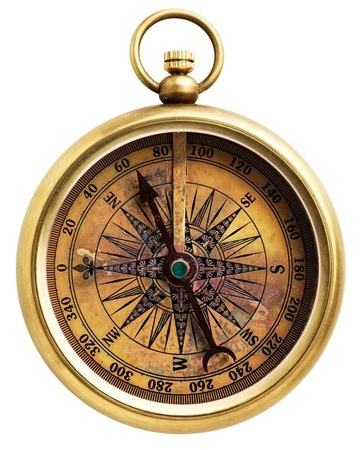
compass


Too often during this process of grieving, I have been angry. As I addressed in the last post, I had been charged with creating an imaginary entity to which I can assign the anger. I chose God. The next chapter in this process is to determine what will make me happy. How do I want my life to look in five years? As one who has been burned by planning in the past, with ashes the only remaining vestiges of the future I once built, this is an immeasurably more difficult assignment.

I want my children to be happy and successful in whatever endeavor they choose. I want them to live wherever they want but I want them to remain close to me emotionally. I want to be the person from whom they seek advice or from whom they seek comfort when life throws them a nasty curve. Outside of that, I want to continue in my job, which brings me joy and satisfaction. I would like to travel. I want Sam to be my tour guide in Italy and Cam to be my guide in the UK. I would like to learn French or Italian. Not because I plan on living there of traveling extensively, but because I have always had problems learning a foreign language and I like the challenge. I would like to learn to play the piano. I would like to read all of the classics. I would like to learn art history.

But will doing these things make me happy? What will people say of me five years from now? Will they say that I survived my wife’s death well? Will they say that I was able to move on and formed a new life outside of my new identity as a widower? Will I be alone? Will I find love again? Will I survive?

The answers to these questions plague me. In many ways, the question is the same: What will make me happy and what will people think of me five years from now? These both boil down to having a fulfilling life following a major upheaval. When I applied for the job I currently hold, I was asked by my boss’s boss where I saw myself in five years. That was four years ago. Rather than dazzle him with my ambition and tell him that I wanted his job in five years, I reflected on the future which lay in tatters before me. And so, I told him that I did not know where I would be in five years. That I respected that I was new to the company and that I would need to learn the company and the industry before laying out a career path. I don’t know if that was the perfect answer, but he told me I was correct to temper my ambitions with reality. I got the job.

Today I feel that I am being asked the same question. Where do I want to be in five years? But rather than a career path question, this is a life path question. Again, I feel that I must have the same response. I need to learn the landscape of this new life, acknowledging that it is new and different than the life I lived before. In many ways, I am newborn. I have the second part of my life before me. But I must respect that I have little in the way of plans or ambitions that bear any resemblance to the life I led before. True, I’ve always wanted to travel, but now I face the prospect of travelling alone or as a third wheel when my children take their eventual families on vacation. This does not excite me. It’s a little like being the afterthought invitation for a party after you’ve heard about the party but hadn’t been originally invited.  Other ambitions (reading, learning a foreign language, playing the piano) are nice wishes, not life plans. True, they will bring me joy and occupy my time, but are these life plans? I don’t know. My life plans before were to work until I was ready to retire, then Lisa and I would travel together around the country and around the world, with or without the kids, depending on their station in life. We would spend our time in our home together or on the Cape. But as I pull at that thread now, there is little desire to travel alone and the thought of an empty, silent home (soon to also be devoid of our little white ball of canine love) terrifies me.

And so, to this question, I have no firm response. The future before me is a blank slate, equal parts terror and excitement. Perhaps over time, I will see the shimmering outline of a path through the thicket, but right now there are only brambles and thorns, silence and loneliness. And so I read my classics, look forward to studying piano, and tackling French or Italian. My future, in ashes, will rise like the phoenix, whether I want it to or not, whether I plan it or not. Better to have a say in the process than be overrun with other’s expectations. To the question, how do I want people to see me in five years, I can only say that I hope they see me as living my life, a different life, maybe a better life maybe not, but a life denied my wife.
Dear God

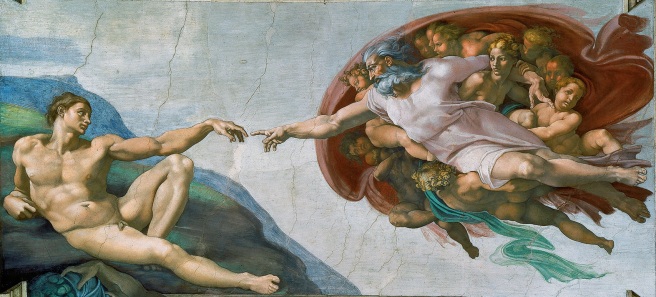
Creation of Adam“Take your anger and put it into an imaginary being. That way you can yell at the entity and throw it out when you don’t want to feel the pain of the anger anymore or if you don’t have the time to deal with the anger.”


These are the words of the grief counselor, to whom we (the kids and I) have been going since mid-December. I told her that I am angry about the fact that cancer first took my father, then my wife, and now will take my dog. First she said, “Why do you have to do anything with the anger? Aren’t you allowed to be angry? Aren’t you justified?” My response was that there is no outlet for the anger, no target. I cannot remain so angry for so long that I shut down emotionally and socially. I have enough problems being social as it is!

So I, as my homework for this week, am to create an entity, an imaginary being, to whom I can ascribe the evil characteristics necessary to house my anger. I could create a virtual punching bag and anthropomorphize it to the point where it has horns and a tail upon which I can stomp and to whom I can scream. However, that form does not appeal to me and seems shallow and unfulfilling.

As an atheist, I have a better solution. God. How could a benevolent God inflict my wife with a terminal disease that would kill her? How could a caring God do that to my children? To me? How could a loving God condemn a dog to three separate forms of cancer within it’s short life? How could a generous God condemn my father to an incalculable amount of pain in the months before his death? And on a grander scale, how could an altruistic God kill thousands of children each year through malnutrition, starvation, disease, or war? Because I can conceive of no rational reason for such a dereliction of duty, I choose to believe there is no supreme being above. It is easier for me to believe that nature simply evolves in chaos than to believe a God could be so inept or uncaring.

So, if there is a God, I do not believe he/she is omnipotent and all powerful. That said, and as part of my grief counseling homework for this week, here is my creation of an imaginary being to whom I can bequeath my anger. God. And now my letter to God:

Dear God,

How could you? How could you either give my wife cancer or allow her to contract it? How could you do that to my children? How could you make her suffer through the barbaric treatments you have allowed medicine to create in an attempt to counter your unholy and defective DNA? How could you take her when she was still so young and we had a future planned together that now is reduced to ash? How could you? Why?

How could you put my father through so much pain that it killed him? How could you allow that much pain to transfer to my mother who now survives him but cannot live without him? How could you put my brother and sister through the act of watching him suffer with no ability to alleviate his pain? How could you? Why?

How could you give my simple, silly dog, whose sole purpose in life is to love us and make us happy, three different forms of cancer in his short life? How could you take his eyesight and force him to endure countless surgeries to save his back legs from your poor design? Why do you make him suffer so much and force us to euthanize our pets without allowing us to end the suffering of our human loved ones who endure so much pain? How could you? Why?

How could you allow the children of the world to endure unwarranted pain and suffering simply because of the circumstances under which they were born? How could you allow men to create war against one another for, ultimately, silly political, geographic, or religious reasons?  Why do we have to suffer so much on this earth? How could you allow all of these things to occur while remaining unseen and unresponsive? How could you? Why?

Are we simply to fall back on “faith?” A faith that you are really there and listening and that we will be rewarded in paradise for all of our suffering. Well, I don’t buy into it and find that if you do exist, you are either malevolent, uncaring, or incompetent. If you are malevolent, you are not worthy of our deference. If you are uncaring you are also not worthy of our blended knee. If you are incompetent you are to be pitied and not revered. Occam’s Razor demands that the most likely solution is that you simply do not exist. But for the purposes of grief mitigation, I will allow that you exist, but only for the purposes of my derision, my anger, and my pain.

Most sincerely,

Thanksgiving (or Fortunate Enough to Hurt)

45604227_mIf you’re lucky, once in a lifetime a love comes along that shakes you to the very center of your being. If you are lucky enough to have been afflicted with such a love, you must acknowledge that one result will be that time will speed up. There is a phenomenon known as Vierordt’s Law, which states that short-term time is overestimated and long-term time is underestimated. In short, days seem to last incredibly long and years fly by. This can be best summed up in an example. When the kids were first born, everyone we met told us to enjoy these times because time would quickly pass. At the time, all I wanted was one good night’s sleep. That was 21 years ago, and I finally understand what those wise people meant.

Now I suffer from another phenomenon, hiraeth, which is a Welsh word meaning “homesickness for a place you can never return to.” It is when you lose that special person that these two phenomena fuse in a pain we simply call grief. Time has slipped away, and we cannot go back to that happier, simpler time. It is simplistic to suggest that one has a choice to appreciate the time spent with that great love or to begrudge the time stolen by disease. To choose the former is to ignore the heart-wrenching hiraeth felt by the loss. To select the latter is to ignore the joy of a lifetime spent in Vierordt’s miasma. Rather, it is reasonable to expect to experience both options (often within the same day). To acknowledge both the joys spent with a great love and the pain of their loss is the price of having such a great love. To easily overcome such a loss indicates that the love was not as interwoven into your soul as you thought. To find the loss debilitating at times means a genuine, deep love and an equally devastating loss.

And so, today I must give thanks for both the time I had and the pain I feel now because I now know I cannot have had one without the other without preceding her in death.

There was a time when I was alone and happy to be so. At least I thought I was happy. What I was was lonely and determined that I didn’t need anybody. High school friends were off doing things I was not comfortable doing (drinking, drugs) and I was unwilling to give up that kind of self-control.

Now I find that I am lonely and determined that I do need people. However, after spending a lifetime eschewing friendship as an unnecessary protuberance of my streamlined and happy life, I find myself without friends when I need them most. I have many acquaintances, genuine and sincere, but no friends. It is my own doing and based on the platform that I had married my best friend so any more friends would be superfluous. Besides, I was not bright enough or socially sophisticated enough to handle more than one friend. Now she is gone, and I am both alone and lonely, left to my thoughts and memories. I miss her so much. And I acknowledge that I must suffer this great pain because I have such wonderful thoughts and memories.

To all of my acquaintances, I wish you a happy Thanksgiving and hope you appreciate, most importantly, your family and friends. Thanksgiving is a day to appreciate those who have given you so much, especially love.

Quirks

She had too many clothes

She drove like a madman

She was always running late

She was honest to a fault

She shoved her leg under me while I was sleeping

She drank Diet Coke for breakfast

She never put milk on her cereal

She put too many lights on the Christmas tree

She recited silly campfire songs

She was not perfect

Thankfully

It is the differences that make us interesting

It is the differences that attract us

It is the differences that can repel us

When we accept the differences in another

We call them quirks and learn to live with them

Now that she is gone, it is the quirks I miss the most

I don’t have too many clothes

I don’t drive like a madman

I’m never running late

I believe in the value of a white lie

I miss her leg under me

I now drink Diet Coke for breakfast

But I still put milk on my cereal

I don’t want to put up the Christmas tree

I miss those silly campfire songs

Because she was perfect to me.