Dear God

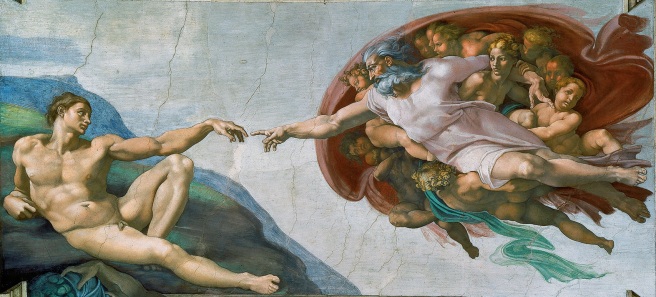
Creation of Adam“Take your anger and put it into an imaginary being. That way you can yell at the entity and throw it out when you don’t want to feel the pain of the anger anymore or if you don’t have the time to deal with the anger.”

These are the words of the grief counselor, to whom we (the kids and I) have been going since mid-December. I told her that I am angry about the fact that cancer first took my father, then my wife, and now will take my dog. First she said, “Why do you have to do anything with the anger? Aren’t you allowed to be angry? Aren’t you justified?” My response was that there is no outlet for the anger, no target. I cannot remain so angry for so long that I shut down emotionally and socially. I have enough problems being social as it is!

So I, as my homework for this week, am to create an entity, an imaginary being, to whom I can ascribe the evil characteristics necessary to house my anger. I could create a virtual punching bag and anthropomorphize it to the point where it has horns and a tail upon which I can stomp and to whom I can scream. However, that form does not appeal to me and seems shallow and unfulfilling.

As an atheist, I have a better solution. God. How could a benevolent God inflict my wife with a terminal disease that would kill her? How could a caring God do that to my children? To me? How could a loving God condemn a dog to three separate forms of cancer within it’s short life? How could a generous God condemn my father to an incalculable amount of pain in the months before his death? And on a grander scale, how could an altruistic God kill thousands of children each year through malnutrition, starvation, disease, or war? Because I can conceive of no rational reason for such a dereliction of duty, I choose to believe there is no supreme being above. It is easier for me to believe that nature simply evolves in chaos than to believe a God could be so inept or uncaring.

So, if there is a God, I do not believe he/she is omnipotent and all powerful. That said, and as part of my grief counseling homework for this week, here is my creation of an imaginary being to whom I can bequeath my anger. God. And now my letter to God:

Dear God,

How could you? How could you either give my wife cancer or allow her to contract it? How could you do that to my children? How could you make her suffer through the barbaric treatments you have allowed medicine to create in an attempt to counter your unholy and defective DNA? How could you take her when she was still so young and we had a future planned together that now is reduced to ash? How could you? Why?

How could you put my father through so much pain that it killed him? How could you allow that much pain to transfer to my mother who now survives him but cannot live without him? How could you put my brother and sister through the act of watching him suffer with no ability to alleviate his pain? How could you? Why?

How could you give my simple, silly dog, whose sole purpose in life is to love us and make us happy, three different forms of cancer in his short life? How could you take his eyesight and force him to endure countless surgeries to save his back legs from your poor design? Why do you make him suffer so much and force us to euthanize our pets without allowing us to end the suffering of our human loved ones who endure so much pain? How could you? Why?

How could you allow the children of the world to endure unwarranted pain and suffering simply because of the circumstances under which they were born? How could you allow men to create war against one another for, ultimately, silly political, geographic, or religious reasons?  Why do we have to suffer so much on this earth? How could you allow all of these things to occur while remaining unseen and unresponsive? How could you? Why?

Are we simply to fall back on “faith?” A faith that you are really there and listening and that we will be rewarded in paradise for all of our suffering. Well, I don’t buy into it and find that if you do exist, you are either malevolent, uncaring, or incompetent. If you are malevolent, you are not worthy of our deference. If you are uncaring you are also not worthy of our blended knee. If you are incompetent you are to be pitied and not revered. Occam’s Razor demands that the most likely solution is that you simply do not exist. But for the purposes of grief mitigation, I will allow that you exist, but only for the purposes of my derision, my anger, and my pain.

Most sincerely,

A Note To My Children This Christmas

Broken Ornament1

Christmas is supposed to be the time of year when you indulge the child within; a time when the twinkling lights and Christmas songs fire the imagination and spark precious memories. When decorating the tree reminds us of all the Christmas’s past as we hang our favorite ornaments. When a trip to the Providence Civic Center to see the Trans-Siberian Orchestra and their “frickin’ lasers” would indulge both the seasonal sentimentality and the rock show need in us.

However, this Christmas there will be no Christmas tree, no Trans-Siberian Orchestra, no lights or lasers. When we lost your mother, we relegated those good times to memory, never to be added to – only to be recalled. There will never again be nine Christmas trees decorating 3 Deerfield Drive. There will probably never again be a house built with an outlet beneath every window so that electric candles can easily be displayed.

We always had a beautiful garden. I say we like I had anything to do with it. I pruned and weeded, but your mother designed the garden and hand-selected all of the plants within it. Now I will move to a condo with no garden, and the best I can do is a patio tomato and a house plant. No more luxurious rose bushes, the names of which I had committed to memory. Now it is all only a memory. I will miss those roses. I almost cried the other day when we went to Kroger. As we filled the carriage with supplies, we passed the florist section. I would normally buy a dozen roses. Mom and I had a ritual. I would buy them and bring them home. She would complain that we couldn’t afford to buy roses every time I went grocery shopping. I would lie and tell her I had a coupon. Now there is no need for me to buy roses. Another painful reminder that she is gone forever.

Nothing makes you appreciate what you have until it’s gone. I had life by the balls. I had a wonderful wife, two great kids, a beautiful home that we had built, and a job at which I could make a decent living. I had a fluffy white dog and two nice cars, everything but the proverbial white picket fence. I thought I appreciated everything I had and, to a point, I did. However, it wasn’t until cancer visited our house in 2008 that I began to see how fragile my grasp on this reality was. And now, my wonderful wife is gone, our beautiful home is gone, you two are one year away from beginning your lives apart from me, and Delbow is old and in constant pain. I had my time. I had my life. Now it is your turn. I do not begrudge you the incredible futures before you.  I simply wonder when it was agreed that cancer could shatter my future at fifty. I still have a nice car and my job is better than ever, but my world has slipped over the event horizon.

I am so grateful for you both. You have been through hell. And despite that, you both completed the fall semester of your senior year with amazing grades. But I know you are hurting. As long as we continue to talk to each other we will get through this and into a different “normal.” It has been three months, and this is a difficult time in our grieving process. We realize Mom is no longer coming home now.  We are beginning to understand that and wow, it hurts.

Some memories are fading, like the names of all of the medications she was on at the end. Something so important at the time has begun to fade and, despite all reason and rationale, it begins to fester within me as guilt that I am beginning to forget her. I know that is silly, but the guilt is incredibly real. I also feel guilt for being the one to survive, given how close you were to Mom. I wish it could have been me that had cancer and died. Not because I would want to miss anything of your lives or the incredible things you have yet to experience, but because I know what an amazing person Mom was and how disgustingly unfair this all is to her.

Seven years of fighting did nothing to prepare us for her loss. And I know that any smiles or laughs we have are met with the urge to share them with Mom. The fact that she’ll never be there again is the sharpest pain I’ve ever felt. My one wish this Christmas would be to stop your pain by having Mom back –and healthy. But I don’t believe in Santa Claus anymore and even if I did, I believe that this wish would be beyond his reach. I’m so sorry. I hate this new normal, but I love you both so much.

Reliquary

reliquary

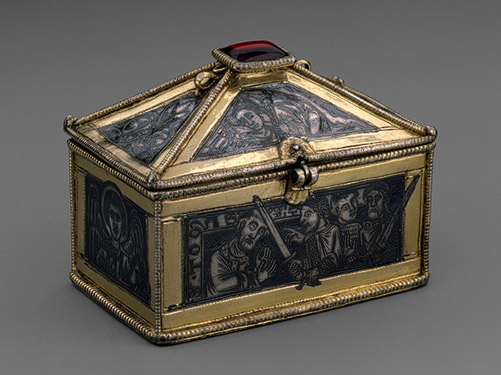
Sacred items and memories dominate my thoughts now. There are the design elements throughout the house, all selected with great care by my wife. There are the memories of daily events now lost forever. There are the fountain pens bequeathed to me following my father’s death. Everywhere I turn in this house I am reminded of cancer’s cost and the future’s lost. This house has become more museum than home. I don’t so much live here as exist; a docent residing after hours at the gallery.

I am told that I need to move on, to build a new life, a new future. But I am shy to begin. How can I be confident enough to embark on a new future when the one I spent 25 years forging was so easily destroyed? It has been three months now since her death and I am lost.

Small things both ground me and terrify me. I find comfort in the daily routine. However, I now carry a debilitating loss of confidence I never expected. I also have a terrible time concentrating. Both of these developments are troubling to me. I can’t read a book without my eyes glossing over after two minutes, regardless of the content. I love to read and have too much free time in which I could theoretically be reading. However, I cannot concentrate enough to read. It is incredibly frustrating. I feel like Burgess Meredith in that famous Twilight Zone episode where he is a quiet librarian who’s single wish is to be left alone to read. After a catastrophic nuclear attack, he finds himself the lone survivor with all the time in the world and all the books of his library at his disposal. However, at the very end, he accidentally shatters his reading glasses.

Photographs set off a cascading series of memories, and the house is flush with photographs. However, there will never be another photograph, never a new memory. How can I understand that this is forever? This new “normal” is terrible.

I do not remember my dreams, if I do dream. The kids dream of Lisa, sometimes it is sad, sometimes it is fun and I don’t know how to feel about that. I am not burdened by dreams of Lisa sick or dying, but I am not visited by her in better dreams either. All I have are memories. I am living out of a reliquary.

My Shifting Memory

13282728_s

‘Tis in my memory lock’d,

And you yourself shall keep the key of it.

Shakespeare, Hamlet, I, iii, 85

In an episode of The West Wing, Deputy Chief of Staff Josh Lyman experiences a breakthrough in his repressed, post-traumatic stress disordered memory when he realizes that the sound of music reminds him of sirens following his being shot during an assassination attempt on the president. Pleased with himself, but wary of any ongoing associations, he asks his therapist why he shouldn’t be worried. The therapist, while packing up his belongings at the end of the long session, replies simply, “Because we get better.”

This scene reminds me that while time goes on, if we’re lucky and listening, we understand ourselves a little better each day. So it is with my grief and the grief of my children following my wife’s (and their mother’s) death 80 days ago. We seem to have undergone, while no one was looking, a transition in grieving. We have all felt it and didn’t know why we were being buffeted by our loss differently than before. No longer are we, exclusively, thinking of the night Lisa died or the days and weeks leading up to that day. Rather, because of daily life, we see the future and are having a similarly difficult time grappling with the concepts of never seeing Lisa again and that lasting forever. “Never” and “forever” dominate our thoughts now.

I don’t know where any of this falls on the great wheel of grieving, and I don’t care. I find the entire Elizabeth Kübler-Ross paradigm, as presented in popular culture, flawed. I do not see it as a linear progression, while acknowledging it was never intended to be. However, society seems to think that you go cleanly from one phase to the next on your way to eventual acceptance and a return to “normal.” Instead, I find that through each step of grieving, as we did in our various phases of Lisa’s illness, we establish a new normal each day. Some days string along neatly with the previous while others strike us as different. However, each day presents us with what we consider to be normal. We get up, we shower, we go to work or school. When we repeat this structure enough, it becomes our “normal.” When our thoughts focus on a specific concept of grieving, that too becomes our “normal.” And so, we each seem to have transitioned to the difficult process of understanding and accepting “never” and “forever.” That is not to say that we cannot, at a moment’s notice recall the last night or last few days, but the details are becoming fuzzy around the edges. No longer can I recall the names of all of the medications on which Lisa was dependent at the end. I can recall their color but not their names.

This transition to a new normal also carries with it significant guilt. If I can no longer recall the names of the medications, which were so important to her comfort and survival, doesn’t that, by extension, mean that I am slowly forgetting Lisa? When details fade, it portends an overall and irrational fear that all will fade. When I think of Lisa now, the first thing I think of is not her death or even her illness, but her smile and her laugh. This reordering of thought worries all of us. The mind is an amazing thing, and we carry memories in our mind the way we think we recollect the actual event having unfolded. And what was critically important to me might not have been important to either of the kids, while something so critical to them might have escaped me and faded in my mind before it settled into theirs. This is another form of guilt. How can I not find the important events in my children’s lives important enough to remember?

Memories are ethereal and, ultimately, shapeable. Just as witnesses to an accident fail to make reliable reporters, so too, I find, that our memories morph into something we can easily recall. And each time we recall that memory we recall the memory shaped in our mind, no longer the actual event. Over time, the recollection of the actual event fades, and we can only recall our individually shaped memory. Perhaps that is why I can no longer recall all of the medications. My memory is being reshaped. I would like to think that Lisa has had a hand in reshaping my memory. Over time, perhaps, she will reshape my memory to no longer feel the horrible pain of her loss. It is locked in my memory, and she has the key.

Wrestling the Unseeable

44589544_m
When Lisa was suffering the horrific, barbaric, debilitating effects of chemotherapy, first via standard treatments and then later clinical trials, there was nothing I could do to alleviate her pain. I was constantly chasing the speeding eight ball trying to understand the side effects of her treatment, knowing all the while that I was helpless to mitigate them. The best I could do was to be with her. In seven years of treatment, I never missed an appointment or treatment with her. I was where I needed to be, by her side, as her husband and her friend. In truth, it was all I could do for her. Unfortunately, we wrestled the unseeable and lost.

Now she’s gone forever, and I’m still helpless to alleviate anyone’s pain or suffering. This time, it is my children who suffer as they try to come to terms with losing their mother. It is as if Lisa’s cancer continues to punish my family. The bad dreams at night and the painful realizations in the light of day are both beyond my ability to ease. I’m tired of losing to cancer. All I can offer them is loving words, long distance hugs, and a virtual shoulder.

At the party we held in Lisa’s honor after she died, the kids and I each gave short speeches. Cameron stated in his that, while Lisa had died, cancer had not beaten her, she had taken the bastard with her. Unfortunately, I think he overstated it a bit because he, his sister and I are still suffering from cancer’s destructive forces, this time in the form of grief. I continue to wrestle the unseeable and lose.

Thanksgiving (or Fortunate Enough to Hurt)

45604227_mIf you’re lucky, once in a lifetime a love comes along that shakes you to the very center of your being. If you are lucky enough to have been afflicted with such a love, you must acknowledge that one result will be that time will speed up. There is a phenomenon known as Vierordt’s Law, which states that short-term time is overestimated and long-term time is underestimated. In short, days seem to last incredibly long and years fly by. This can be best summed up in an example. When the kids were first born, everyone we met told us to enjoy these times because time would quickly pass. At the time, all I wanted was one good night’s sleep. That was 21 years ago, and I finally understand what those wise people meant.

Now I suffer from another phenomenon, hiraeth, which is a Welsh word meaning “homesickness for a place you can never return to.” It is when you lose that special person that these two phenomena fuse in a pain we simply call grief. Time has slipped away, and we cannot go back to that happier, simpler time. It is simplistic to suggest that one has a choice to appreciate the time spent with that great love or to begrudge the time stolen by disease. To choose the former is to ignore the heart-wrenching hiraeth felt by the loss. To select the latter is to ignore the joy of a lifetime spent in Vierordt’s miasma. Rather, it is reasonable to expect to experience both options (often within the same day). To acknowledge both the joys spent with a great love and the pain of their loss is the price of having such a great love. To easily overcome such a loss indicates that the love was not as interwoven into your soul as you thought. To find the loss debilitating at times means a genuine, deep love and an equally devastating loss.

And so, today I must give thanks for both the time I had and the pain I feel now because I now know I cannot have had one without the other without preceding her in death.

There was a time when I was alone and happy to be so. At least I thought I was happy. What I was was lonely and determined that I didn’t need anybody. High school friends were off doing things I was not comfortable doing (drinking, drugs) and I was unwilling to give up that kind of self-control.

Now I find that I am lonely and determined that I do need people. However, after spending a lifetime eschewing friendship as an unnecessary protuberance of my streamlined and happy life, I find myself without friends when I need them most. I have many acquaintances, genuine and sincere, but no friends. It is my own doing and based on the platform that I had married my best friend so any more friends would be superfluous. Besides, I was not bright enough or socially sophisticated enough to handle more than one friend. Now she is gone, and I am both alone and lonely, left to my thoughts and memories. I miss her so much. And I acknowledge that I must suffer this great pain because I have such wonderful thoughts and memories.

To all of my acquaintances, I wish you a happy Thanksgiving and hope you appreciate, most importantly, your family and friends. Thanksgiving is a day to appreciate those who have given you so much, especially love.

I Hate This Life

38515506_m

The bell strikes one. We take no note of time                                                             But from its loss.                                                                                                                                 – Edward Young, Night Thoughts. Night I, l. 55, 1742.

I hate this life. In fact, it is “life” only in name. I continue to inhale and exhale and my heart continues to beat, but I really only exist. The day begins with my alarm at 4 am. I open my eyes to the empty space in bed where Lisa used to sleep. I get ready for work and feed Delbow, whose pancreatitis and pneumonia are being treated but for whom I can do nothing. I leave for work at 5 am and listen to a book on the way. At work, I am either busy or try to stay busy until 3 pm when I drive home listening to the same book. I open the door and greet Delbow, giving him a cookie. I change and sit in the living room. It is 4:30. And time stops.

I prepare everything for the next morning. I ready Delbow’s medications. I feed him. I feed myself. It is all mechanical, devoid of interest. The house is no longer a home. It sits unused. The gardens are overgrown and weedy. All of Lisa’s belongings still reside where she left them. Her glasses. Her purse. Her walker stands folded in the laundry room. I watch television because it passes the time. It too is lifeless. Hours of “How It’s Made” on the Science channel. After an interminable amount of time, I look up. It is 7:30. Is it too early to go to bed? To escape this mental prison? I go to bed deciding to read a book. My mind is incapable of concentrating these days and I gloss over a page of text before realizing I have absorbed nothing of the story. I put the book down. I cannot sleep yet. I turn the television back on. There is a Modern Family repeat on. I’ve seen it twelve times before. I anticipate the lines of the show, wishing I could  sleep. Finally, after a marathon of Modern Family and The Big Bang Theory reruns, I turn off the television and shut off the light. My mind races and thinks of all things Lisa. I cry. At some point, I fall asleep.

Oh, I know what Lisa would say. First, she would give me a Cher to Nicholas Cage in Moonstruck slap and tell me to snap out of it.Then she would tell me that I need to live because I can and she cannot. She would tell me that I have to stay healthy, physically and mentally, for the kids. That they are relying on me and taking coping cues from me.  I don’t want sympathy. I don’t want a shoulder upon which to cry. I want Lisa. Everything will get easier with time, they say. Time. I have time! I have too much time and not enough answers. I understand all of these things in my head, but my heart is broken and empty, grieving for what it cannot have.

At 3 am the phone rings. It is Samantha. She has had a bad dream about Lisa and wants to talk it out. I am grateful for her call. She relates the details of the dream and I cry too. How can I not? It is heartbreaking. I tell her I hate this life and she says she understands. We talk about her art and try to change the subject. Eventually, she says she feels better and apologizes for calling. I tell her I’m glad she called and she says she can go back to sleep. I say I love you, she says she loves me, and she hangs up. It is 3:40. I lay there replaying the conversation until the alarm goes off at 4 when I look over at the empty space where Lisa used to sleep. Rinse. Wash. Repeat.

Hiraeth

7617471_s

Time steps on wounds and walks past victories, pausing for neither pain nor happiness. It is two months tonight since Lisa died. The world keeps spinning, day surrenders to night and night back to the day. The clock whirls forward, and the calendar continues to shred. In two weeks, it will have been a year since my father died. Where has the time gone? On the best of days, I am uncomfortably numb, and on the worst an open sore. When will it stop?

I talk to people, and they suggest I be happy for the time we had and not angry for the time stolen. I know these people are genuinely trying to help, but I cannot get past cancer’s thievery. I am grateful for the time we had, most of it. Some of it was horrible, some of it a nightmare of pain and suffering. But most of it was terrific and provided me with (I guess) a lifetime’s worth of good memories. Charles Baudelaire wrote, “I have more memories than if I were a thousand years old.” How fortunate for him. I have half a lifetime’s worth of memories that must last a thousand years.

My daughter wrote the piece below. It is insight into her pain and loss. May she find peace in writing, may we all find it.

Hiraeth

I’m so tired of fighting. Fighting with myself and fighting with others. Fighting my situation. Stories have conflictual perspectives. Person vs self, person vs person, person vs nature, and person vs society. I feel like a part of all these conflicts right now. I’m angry and frustrated with myself all the time. I’m arguing with everyone- with Tristan, with Graydon, Cam- I disagree with classmates, God and I aren’t on speaking terms, to say the least. And I feel like most people have forgotten what I’m going through. I’m tired of it all.

The thing with grief is that it’s never ending. It’s like a homesickness for a place that no longer exists. I can no longer return to her hugs. To her voice calling me “punk”. To her smile. Her scent combined with “passion” perfume and Coast soap. I can never return to her laugh, her soft skin, her sparkling eyes. There will never be a time when I can go back. I am told I must go on, that I must live for her, and for me. But I don’t want to go on. I want to go back. I want to hug her again. I miss the feeling of her skin. I miss the feeling of her arms and her hands. I miss walking up to her, leaning my head on her shoulder, and saying, “Hi” or “I love you” just because.

I went home a weekend or so ago. I wanted to go home, see Dad, and spend some time with him, hopefully make him feel less lonely for a few days. But I honestly didn’t want to go home. I didn’t want to sit on the couch, in the middle, because Dad sits on the left, and Mom on the right, her feet up on the edge of the coffee table, just watching TV. I didn’t want to walk into her bedroom and see her lonely glasses on the bedside table. I didn’t want to see the bathroom she fell in near the end when I didn’t catch her.

I didn’t want to think about how she tried to comfort me after it happened, telling me it wasn’t my fault she fell. Telling me it was ok, and not to cry. Telling me that this kind of thing was bound to happen sooner or later. She was bleeding from her hands where the textured wall had cut her. Bruised on her bum where she fell on the small metal trash can. I can’t think about that day without wanting to scream, sob, and rip my hair out. It was my fault. But it wasn’t my fault, I couldn’t get past the walker blocking the door. But it was my fault, why hadn’t I moved it so I could be closer. It wasn’t my fault, and I know that. But it was, and always will be, and I know that too.

I didn’t want to go to my room. Where I’d go when we were fighting, where I would sit on my bed, and fume. I didn’t want to close the door and wait for her to open it so we could make up. I didn’t want to go in the kitchen or the garden. I want to leave this house as a relic in my mind- nothing to be touched again by any but her. But I also never want to leave because I will never again live somewhere I can picture hearing her footsteps. I don’t want to leave the room she died in; me, sitting on the couch, when Dad called our attention- “Guys,” and then silently as we gathered around. Then waiting, then waiting, then…

But I also never want to be in that room again.

I’m keeping it together in school. I can go on autopilot and joke with people and listen attentively to their petty problems, and laugh when I need to. I can focus on lectures, and participate in complex discussions in class. I can talk all day about Freud and Tocqueville and oil painting.

But then I go home and I’m alone. And I get thinking. And I can’t stand it. And wherever she is, I desperately want to be too. I’m lonely and my brain is moving too fast. And then it’s 1:30 in the morning or night, and it’s one of those terrible moments when your Mom is dead, your best friend gone, and everyone has forgotten how much everything hurts.

Everything is spinning and I’m juggling and juggling, but I’m starting to drop some things.

Disappointing the Page

The blank page stares back at me, expectantly. My head aches from coughing, and my throat is on fire. My eyes and nose have sprung leaks and drip incessantly. I’m sitting here alone listening to music and trying to write something intelligent. The Benadryl is in full force, and my head spins, looking for a pillow with which to snuggle. The kids are back at school, and I am alone. The dog has pneumonia and pancreatitis and sits below me looking at me as if I might have some noble answers for him. I do not.

Shouldn’t I be up doing something? Don’t I have a honeydew list somewhere and if so, does it matter? I am lost in the music, searching for that perfect place in that perfect song when the guitarist goes away within himself on a live recording. He can no longer hear or see the crowd, but disappears within himself and the Fender extension of himself. If I could play like that on one song, I would be happy and never pick up the guitar again.

The rain has stopped, not that we had any flooding in my neighborhood. I understand that two people in Houston died during the storm. In other news, four people were beheaded by ISIS and all souls were lost aboard a Russian jet when it crashed in Egypt. Happy news from all around the globe.

It’s Halloween, the day when Lisa would answer the door full of excitement to see the costumes worn by the youngest children. It is the first holiday I have spent alone. I am not happy about it but resigned to the fact that I am now alone and forever shall be. I am not the bar hopping type and feel too old for that anyway. And I don’t think I’ll be going on Farmers Only anytime soon to set up an account. Can you imagine? I am constantly adding to my retirement account but have no idea why. I tinker with the assignments and track results meticulously. To what end? I guess I’ll have a nice nest egg for the kids to split when I’m gone. I honestly do not see a future for myself.

If this is the grieving process, I can’t wait to get my certificate of completion. I had the first dream I can remember about Lisa the other night. She was not sick, in fact, she was healthy and full of life. She told me she was getting married, that our marriage was over, and she was moving on without me. What a mix of emotions I had when I awoke. In the months preceding her death, I had only one other dream about her that I can remember. She was sick and knew she was dying. She told me to buy a condominium on the water in Newport. Not sure what to do with that.

I don’t’ know what to do anymore. The house is bereft of life, food, and interest. My heart aches all the time, and I cannot turn without feeling the knife plunge into my chest as I see another design accent Lisa created or how she took this dwelling and made it home. When does this end?

I hate to sound as if I’m complaining. I have it pretty good. But without anyone to share it, it is meaningless. I am hanging on to my children with eagle talons, unwilling to acknowledge that they are one year away from leaving me for good (as they should). I insinuate myself into their lives to belong. Without them, I am a shell. It is hard enough being a single parent without facing the fact that even that job will expire next year when they strike off on their own. Oh, sure, I’ll be here in case they have a problem, but the family unit will be broken permanently. My eyes are leaking again. But I don’t think it is the fault of the cold I have. No, this is from deep inside and beyond the reach of a virus. This is emotion and truth. My chest hurts and all I want to do is talk to Lisa about it. I want to feel better; I want to feel like I did when I had a future. But she is gone, and I am alone.

How long do I wear my wedding band? Is there a book somewhere that tells you what is acceptable? I am an atheist, I think. Therefore, there is no heaven or hell, only this life. So if it is until death do us part, I should be able to remove my wedding band without guilt. So why do I want to hold onto it? Is it in case there is an afterlife? Do I still have a chance to spend a future with Lisa beyond this realm? My head says no, but I continue to wear the ring as if it is some ticket to a future paradise. I cannot square that circle in my head.

I have written 1,000 words now and have said nothing, both disappointing my expectant page and myself. There is no passion in my soul right now. I am in search of something to do. Some small victory to achieve which will validate my existence. Any ideas? All I do is stare at Facebook, Twitter, and CNN. These are the tabs open on my browser. All I get from them is news and memes from friends on Facebook, trolls on Twitter, and bad news from CNN. Surely there is more to life. I am (only) fifty years old. Do I not have something else to contribute? The guitarist has gone away now. I am going with him. I cannot play it, but I can feel it. Do not come back to the band, play within yourself and without yourself and carry me along on your notes like a wave at the beach. I do not want to drown, but I do want to taste the life that sea water offers. I miss Lisa. I miss my life.

Scabs and Justice

CancerNothing heals the wounds of loss. As Rose Kennedy famously supposed, “It has been said, ‘time heals all wounds.’ I do not agree. The wounds remain. In time, the mind, protecting its sanity, covers them with scar tissue and the pain lessens. But it is never gone.” As anyone who has lost someone close can attest, these words ring devastatingly true.

There is nothing to be gained by picking at the scab covering the wound. To willfully go back in time in your head to the horrible end is nothing but masochistic. There is nothing cathartic about it. No therapeutic healing is to be found. It involves only pain and prevents the wound from ever scabbing over.

However, it should be noted that not picking at the scab does not equate to compartmentalizing the loss and never dealing with it. Putting the loss aside and not addressing it emotionally is a recipe for future heartache compounded by the loss of time one could have used to help those around them feeling the loss cope better. In short, ignoring the problem won’t make it go away.

I’ve found that the emotions below the surface ooze out like so much pus and burn without warning, whether you are prepared for it or not. While the path to emotional health is anything but linear, it does afford me the knowledge that I’ve faced these various phases of loss before, usually many times before. If I am angry that my wife died, I know I’ve been angry at this before and at some point (and usually in spite of whatever actions I take), I get past it. The anger is real and immediate, consuming all other emotions, but it does ebb. It usually trades places with overwhelming sadness as bitter tasting as when the original loss took place. The anger I felt in my chest gives way to a burning I can taste. And again, all of these changes in emotion occur without my picking at the scab; they just occur without warning and are all consuming.

Sandy Phillips, the mother of one of the victims of the Aurora theater shooting in 2012, said in a television interview regarding the ultimate verdict of the then ongoing murder trial of the monster responsible that there could never be justice because justice would involve bringing back her daughter. How that resonates with me now. There can be no justice. And further, just as in Sandy’s case, there is neither justification nor rationality for the loss. Had my wife known she was going to die in order to provide a definitive cure for cancer she would have gladly given her life. However, in spite of her participation in countless clinical trials, none has proven to be the effective cure doctors had hoped for. Each waiver she signed contained language explaining that while it was hoped that there would be a medical breakthrough relating to the clinical trial, she should not expect to be the recipient of that breakthrough. She signed every time without hesitation. But that does not bring justice, justification, or rationality for her loss. The finality of death is non-negotiable and only leads to unsettling silence in the house occasionally drowned out by the din of me screaming in my head. There is no justice. There is no justification. There is no rationality. There is only loss, emotion and scars, barely scabbed over.