
Lost

A sentence in The Silence of the Lambs has always stuck with me. Playing a cat and mouse game with young Clarice Starling, Dr. Hannibal Lecter, in his burgeoning respect for the young FBI agent, slips in a clue to the identity of “Buffalo Bill” by saying, “We begin by coveting what we see every day.”

In other words, what we know, what we’ve experienced, is our “normal.” Every child knows only one childhood, and while the grass is always greener at your friend’s house (because you don’t see their life behind closed doors), we only know our life as “normal.” We are all “middle class” in that respect. In the simplistic world of childhood, we understood that there were kids who had it better than we did and kids who had it worse. We, regardless of who we were, were in the middle. Normal.

In genuine Monty Python “Four Yorkshiremen” tradition, I now look at children today and lament the ease with which they can communicate (email/cell phones), their easy access to information (the internet), the societal shifts in the Overton window concerning LGBTQ+, race relations, and other socioeconomic changes they now see as “normal.” However, I also cringe that my generation didn’t fix enough of the outstanding issues plaguing the America of my youth (and compounded the incomplete list by adding so many more complicated problems). If the goal of every generation is to leave the world better than we found it, we have failed. We are leaving behind a world that may not be inhabitable because of climate change. “Here, kids! Apply this SPF 1,000,000 suntan lotion before going outside, and don’t forget your space suit when walking to the bus stop.”

And it goes far beyond climate change, as catastrophic as that is. Children today see cheating (from Trump on down) as the way to get ahead. And that’s because there are no consequences for bad behavior—quite the contrary. We reward bad behavior with advancement and success (unless you lose to someone less moral than you). Drive 100 mph? No problem. Police are only on tv and in movies. Cheat on your wife? No problem. It must have been her fault. Lie at work? No problem. Blame someone else. There are no negative consequences for bad behavior, only the promise of advancement over those suckers following the rules. And that’s the flipside. Those who are moral and adhere to societal rules are “sheep” destined to be led to slaughter by those not afraid to wield the knife. So, not only are there no negative consequences for bad behavior, but there are negative consequences for good behavior. Think about that.

And don’t come at me with, “It’s because of the lack of God in the classroom.” Evangelicals are the most hypocritical flock around. Already willing to accept the bible, angels, and demons as real (while ignoring Trump’s egregious mendacities, viciousness, and megalomaniacal march toward dictatorship), their unfailing support for him is genuinely disgusting and devoid of logic. Fiction is real and facts irrelevant—Trump’s army of pretzel-twisted moralists.

The “Lost Generation” was so named because so many born between 1883 and 1900 had their youth and young adulthood stolen by World War I and death, and survivors were disenfranchised wanderers condemned to see their children fight and die in World War II.

Our failure to address the problems we inherited, coupled with our selfishness and abdication of responsibility, have created a new Lost Generation. This is a generation born into the normalcy of school shootings, movie theater shootings, grocery store shootings, church shootings, concert shootings, club shootings, (insert setting here) shootings, open carry, concealed carry, constitutional carry, and societal harikari, racism, hatred, whataboutism, science is bad, education is worse, bullshit.

This Lost Generation will raise future generations further devoid of responsibility, racing toward an uninhabitable planet with no backup available and mass shootings so commonplace journalists will no longer cover them. “Thoughts and prayers” will be reserved for events not “baked into” American freedom and exceptionalism. There will be ever more rule-breaking, selfish predators advancing through the devoured crowd of ethical chumps still inhabiting the remnants of civilized society—shame on us. We, Generation X (1965-1980), failed in our mandate to leave the world better than we found it. And we learned it from the generation before us, the Baby Boomers (1946-1964), who taught us excess, greed, and self-centeredness as a winning formula. It was our “normal,” it was what we coveted. So, too, the generations after us, the Millennials (1981-1996) and Generation Z (1997-2012).

“We begin by coveting what we see every day.” It is our normal. And we are raising a new lost generation on a dying planet. We covet that which we know. And all we know is wrong.

Home

537521main_earth_pacific_full

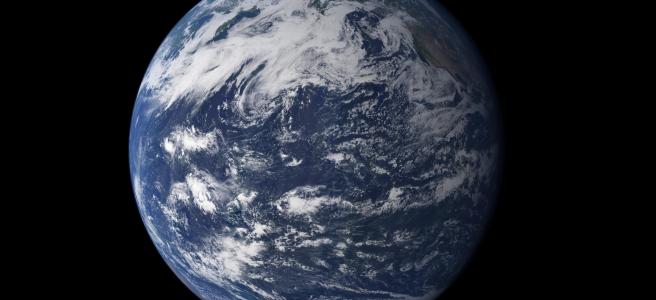
In light of the terrible attacks in Paris, Beirut, Syria, Iraq, and the 88 who are killed with a gun in America every day, I am reminded of the quote from Carl Sagan regarding our pale, blue dot:

“Look again at that dot. That’s here. That’s home. That’s us. On it everyone you love, everyone you know, everyone you ever heard of, every human being who ever was, lived out their lives. The aggregate of our joy and suffering, thousands of confident religions, ideologies, and economic doctrines, every hunter and forager, every hero and coward, every creator and destroyer of civilization, every king and peasant, every young couple in love, every mother and father, hopeful child, inventor and explorer, every teacher of morals, every corrupt politician, every “superstar,” every “supreme leader,” every saint and sinner in the history of our species lived there-on a mote of dust suspended in a sunbeam.

The Earth is a very small stage in a vast cosmic arena. Think of the endless cruelties visited by the inhabitants of one corner of this pixel on the scarcely distinguishable inhabitants of some other corner, how frequent their misunderstandings, how eager they are to kill one another, how fervent their hatreds. Think of the rivers of blood spilled by all those generals and emperors so that, in glory and triumph, they could become the momentary masters of a fraction of a dot.

Our posturings, our imagined self-importance, the delusion that we have some privileged position in the Universe, are challenged by this point of pale light. Our planet is a lonely speck in the great enveloping cosmic dark. In our obscurity, in all this vastness, there is no hint that help will come from elsewhere to save us from ourselves.

The Earth is the only world known so far to harbor life. There is nowhere else, at least in the near future, to which our species could migrate. Visit, yes. Settle, not yet. Like it or not, for the moment the Earth is where we make our stand.

It has been said that astronomy is a humbling and character-building experience. There is perhaps no better demonstration of the folly of human conceits than this distant image of our tiny world. To me, it underscores our responsibility to deal more kindly with one another, and to preserve and cherish the pale blue dot, the only home we’ve ever known.”

An Alien Impression

It’s hard to step back, to see things in a different way, to extract one’s self from the myopic view of daily life.  But imagine if you can, a visitor from another world peeking in on our pale blue dot for the first time.  What would it see?  What would its first impressions of us be?

It would see Earth’s dominant creature huddled on a land composing only one third of our planet’s surface.  Two thirds of our planet, covered in water, the life nurturing element we seek on all other space rocks, avoided here at home.  We want to live near it, but cannot live in it.  It would see our frail, little bodies carried around in individual metal conveyances.  Cars, everywhere cars!  2010 saw the earth surpass the 1 billion automobile mark for the first time.  Nikolaus Otto created a stationary four-cycle internal combustion engine in 1876.  Karl Benz, at the urging of his wife Bertha, registered patent (DRP 37435) on January 29, 1886 for a three wheel, four-cycle motor car.  Gottlieb Daimler and Wilhelm Maybach used a mobile version of Otto’s engine on a stagecoach in 1886.  Everything since, every innovation, advancement and safety feature, is built on this transformational, but dated, internal combustion engine.  Choking on self-inflicted pollution and limited in access by the venous network of roads across our planet, our visitor might wonder at our lack of imagination.  Our visitor would see the tricked-out pickup truck next to us scream down the highway at 80 miles an hour, cutting across four lanes of highway, oblivious to the welfare of his fellow travelers.  From above, this looks callous and entitled, and yet almost stationary!  Even our air travel looks lethargic.  Metal tubes with protruding wings shepherded by specially trained operators, herding people like cattle across states, countries, oceans and continents, flying at a mere 350 mph (or 0.000052% the speed of light) and limited in their decent to specialized patches of cement bedazzled with various colored lights, from which more tendrils of road emerge.

And speaking of light, it would see that we still use the incandescent light bulb!  Thomas Edison’s first commercially practical light bulb was created in 1879.  We still use this as our primary source of artificial light, in spite of the fact that 95% of the energy created is wasted as heat, while only 5% is converted to visible light.  If our visitor could travel the world at night and take a panoramic picture, this is what it would see:

It would also notice that we cannot speak to one another!  At last count, there were at least 6,700 active languages in the world.  According to Ethnologue, here are the top twenty (in terms of the number of speakers):

Language

Speakers

Chinese

1,213,000,000

Spanish

329,000,000

English

328,000,000

Arabic

221,000,000

Hindi

182,000,000

Bengali

181,000,000

Portuguese

178,000,000

Russian

144,000,000

Japanese

122,000,000

German

90,300,000

Javanese

84,600,000

Lahnda

78,300,000

Telugu

69,800,000

Vietnamese

68,600,000

Marathi

68,100,000

French

67,800,000

Korean

66,300,000

Tamil

65,700,000

Italian

61,700,000

Urdu

60,600,000

You may notice that this accounts for only 3,679,800,000 of the 6,973,738,433 inhabitants of our planet, or 52.8% of the earth’s population.  You might also be interested to know that the United Nations, the “international organization founded in 1945 after the Second World War by 51 countries (but now composing 191 countries) committed to maintaining international peace and security, developing friendly relations among nations and promoting social progress, better living standards and human rights,” has only six official languages: Arabic, Chinese (Mandarin), English, French, Russian and Spanish (representing only 33% of the world’s population).

Another look by our visitor would see that we have invented incredible methods of murdering one another.  We kill each other at an amazing rate and over reasons quite unfathomable to our guest.  And it is always 20/20 hindsight for these “inventors of death.”  Robert Oppenheimer, “Father of the Atomic Bomb” quoted the Bhagavad Gita saying,

Now, I am become Death, the destroyer of worlds.

Albert Einstein said,

I made one great mistake in my life—when I signed the letter to President Roosevelt recommending that atom bombs be made; but there was some justification—the danger that the Germans would make them.

Mikhail Kalashnikov, creator of the AK-47 said,

I would prefer to have invented a machine that people could use and that would help farmers with their work — for example a lawn mower.

Even Alfred Nobel, the man whose name is synonymous with peace, but who also invented dynamite, considered his invention for the mining industry to ultimately be a peacemaker.

My dynamite will sooner lead to peace than a thousand world conventions.  As soon as men will find that in one instant whole armies can be utterly destroyed, they surely will abide by golden peace.

Should our visitor land on our soil (without being shot out of the sky), breathe our specific atmosphere (without inhaling instantaneous toxic death) and speak to us (in flawless English the caricatured words of science fiction movies from the 1950’s, “Take me to your leader”) who amongst us can speak for all of us?  Who can stand and represent us to the galaxy?  The answer, I think, is not the President of the United States, the Secretary General of the United Nations or the Pope, it is our children.  Unburdened by the fractious effects of race, religion or sex, they retain their wonder, their imagination and, most importantly, hope.  Science and mathematics may be the galactic language, but every child, with the flame of hope burning brightly within, is our best envoy.

So the next time you’re stuck in traffic at night and pass a billboard written in a foreign language for “Bulk Ammo and Silencers”, think of our imaginary visitor and wonder, can’t we do better?