
I am many things.
Male
White
Short
Overweight
Middle aged
Married
College educated
New England raised
Living in Texas
A son
A husband
A father
An uncle
A nephew
A friend
An enemy
Blue-eyed
Left handed
Employed full-time
Middle class
Homeowner
Car owner
Non-smoker
Independent
I am all of these things and these are measurable demographics used by all manner of people and organizations in order to sell me things and, in politics, theoretically, represent me.
Having been raised in Rhode Island, I grew up thinking the majority of the country was just like me, white, Catholic, middle class. There were blacks and Jews in school with me, and while they were the minority, I did not treat them any differently, nor did they see me (I hope) as an oppressor. They were my friends and part of my world.
As I grew, I began to see the political landscape of Rhode Island as the basis for the fabric of America. At the same time, I joined the workforce and began to understand Churchill’s remark:
“Show me a young Conservative and I’ll show you someone with no heart. Show me an old Liberal and I’ll show you someone with no brains.”
Rhode Island politics is dominated by trade unions. Democrats control the legislature and the state constitution essentially renders the Governor moot. As I began to bring home part-time, high school student paychecks with deductions to anagrams I did not understand, I began to think like a conservative (Republican). I worked for this money; don’t give it to somebody else. Business drives the economy. Without jobs there are no unions. Ayn Rand would have been very proud. But in retrospect, I think this reaction was more a rebellion against the Rhode Island Democrat mindset and less a political ethos. Taxes were too high, handouts too easy and I did not feel my hard work was being protected in the state house. I was a Conservative with no heart.
As with everybody, as we get older, the world gets smaller. College, just next door in neighboring Connecticut, opened my eyes to other religions. No longer was Catholicism the dominant religion. No longer did liberal tendencies dictate legislation. So, too, were these the days of Ronald Reagan’s trickle-down economy. As a burgeoning economics major, this philosophy made sense and met with my understanding and expectation of things. However, as a college student trying to get loans and seeing my parents struggle to shoulder the weightiest financial burden for two college aged children with a third coming up through the ranks, coupled with the seemingly never ending string of corruption issues emanating from the Reagan administration, my conservative leanings were shaken. Was this a reaction to the financial situation I found myself in? Was it a reaction to the broadening of my understanding of the country and the world? Or was it simply another shift against the grain?
Careers, a marriage and parenthood quickly followed. Once again, I found myself trying to provide for my family and build a career in an economy growing under Clinton’s watch through economic structures established by his Republican predecessors. And once again, living in the Rhode Island Union, I saw the expansion of social programs as a long term detriment to the local economy, but those were heady times and we were all (relatively) happy living on the dotcom bubble. When that burst, and September 11, 2001 hit, Rhode Island was slow to respond to the economic crisis that ensued. Like the rest of the country, I was angry and wanted to strike back at somebody for the evil perpetrated on my neighbors (Boston, from where the flights originated and New York). Following the morally damaged presidency of Clinton, I fell into the political pit warned about by Bertrand Russell when I voted for W:
“Our great democracies still tend to think that a stupid man is more likely to be honest than a clever man.”
I had ascribed FDR’s tenet, “I’m not the smartest fellow in the world, but I can sure pick smart colleagues” to W and assumed he would do the same. Unfortunately, I think Kurt Vonnegut put it best when he said:
“The last thing I ever wanted was to be alive when the three most powerful people on the whole planet would be named Bush, Dick and Colon.”
My wife’s diagnosis with an aggressive breast cancer in 2008 forced us to reevaluate our lives. Because family and her survival weighed so much more over career and home, we picked up stakes and moved to Texas to seek treatment at the University of Texas M.D. Anderson Cancer Center in Houston.
At first, this change of environment seemed to meet my expectations and stereotypes. Southerners were friendly and slower. Northerners were rude and always in a hurry. I ignored the conservative predispositions of Texas even though Texas-bred W took us to war in Iraq over bogus intelligence and OBL and the Taliban hid in the lawless Hindu Kush on the Afghanistan/Pakistan border. And even though Rick Perry, W’s intellectual equal, continued to gut the education system and pilfer jobs from other states, it didn’t matter to me as long as my wife was receiving the best medical treatment. My once expanded understanding of the world didn’t matter to me when my family was suffering.
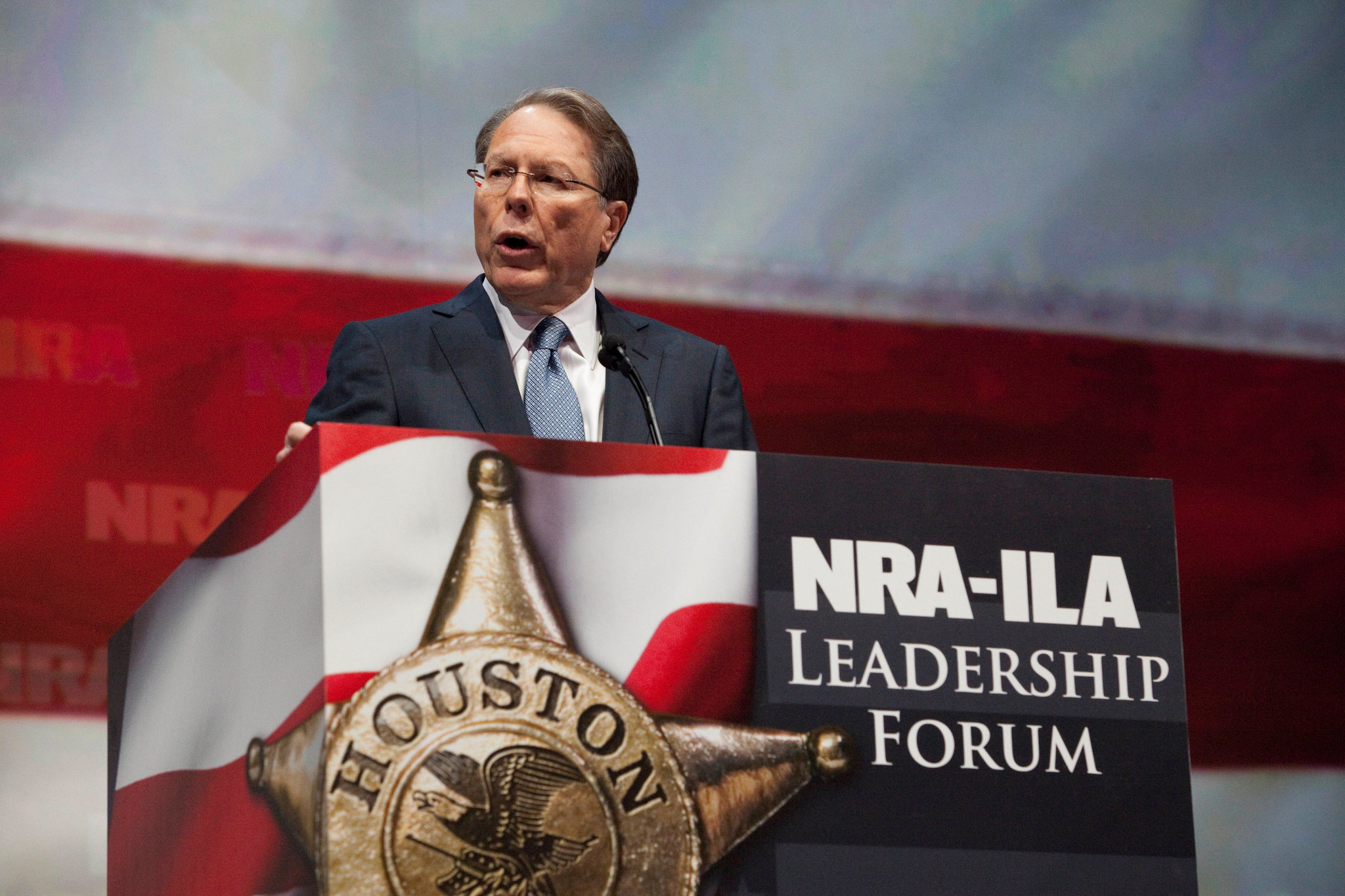
Then, on December 14th of 2012, while working on my laptop at the hospital while my wife was undergoing restaging tests, news broke of a shooting at an elementary school in Connecticut. I read with horror as first the casualty total rose and then it was reported that children were among the victims. That day, coupled with the local reaction in the following weeks caused a seismic shift in my perception and attitude. No longer was Texas the friendly, slow state with questionable education standards and a job-pilfering, slow-witted governor, now it showed itself to be a gun loving, religious zealot, paranoid, racist, American anachronism. Unfortunately, as time elapsed, I came to understand that this political/religious background was neither limited to Texas, nor the south. “Red” states throughout the country began to show their prejudices, paranoia, fear and hatred. The “Gun Control” debate had ripped the genteel mask of civility off of otherwise, (seemingly) generous people. I saw the people who attended the NRA’s Annual Paranoia Jamboree here in Houston. I argued with them. I argued with the dimwitted grandfather who brought his grandson to a gun control rally in Austin to argue for more gun rights. I was scheduled to debate a state senator, who had introduced a firearm protection act, on television, until he chickened out. I had become a liberal without a brain.
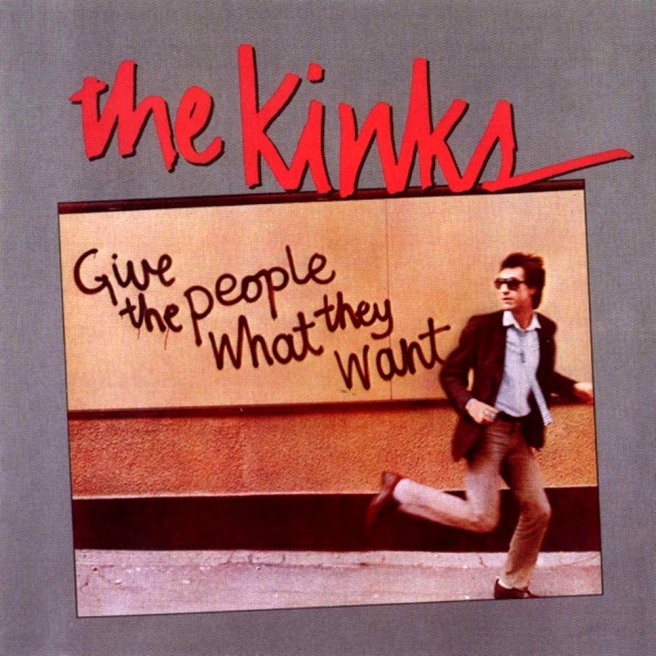
And then it hit me. The Kinks were right!
Why, I asked myself, was I always going against the grain? Why were my political positions always running counter to the culture in which I lived? How could I be represented by people so contrary to my positions? Lightbulb! Ted Cruz was elected by people who were pleased by what he claimed to represent. Louie Gohmert was elected by people who believe what he believes. Steve Stockman was elected by people as deranged as him. And so it is. Give the people what they want.
And so, the reason congress is in a perpetual state of paralysis is because America is in a perpetual state of paralysis. We seek to impose our ideal democratic notion on the rest of the world while ignoring fractures at home. Russian president Vladimir Putin wrote, warning America not to consider ourselves exceptional. George Bernard Shaw wrote,
“Patriotism is, fundamentally, a conviction that a particular country is the best in the world because you were born in it….”
The fact I find most interesting is that Congress has a 19% approval rating, according to Gallup. If we elect representatives who represent our interests and convictions, why is our approval of the job they do so low? At heart, are we not happy with our own convictions? The devil is in the details and it is this process that divorces concept (patriotism and democracy) from reality (legislation and personal responsibility). We cannot give the people what they want because they are not prepared to work for that which they think they deserve.


 Thoughts at Large