Expect Delays

On November 3, 1993, New York’s legendary senator Daniel Patrick Moynihan introduced a bill to tax Winchester hollow-tipped “Black Talon” bullets, “specifically designed to rip flesh,” wrote the senator in an Op-Ed to the New York Times on December 12, 1993, at 10,000%.  So sacrosanct is the poorly written Second Amendment that no rational debate can proceed beyond the “shall not be infringed” clause (conveniently omitting the “well-regulated militia” part. Nineteen days after the bill was introduced, Winchester voluntarily announced it would cease the sale of these “cop killer” rounds to the public. What a shame. Winchester’s action rendered the narrowly written bill moot. Perhaps a more broadly written bill, introduced in an era when public discourse and compromise still existed, might have progressed and saved countless lives. What a shame.

Is there a mindset, a phrase, that city planners use with their public works departments where delaying maintenance on a road is considered the safer option? Hear me out. Automobiles are profoundly safer than they were in the 1960s. Seatbelts, airbags, better braking and steering systems, and computers armed with the ability to either stop the car autonomously or, at the very least, alert the driver of an imminent collision. Coupled with that is the rise of the SUV and the baffling dominance of pick-up trucks, most of which haul groceries and passengers instead of tools and dirt. Most are polished to a greater shine than my sedan. And I know most have never seen the off-roads except in testosterone-dripping advertisements with chunky guitar riffs and gruff narrators. I had a Camry at one point, about 20 years ago, and had to trade it in because I could not see around the walls of aluminum and plastic in front of me.

I inquire about the city planners because, once again, like Senator Moynihan’s end run around the Second Amendment to save lives, the size, power, safety, and speed on our roads create a recipe for disaster when paired with the divisive, Dunning-Kruger homeowners who’ve claimed their territory on Mt. Stupid. Driving to work daily, I can picture insurance leaders scratching their heads, wondering why they continue to underwrite auto policies. In addition to the countless lives lost during the COVID-19 pandemic, another casualty of that time, still affecting us today, is the demise of the speed limit on our roads. 65 mph means 80 (at the very least), 45 means 70, and 25 means 40. If you drive at the speed limit, you risk being run over or, at the very least, becoming the target of the NASCAR driver behind you, engaging in road rage characterized by flailing hand gestures, flashing headlights, and monosyllabic profane grunts. Furthermore, bad behavior no longer has any consequences. While my blood pressure rises and I feel the urge to respond in kind, they are already home, feet up, watching SportsCenter for this weekend’s zoom-zoom race pole positions.

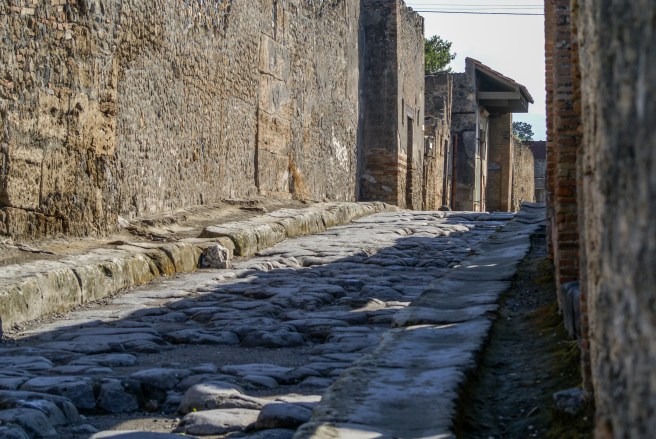
So, if society has ever safer, ever more powerful, ever bigger road behemoths, can we not take a page from the late senator’s book and reduce highways and byways to either dirt paths or the cobblestones of Pompeii? Lives would be saved because traffic would have to slow down. Counter programming through delayed maintenance: Inverse Safety Measures.

And so, while the gun chorus chants, “Guns don’t kill people, people do,” a suitable response to the petulant and self-appointed “special” drivers can be expressed as, “Cars don’t kill people, people do.” While cars are safer, guns are increasingly ubiquitous in Red/Blue angry America. And that truly is a recipe for death.

My Generational Fallacy

Maxwell and Finnegan

I am a middle-aged white man. And I can recognize some, but not all, of the societal privileges afforded to me for no other reason than I am a white man. I feel it is important to establish that upfront. I have accomplished things in life partly due to my efforts and partly because of my accident of birth. Accident of birth. What else can I call it? In addition to being born a white male, I was also born in the United States. Again, not of my choosing. But here I am, and I accept the failings in my life as my burden, my fault. I take full ownership of my failures but share my victories as being due to my efforts, others’ efforts, white privilege, and the combination of those factors occurring here in the United States.

The paragraph above is enough to exclude me from the Libertarian party, who believe they alone are responsible for the air they breathe, and they’d like you to thank them for making enough for you like it’s Reardon Steel.

With that backdrop established, let me tell you a little about my upbringing. My first best friend was black. We shared the same first name. When he or I moved away, I’m not sure what happened (I was young and cursed with a terrible memory), my next best friend was Jewish. And the thing is, it didn’t matter. I didn’t care. Or I hadn’t learned from society to hate yet. The only thing I now hate is willful ignorance. I learned so much from my friend about Judaism, its holidays, and the amazing food! I was raised Catholic (as was most of the state in which I was raised). I assumed everyone was Catholic. It wasn’t until much later that I learned Catholicism was itself but a branch of Christianity and Christianity a branch of organized religion.

Throughout my life, until I was probably 30 years old, I assumed that the problems of the past were destined to be solved by my generation. Racism being foremost in my mind and the easiest to solve. It was just wrong! That’s easy to fix, I thought. It was, I thought, the low-hanging fruit of justice, and I assumed I no longer lived in a country responsible for strange fruit (listen to the song). I also thought later in life that gun violence in America would be easily fixed after 26 first and second-graders (and educators) were slaughtered at Sandy Hook in Newtown, CT. In both situations, I learned there was a generational fallacy in my thinking. I assumed my and subsequent cohorts, armed with better information, compassion, and the benefit of 20/20 hindsight, would see the obvious path to social justice. How I was wrong! Chronological snobbery? Maybe. I now believe it is a combination of regional biases and willful intransigence that prevents solving society’s problems.

Dr. Martin Luther King, Jr. would be 94 years old now if he had not been murdered at age 39 in 1968. What he did, what all who fought for civil rights in America in the 1950s and 1960s, and accomplished, cannot be appreciated using today’s time prism. The Overton Window has undoubtedly shifted on civil rights and many other topics.  What they accomplished then, at great personal risk and, for some, with their lives, is monumental. However, the Overton Window is not a slider moving in one direction but a pendulum constantly swinging between the warmth of progress and the cold intransigence of those benefiting from the status quo. “Make America Great Again” is the most recent example of this philosophical ossification. “Progress” is seen as a threat to their privilege. Equity and equality are, ironically, seen as unfair. Diversity, Equity, and Inclusion programs are seen as nefarious as Affirmative Action. After George Floyd was murdered by the police, DE&I programs blossomed nationwide, and workplaces and communities benefited from new thinking. Unfortunately, today we see the pendulum swinging the other way and DE&I programs being cut in red states all across an even more divided America.

I saw an interview with Martin Sheen recently. He has been arrested for protesting more times than he can count. And it has cost him roles. He said, “If what you believe doesn’t cost you anything, then you’re left to question its value.” He is 83 years old now. And I couldn’t help but appreciate his passion.

I confess to being a West Wing fanatic. I adored that show (especially the first four seasons written by Aaron Sorkin). I think the season finale of the second season (Two Cathedrals) is the best episode of television ever created. That said, and while I remain a devout fan, I also think it ruined politics for me and a generation of those like me. I assumed life was a meritocracy and not the plutocracy and cleptocracy it truly is. I appreciated the sincere debate depicted in the show and assumed that was how politics worked. Today, there is no debate, only sound bites, social media gotcha’s, net zero wins, and tribalism, where a foundation of facts cannot be agreed upon. We can’t even agree on what is a fact!

Martin Sheen lives how Aaron Sorkin writes.

Contrast that with today’s news that 25-year-old NASCAR driver Noah Gragson was suspended indefinitely for liking a disgusting meme laughing about George Floyd’s death. He’s 25 years old. So, no, I no longer believe my generation will solve society’s ills no more than I think my children’s generation (or Noah Gragson’s) will move us forward.

They say the first step in solving a problem is acknowledging there is a problem. We haven’t graduated from that simple first step.  There is no low-hanging fruit when those on the other side will embrace any atrocity rather than let you “win.” And for that, society loses.

My generational fallacy has cost me. Not as much as those in the fight every day. It is a cost for which I feel the need to apologize. It has cost me from seeing the issues clearer. Evidence of that is easy to see. Reread this and count the number of times I say a version of “assume.” However, contrary to the familiar American saying, in this case, it has only made an ass out of me.  I hope to do better. I dream of our country doing better. And now, not generationally.

Tamara

I want to take a moment and thank someone. Someone who, after all she’d been through, passed one more lesson on to someone needing a class.

Tamara (Lukowicz) O’Hara had every reason to be me. Every reason to be angry, pessimistic, defensive, and assuming, a person who only saw what was wrong with the world and never what was good. A victim. The war I saw my late wife Lisa wage against cancer scarred me eternally as sure as it took her life. I have guilt that will never be assuaged. It can never be mitigated despite logic and reason, regardless of the assurances from my children that my guilt is misplaced. I have bottled rage with no pressure relief valve. There is no one to complain to or in charge with whom to debate my points.

And I found myself bitter. Angry with the unfairness, inconsolable in my rage.

As a child, Tamara had childhood cancer. She battled it and beat it. She was Lisa’s cousin. I only met Tamara as a young adult after I began dating Lisa in the late 1980s. It was either a Thanksgiving at Lisa’s parent’s house or a Christmas Eve party at Lisa’s mom’s cousin’s apartment. I found her bubbly, engaging, and happy when I first met her. She greeted everyone, me included, with a smile and a story. Her parents and her sister were all there. The whole family was approachable and energetic. I took to them all fast. At the time, I think she was the only person I’d ever met who had survived cancer. Not that I ever asked. At that time, cancer was as foreign to me as hieroglyphics and certainly not a polite topic of dinner conversation.

Every time I saw Tamara, she was the same. I never once heard her complain about anything. Not the dinner, the people, the conversation, work, life, nothing. Ever. Over time, as I matured into marriage and had twins, her perpetual bubbliness I relegated to goofiness! She was goofy! Happy beyond all reason, charismatic seemingly without cause. And that’s when I first missed the opportunity to learn from her. She wasn’t goofy. She was alive in every way.

As we age, relationships fade, faltering, not through animosity, but as our lives are dominated by the mundane. Work consumes our days as we seek to purchase the bread our families eat at night. The kids’ kindergarten work morphs into helping them build a trebuchet for high school. And soon, or so it seems, after decades of this march, we see extended family members at weddings and funerals. We see ourselves taking another step up in the generational parade.

A corollary consequence of this separation is the paralysis of others in time. A different cousin of Lisa’s had a daughter who recently graduated from Columbia. I missed it! Without the periodic injection of news (touching base with that faction of the family), she was forever a student there. It is the mirror image of how we miss the small changes in those in our household. Those that have not seen them (or us) for a while notice the slow changes we miss.

And so it was with Tamara. She was somewhere out there, bubbly and happy. Except that was not how she was. She married in 2015, and I saw her in 2021 at Lisa’s mom’s funeral. She became ill again last November and endured procedures and pain I hope never to experience. She died Thursday at 53 years of age. Far too young for her shining light to be extinguished, leaving those who knew her to continue in a darker world.

I will see her family at the funeral. I will see again the familiar anguish, incomprehensible sense of loss, and appreciation that her struggle and pain are over. Her widower has lost a soulmate. Her parents have lost a child. Her sister has lost a part of herself. Cancer has again stolen one of the best of us. I have lost a belated teacher. A teacher I failed to learn from in life, but one whose message I hope to employ in the future.

Today

“Even in our sleep, pain which cannot forget falls drop by drop upon the heart until, in our own despair, against our will, comes wisdom through the awful grace of God.”

With these words, quoted from Aeschylus, Robert Kennedy consoled African American campaign workers (and millions worldwide) in Indianapolis on this night 55 years ago after having announced to the crowd that Martin Luther King, Jr. had been assassinated earlier that evening in Memphis.

If you get a chance today, watch the speech he gave. It is shocking in its beauty and honesty. It was reported that the Secret Service told Kennedy they could not guarantee his safety if the crowd became violent. He gave the speech anyway.

He said, “Let us dedicate ourselves to what the ancient Greeks wrote so many years ago, to tame the savageness of man and make gentle the life of this world.”

Martin Luther King, Jr. was 39 years old on that day. Imagine a different universe where he lived. What would the United States look like today? Would we have faced the horrific stain of slavery head-on and ensured equality among all our citizens? Would we finally be living in a nation where his (now grown) are judged not by the color of their skin but by the content of their character? Maybe. Probably not. Intransigence and ennui ossify both the disengaged and unaffected. It is worth noting, Robert Kennedy was dead two months later, himself the victim of America’s gun violence.

At 58 years old, after a decade of railing against gun violence, that uniquely American disease, I am still haunted by the following sentiments when tending to my own heart and not the soul of our troubled nation:

Robert Kennedy:

“Few will have the greatness to bend history itself, but each of us can work to change a small portion of events. It is from numberless diverse acts of courage and belief that human history is shaped. Each time a man stands up for an ideal, or acts to improve the lot of others, or strikes out against injustice, he sends forth a tiny ripple of hope, and crossing each other from a million different centers of energy and daring those ripples build a current which can sweep down the mightiest walls of oppression and resistance.”

“The purpose of life is to contribute in some way to making things better.”

“Few men are willing to brave the disapproval of their peers, the censure of their colleagues, the wrath of their society. Moral courage is a rarer commodity than bravery in battle or great intelligence. Yet it is the one essential, vital quality for those who seek to change a world that yields most painfully to change.”

Martin Luther King, Jr.:

“Our lives begin to end the day we become silent about things that matter.”
“In the end, we will remember not the words of our enemies, but the silence of our friends.”

“If you can’t fly then run, if you can’t run then walk, if you can’t walk then crawl, but whatever you do you have to keep moving forward.”

“There comes a time when one must take a position that is neither safe, nor politic, nor popular, but he must take it because conscience tells him it is right.”

“Nothing in the world is more dangerous than sincere ignorance and conscientious stupidity.”

“The ultimate measure of a man is not where he stands in moments of comfort and convenience, but where he stands at times of challenge and controversy.”

Christopher Hitchens:

“Never be a spectator of unfairness or stupidity. The grave will supply plenty of time for silence.”

“What I used to say to people, when I was much more engagé myself, is that you can’t be apolitical. It will come and get you. It’s not that you shouldn’t be neutral. It’s that you won’t be able to stay neutral.”

“For years, I declined to fill in the form for my Senate press credential that asked me to state my ‘race,’ unless I was permitted to put ‘human.’ The form had to be completed under penalty of perjury, so I could not in conscience put ‘white,’ which is not even a color let alone a ‘race,’ and I sternly declined to put ‘Caucasian,’ which is an exploded term from a discredited ethnology. Surely the essential and unarguable core of King’s campaign was the insistence that pigmentation was a false measure: a false measure of mankind (yes, mankind) and an inheritance from a time of great ignorance and stupidity and cruelty, when one drop of blood could make you ‘black.”

Today, a former president was arrested and indicted on criminal charges in Manhattan. Donald Trump is the antithesis of Robert Kennedy or Martin Luther King, Jr. because while they carried the torch of justice to move society ever closer to a bright future, he chose to pour gasoline on smoldering embers and moved us backward toward our dark past.

At a time when our country is as divided as ever, short of outright conflict, I hope there are more of us whose “purpose of life is to contribute in some way to making things better” than those who want to see it burn.

Eyes

Grief is a hole carried deep within. It is the oxygen-deprived void, generally unseen by anyone else, living within our soul whose weight varies from day to day, moment to moment, from a quick catch of your breath to drowning suffocation.

Queen Elizabeth II died yesterday at the age of 96. Unless you’re 95, I don’t know anyone who wouldn’t sign that lifetime contract today. My cousin died yesterday, too. Life did not afford her 96 years. Absent the global outpouring of tears, her loss is no less devastating than that of the queen to her family. Grief is sure to wash over her family as sure as the queen’s.

Regardless of your feelings toward the British monarchy, whether you feel it is superfluous in 2022, an anachronism to modernity, or the steady hand on the till as time unfolds, the queen’s passing marks the end of an era. She worked with fifteen Prime Ministers throughout her long life, the first being Sir Winston Churchill. Churchill was born in 1874, a mere nine years after the end of our Civil War. She served as monarch for 70 years or about 28.5% of the entire history of the United States.

To remember a time when she was not monarch, you would have to be over 75 or 80 years old. Consider the changes the world has undergone during the time of her reign. Of course, few of us knew her. I can only project my interpretation of the video and deed she presented to the world. However, it seems that, whatever you feel about her, she sincerely believed in the queen’s duty above all else. No doubt, this came at a tremendous personal sacrifice. Whether it was a private life forfeited after her uncle’s abdication, a restructuring of her relationship with her husband Phillip in deference to her role, or the official position she had to take over any maternal impulses she may have felt, forbearance and sacrifice was her duty.

Grief is a hole carried deep within. However, there are occasions when it is visible. Words record the pain she endured at her father’s passing, King George VI, in 1952. Modern technological capabilities captured some insight into her grief after the passing of her husband. As we isolated ourselves in reaction to the savage viral death brought by COVID-19, the queen sat alone in St. George’s Chapel on that day in April 2021. Captured by Jonathan Brady of the Associated Press on that day, here she sits with her grief.

Look at her eyes. That is grief. The hole carried deep within, momentarily visible in her lost stare. I know that look. The paralysis grief creates, the mental gymnastics, and incomprehensible lack of understanding one goes through envisioning a world without a loved one are visible to anyone remotely aware. It is the eyes that expose our grief to others. It is through the eyes that tears flow. It is through sight that we feel sympathy and empathy. And it is through our eyes that grief reveals us shattered and lost.

If we are lucky, time softens the edges of our grief. We catch our breath at a memory, song, scent, or place, but we no longer suffer the drowning suffocation as often. We learn to control access to the most devastating memories; we learn to remember without reliving them. It is not an easy skill to learn.

The queen is gone. So, too, my cousin Gwennie. People worldwide may mourn the queen’s loss as if a steel and cement pillar of our societal foundation has crumbled and left us on infirm sand. Her family and my cousin’s will know grief exposed through our eyes. Be a comfort to those showing the signs of grief’s pain. None of us are immune to its theft of air any more than death steals life. The hole grief creates in its immediacy is devoid of oxygen. Help each other breath.

Control

Can this be how it works? I’m 57 years old and see more life in the rearview mirror than the open road ahead. With that perspective, I find it’s become essential to reflect on what I’ve done with my time on this planet. Blissfully ignorant of the repercussions of news events growing up in bucolic suburbia, adulthood, parenthood, citizenship demanded my attention as I aged. I’ve experienced events no one wants. People summarize it as “life” when you see death. I’m not special. Just frustrated.

After the massacre at the movie theater in Aurora, CO, I began to write. Not with the expectation of affecting change, but rather to give my anger, my emotions, an outlet, an offramp for the toxic blood poisoning my body. I saw gun violence stealing a generation. While some social issues had moved the Overton Window, political intransigence (keep cashing the NRA’s checks!) and eventual American ennui accepted gun violence as baked into the American fabric in the name of “freedom.”

After the Sandy Hook Elementary School massacre in Newtown, CT, I began to speak. Surely, a tragedy of this scale would shock Americans (and politicians) out of their stupor. Nope! I talked to groups in Texas as the lone spokesperson for the Brady Campaign in Texas. The only one. That alone tells you all you need to know about the calculus of “I NEED my gun, dead kids and teachers be damned.” Thoughts, prayers, and sad face emojis flooded social media until America’s fruit fly attention span moved on to the latest “tragedy” affecting Kim Kardashian.

My anger peaked with the death of my wife. Fuck cancer makes a great tweet, a guttural reaction without consequence. Utterly suicidal and dying with my wife, I could not yell at the tumor. I took it out on God for a while (also useless) and even turned to God for a bit (utterly meaningless). There was no one to blame, no revenge to be had. No offramp for my anger.

And then Americans, in the obvious next step for a society that had abdicated all personal responsibility and suffered no consequences, elected a narcissistic moron president—a billionaire (if you believe him) speaking for the uneducated rubes. Merit and logic were dead. With each lie, with each crime, I expected consequences. None came. Robert Mueller fumbled the ball with no defenders anywhere near him. Facts were relegated to the trash bin. Tweets became governmental edicts. And I waited. Furious.

When I get angry (when I get down), it is because things should be easier. “Keep the simple things simple; the hard things are hard enough.” But nothing was easy. Changing a light bulb resulted in the glass bulb snapping off the metal base, a trip or two to Lowes, and a call to the electrician. Nothing was easy. Ultimately, I realized it was an absolute lack of control. There was nothing I could do about any of it. My wife was dead, guns were more important than life, freedom from fact and responsibility replaced actual democracy, and rabid evangelicals believed in Trump as the messiah. Stop the world; I want to get off.

And now we have Ukraine. Again, one man brings the world to the point of a world war—one man. Ukrainians are fighting to survive- as a nation and a people. “Denazifying” Ukraine? Really?

I’m reminded of Carl Sagan’s Pale Blue Dot speech as I watch an army destroy entire cities. Stepping back for a second, it seems bizarre that NATO and the UN watch the massacres with tepid financial penalties because Ukraine doesn’t belong to their club. It’s like a high school clique turning its back on a less cool student getting beaten up because they don’t wear the “right” jeans. I understand the political ramifications of engagement. But on a human level, it seems callous and impotent.

So here I am—no one special, poisoned with anger and unable to control or change anything. Hell, I can’t even watch baseball now! The billionaires are too busy fighting with the millionaires. I get the feeling that if aliens did visit earth, they’d look down and say, “Nah, they’re petulant adolescents with nascent technology and a penchant for killing each other. Keep driving.”

So, my clock continues to tick down, and I’m not ignorant enough for its promised bliss. I’ve read Viktor Frankl and Thomas Paine but still cannot find reason or acceptance. How do I accept all of this? How do I “let it go?” No, seriously, I’m asking.

Sunshine

We are a broken nation. Short of another insurrection, we are living in a cold civil war. One side is armed with guns, bullets, and hatred. The other side is armed with reason, truth, and awe at the dissension one man (Trump) could release. Republicans will win at any cost, including the nation’s destruction, if it means Democrats win a skirmish. Democrats eat their own and want a group hug with Republicans.

It is difficult to find the silver lining, the momentary oasis from hatred and paralysis during these times. It is hard to imagine “normal” life existing outside our echo chambers. Stochastic terrorism and dog whistles from the right. Infighting and inertia on the left. However, I found it about six months ago.

While scrolling through the division and vitriol on Twitter, I came across a neuroscientist at Concordia University in Montreal. Yes, Canada, where stereotypes abound of civility and courtesy. Dr. Nadia Chaudhri posted about a fundraiser she had organized, called the Nadia Chaudhri Wingspan Award. It awarded scholarships for minority and historically marginalized students in neuroscience. It was inspiring to see in the age of Black Lives Matter, Oscar’s so White, and other diversity and inclusion awareness campaigns.

Dr. Chaudhri was more than a neuroscientist and associate professor. She was also a wife and mother. And she was Pakistani. Born in Karachi, she attended Franklin & Marshall College in Pennsylvania on a full scholarship, becoming the first woman to win the Williamson Medal for outstanding academic and extracurricular achievement. She earned a Ph.D. from the University of Pittsburg and was a postdoctoral fellow at the University of San Francisco. She was also dying of ovarian cancer at age 43.

As we whittle our list of “acceptable” people with whom we agree on everything, it became clear reading Dr. Chaudhri’s tweets that she was a tireless advocate for the Wingspan Award and an incredibly loving wife and mother. Living in Canada didn’t matter. Being from Pakistan didn’t matter. What mattered was that she was a good person. She was just a good person trying to do the best she could for those she cared about in an impossible situation. I never met her, but she was a good person. And that mattered. I enjoyed reading her tweets about her husband Moni (who she called her Moon) and her son (who she called her Sun).

When the chemotherapy no longer worked and the clinical trials failed her, she tweeted that she was entering the inpatient palliative care program at McGill University’s Health Centre and was meeting with her six-year-old son to tell him she was dying. Yes, memories flooded my brain of my late wife and I having that discussion with our children, but I wept for her, her son, and her husband. My son is getting married in a couple of weeks, and my daughter is recently engaged. I cried because I knew her young son would have to enjoy his significant life events without his mother there just as mine have.

She continued to raise money for the Wingspan Award by having people sponsor her to shuffle through the palliative care ward each day. She posted them on Twitter. As her Twitter account swelled, so too did the donations. She raised over $615,000 (CAD) from 8,600 donors. From her hospital bed, she replied to every person who donated. She posted paintings she did, usually of cards or gifts people had sent her. In one painting, she depicts her husband and son burying her ashes under a tree, hoping that her son would understand her wishes and come to peace with what was to come next in his young life. On September 9th, she was promoted to full professor. She celebrated with her husband, son, and the hospital staff with coffee ice cream.

When her legs no longer supported her daily fundraising shuffle, she danced in place in bed, the focus always on the scholarship.

Even when the inevitable happens, like a fool, I feel caught off-guard. Dr. Chaudhri died on Tuesday, October 5th. I sobbed. I sobbed because I would now be without the sunshine she brought with her inspiring tweets. I cried because the underrepresented in STEM lost a champion. I wept because I knew what her husband was feeling. I sobbed because I knew the world her son would now grow up in without his loving mother. It didn’t’ matter that she lived in Canada, that she was from Pakistan, that she advocated for the coronavirus vaccine for everyone, that she was excited she could vote in Canada’s recent election. It mattered because she was a good person.

Find those that inspire, that bring sunshine into this increasingly dark world. Better yet, be that sunshine for someone else. Thank you, Dr. Chaudhri.

Freedom…

The First Amendment to the United States Constitution reads:

Congress shall make no law respecting an establishment of religion, or prohibiting the free exercise thereof; or abridging the freedom of speech, or of the press; or the right of the people peaceably to assemble, and to petition the government for a redress of grievances.

The Second Amendment to the United States Constitution reads:

A well regulated Militia, being necessary to the security of a free State, the right of the people to keep and bear Arms, shall not be infringed.

Can someone, perhaps a Constitutional scholar (or someone who attended the University of Hard Knocks because, apparently, that’s the same thing), explain to me how these “rights” as written by James Monroe came to be interpreted as freedom from responsibility? Please?

Reeling from a global pandemic, science handed us a way out. And it was made free and accessible to everyone! And yet, after sitting on our asses for a year, we cannot be bothered to get vaccinated. We can’t be bothered to do what is right for our family, our neighbors, our nation, the world. Because FREEDOM! But freedom from what? Can someone answer that question? What’s the end of that phrase? Freedom from what? 

I see yard signs now saying UNMASK OUR CHILDREN! Unmask? Oh, you mean to leave the decision to protect your child, my family, and everyone too stupid to vaccinate themselves to you and your internet search medical degree?

I still wear a mask inside stores. Do you know why? I’m vaccinated! The CDC says I no longer need to wear a mask indoors. I wear the mask indoors for two reasons. First, because the vaccine has provided cover for those too selfish to vaccinate themselves; in other words, those unvaccinated can claim to be vaccinated and therefore no longer need to wear a mask indoors. I wear a mask indoors with those I do not know because I do not trust them. Their freedom from responsibility leaves them vulnerable to the virus and a prime candidate to join 600,000 other dead Americans. And, honestly, I’m done worrying about their lives. If they’re too selfish and cloaked in the wisdom granted by the Fox News science and medical experts Tucker Carlson, Laura Ingraham, and Sean Hannity, I don’t care if they live or die. Just as they have rid themselves of caring whether I live or die. Second, I wear the mask because I could be carrying the virus and be asymptomatic due to the vaccine. Despite my anger at the unvaccinated, I wear it to protect them from me.

 Freedom from responsibility has replaced both the first and second Amendments. We have the freedom to say and do anything we want, but we now assume it was granted without responsibility. No blowback is expected or appreciated. We have been locked indoors for a year. And when finally bored enough, we ventured out. Some of us were vaccinated. But the bored move about freely. And as soon as we ventured out of our homes, we did so, not with the vaccine, but with our guns. Free to leave our homes, Americans are now subjected to multiple mass shootings a day. Because Freedom! But, again, no one finishes that phrase. Freedom from what, if not responsibility?

I weigh too much. Guess what? It’s because I overeat. Not because of my boss, my spouse, my government, or my family. And guess what? When I take responsibility for my weight and eat better foods and less of it, I lose weight! If I eat red meat, there is a chance my heart will suffer, or my cells may rebel in cancer. The danger I am subjecting others to is limited. My family will suffer my loss. But my job will be filled within a week, and the world will carry on. However, not vaccinating myself leaves me vulnerable, along with everyone with whom I come in contact. The danger is expanded exponentially—the exposed beyond just me. And to do that to others is selfish and devoid of responsibility. 

The irony of this situation is that those refusing to be vaccinated directly infringe on my freedoms! I may soon be required to wear a mask everywhere again because the unvaccinated will drive us back into restrictions and lockdowns. I did the right thing for everyone, but I may soon be restricted from moving about freely because of the unvaccinated.

The first definition of socialism in the Merriam-Webster dictionary defines socialism as:

Any of the various economic and political theories advocating collective or governmental ownership and administration of the means of production and distribution of goods.

Can we agree that seatbelts are a socialistic response to automobile injuries and deaths? Can we agree that highways are a socialistic response to bad roads being too expensive for each of us to build alone? Can we agree that the military that the right fawns over and spends almost a trillion dollars on a year is a socialistic response to existential or dogmatic geopolitical threats? If so, can we not also agree that solutions to problems need to be made on a granular level exclusive of a nation’s political definition? Can we agree that it is possible and appropriate to have a socialistic response to a problem within a democratic republic? That perhaps reductio ad absurdum or ad hominem arguments against proper answers to issues are simpleminded, foolhardy, and just plain wrong?   

 My rights are being infringed as a vaccinated citizen both by those who will not vaccinate themselves and those who think a gun gives them power and absolution. Freedom from responsibility is now the American creed. 

Comfort for Aurora

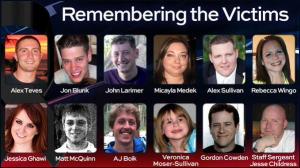
Remembering the Victims

“In the hope that it may be no intrusion upon the sacredness of your sorrow, I have ventured to address you this tribute to the memory of my young friend, and your brave and early fallen child.” Abraham Lincoln, May 25, 1861 in a letter of condolence to the parents of Colonel Elmer Ellsworth

I did not know Jessica Ghawi, Alex Teves, Alex Sullivan or any of the other nine victims murdered in the horrific July 20, 2012 shooting at a movie theater in Aurora, Colorado during a midnight screening of “The Dark Knight Rises.” I do not know any of the 70 people who were injured that night and survived. But as an advocate for gun violence prevention, Jessica, Alex, Alex and many others have become my (forever young) friends. It is because of them that we work for a safer future so others are not sacrificed on America’s insane firearms alters.

The trial for the monster responsible for this all too familiar, American-centric, gun-related carnage is underway in Colorado and I find there is no way to accurately or compassionately convey my love to the survivors, their families, or the families of those murdered without sounding as if I can possibly understand their grief, pain, suffering, loss, anger… even this list seems somehow presumptuous. To those strong enough and compelled to attend the daily court proceedings, this list of presumptions must also include: the ability to sit in the same room with such a monster, knowing that he is attempting to “game” the jurisprudence of Colorado with his “superior” intellect, and the self-control and commitment to a civilized society not to throttle him when he lifts his veil of innocence whenever the jury is not in chambers. Cameras are everywhere.

It is, therefore, ironic that I find the most reflective and appropriate comments in the haunting words of one who would himself later become the victim of gun violence. In a letter dated Nov. 21, 1864, President Lincoln wrote to Mrs. Lydia Bixby, a mother who it was believed had lost five sons in the Civil War. He wrote:

I feel how weak and fruitless must be any word of mine which should attempt to beguile you from the grief of a loss so overwhelming. 

And so, with these borrowed words, please let the victims and their families know that I am thinking of them, grieve for them, honor their children and don’t presume to understand their pain. I haven’t the right words. Allow Lincoln’s to carry my comforts.

Aaron’s Wishes for 2015

December 18, 2014

Hello. My name is Aaron. I am six years old. I am a second grade student in Miss Vasquez’s second grade class at John F. Kennedy Elementary School. Our class has been cutting out newspaper headlines all year and last week we had to go up to the board with each headline and put it under one of the headings we had created. When we were done, we had many headings, but only a few had lots of headlines under them. The heading with the most headlines under it was Fear. Under this heading we had headlines like Ebola, the shooting in Ferguson, the chokehold death in New York City, the police protests, the midterm elections, the open carry marches in Texas and the Bundy ranch standoff.


December 29, 2014

Fear is a paralyzing emotion and emotions are amazing things, but they cannot be the sole basis upon which decisions are made. For example, my mother’s grief often manifests itself in her binge eating, and while it may feel good enough in the moment, I’m sure you will agree that a pint of Ben and Jerry’s Phish Food does not a meal make. Nor does letting a dozen casseroles spoil in the refrigerator because she’s “not hungry” qualify as taking care of herself.

My wishes for 2015 are for fear to give way to reason, for paranoia to give way to compassion and for hatred to give way to understanding. These are my wishes because I am six years old and I will always be six years old. I will always be six years old because our neighbor gave in to fear and bought a gun and accidentally shot at his daughter when she came home late last week. Thankfully, he missed her, but there is a hole in my head where my right eye used to be and tomorrow morning Mommy will bury me.