
Expect Delays

On November 3, 1993, New York’s legendary senator Daniel Patrick Moynihan introduced a bill to tax Winchester hollow-tipped “Black Talon” bullets, “specifically designed to rip flesh,” wrote the senator in an Op-Ed to the New York Times on December 12, 1993, at 10,000%.  So sacrosanct is the poorly written Second Amendment that no rational debate can proceed beyond the “shall not be infringed” clause (conveniently omitting the “well-regulated militia” part. Nineteen days after the bill was introduced, Winchester voluntarily announced it would cease the sale of these “cop killer” rounds to the public. What a shame. Winchester’s action rendered the narrowly written bill moot. Perhaps a more broadly written bill, introduced in an era when public discourse and compromise still existed, might have progressed and saved countless lives. What a shame.

Is there a mindset, a phrase, that city planners use with their public works departments where delaying maintenance on a road is considered the safer option? Hear me out. Automobiles are profoundly safer than they were in the 1960s. Seatbelts, airbags, better braking and steering systems, and computers armed with the ability to either stop the car autonomously or, at the very least, alert the driver of an imminent collision. Coupled with that is the rise of the SUV and the baffling dominance of pick-up trucks, most of which haul groceries and passengers instead of tools and dirt. Most are polished to a greater shine than my sedan. And I know most have never seen the off-roads except in testosterone-dripping advertisements with chunky guitar riffs and gruff narrators. I had a Camry at one point, about 20 years ago, and had to trade it in because I could not see around the walls of aluminum and plastic in front of me.

I inquire about the city planners because, once again, like Senator Moynihan’s end run around the Second Amendment to save lives, the size, power, safety, and speed on our roads create a recipe for disaster when paired with the divisive, Dunning-Kruger homeowners who’ve claimed their territory on Mt. Stupid. Driving to work daily, I can picture insurance leaders scratching their heads, wondering why they continue to underwrite auto policies. In addition to the countless lives lost during the COVID-19 pandemic, another casualty of that time, still affecting us today, is the demise of the speed limit on our roads. 65 mph means 80 (at the very least), 45 means 70, and 25 means 40. If you drive at the speed limit, you risk being run over or, at the very least, becoming the target of the NASCAR driver behind you, engaging in road rage characterized by flailing hand gestures, flashing headlights, and monosyllabic profane grunts. Furthermore, bad behavior no longer has any consequences. While my blood pressure rises and I feel the urge to respond in kind, they are already home, feet up, watching SportsCenter for this weekend’s zoom-zoom race pole positions.

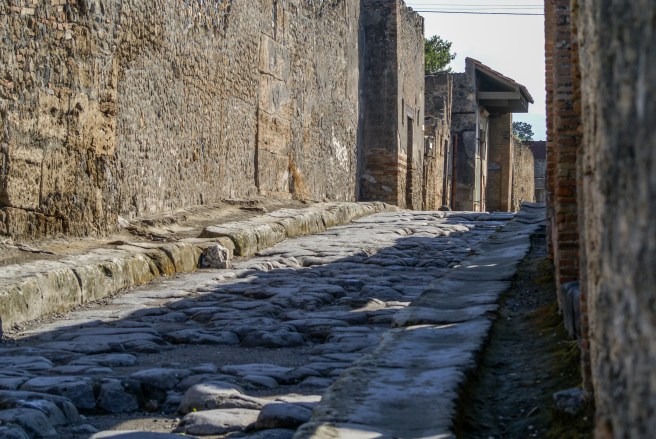
So, if society has ever safer, ever more powerful, ever bigger road behemoths, can we not take a page from the late senator’s book and reduce highways and byways to either dirt paths or the cobblestones of Pompeii? Lives would be saved because traffic would have to slow down. Counter programming through delayed maintenance: Inverse Safety Measures.

And so, while the gun chorus chants, “Guns don’t kill people, people do,” a suitable response to the petulant and self-appointed “special” drivers can be expressed as, “Cars don’t kill people, people do.” While cars are safer, guns are increasingly ubiquitous in Red/Blue angry America. And that truly is a recipe for death.

The Tu Quoque Mirror

The Tu Quoque Mirror: The logical fallacy of accusing your opponent of your offenses.

No one has mastered this logical fallacy more than the loser of the 2020 presidential election, Donald J. Trump.

Accused of tampering with an election: Joe Biden and/or Hilary Clinton did it
Accused of improperly handing documents: Joe Biden and/or Hilary Clinton did it
Convicted of falsifying records: Joe Biden and/or Hilary Clinton did it
Convicted of paying hush money: Joe Biden and/or Hilary Clinton did it
Accused of rape, sexual assault, and sexual harassment: Joe Biden and/or Hilary Clinton did it
Accused of witness tampering: Joe Biden and/or Hilary Clinton and/or Hilary Clinton did it
Accused of weaponizing political infrastructures: Joe Biden and/or Hilary Clinton did it
Accused of mishandling the pandemic: Joe Biden and/or Hilary Clinton did it
Accused of foreign misdealing: Joe Biden and/or Hilary Clinton did it
Accused of a porous border: Joe Biden and/or Hilary Clinton did it
Defending Putin, Orban, Xi, or other dictators: Okay, that one’s Trump alone.

And those are the ones that come to mind in 5 minutes. There is no situation where, when accused, Trump doesn’t (without any evidence) turn it around to be his opponent’s offense. 

It is an extension of the ad hominem logical fallacy “whataboutism.” In that simpler (but no less simple-minded) deflection, you turned the argument by putting your opponent on the defensive by eliciting an example of their misdeed—deflection as a defense. And in the age of bumper sticker philosophy and 5-second sound bites, it works. It’s a gotcha moment just waiting to birth a meme. Except it never answers the original charge. And that’s the idea. Cut to commercial. Print the t-shirts. Hang the flags (and the vice president).

The death of debate and the rise of Trump acolytes have resulted in a catastrophically divided country. It has spawned not a political movement but a cult. And like all cults, it is sick—sick from within and diseased at the head. Like their leader, they obfuscate with whataboutism, like “chosen one” like sycophants. But all cults thrive until they don’t. When is that tipping point? Time will tell.

The tu quoque mirror version takes it a step further. Now, you no longer need to research misdeeds by your opponent. You accuse them of yours. It would be elegant if it weren’t childish. It’s Dorian Gray’s portrait, except he does not see himself, and Mr. Gray puts it on display for his cult.

Oscar Wilde may have summarized Trump best when he wrote, “”You will always be fond of me. I represent to you all the sins you have never had the courage to commit.”

Bigger

The ride home was uneventful. Clark steered his new vehicle cautiously through traffic, feeling as though every eye was on him, every other vehicle turning into his, and his insurance premium atop his mind.

He maneuvered deftly down his street and turned smoothly into his driveway, feeling the bounce between the street and driveway. With an emphatic bump of his fist, he sounded the horn and awaited his family’s arrival and, more importantly, their reaction.

His son bounded out of the house first, smiling as he saw the new vehicle.

“Cool!” he said, seemingly capturing all his son’s feelings in one syllable.

His daughter came out next, still holding her cell phone and seemingly bothered by the interruption.

“What do you think?” Clark asked, eager for some acknowledgment of his latest purchase.

She responded, “Cool,” although this version seemed to carry disdain and judgment rather than excitement.

His wife arrived next.

“Seriously, Clark?” she said, more in the vein of their daughter than their son.  

As they all sat around the dinner table, passing the plate of DiGiorno pizza, corn, and macaroni & cheese, Clark began to explain the reasoning for his purchase.

“The evolution of self-propelled transportation, while still measured in “horse” power, began with the sedan. “Sedan” was named after litter. Can anyone tell me what a litter is?” Clark questioned.

The children bowed their heads as if their plates held mysteries of the universe previously undiscovered. They knew their father was about to go into one of his history lessons, and they wanted dinner to be history. Finally, with a mouth full of pizza, Clyde, the son, smiled and said, “It’s the place where the cat squeezes off a loaf!”

Karen, Clark’s wife, admonished Clyde while Clark attempted to stifle the smile the visual represented.

Caroline, their daughter, remained transfixed by her plate.

“A litter,” Clark continued, “is a box with extending poles a pharaoh or dignitary would sit in and then be transported by servants carrying the poles.”

“Like in Game of Thrones!” exclaimed Clyde.

“What are you doing watching Game of Thrones?” asked Karen.

“Oh, um, Kenny had it on at his house once, and I saw Joffrey being carried in one. A litter.”  

Sensing the conversation getting away from him, Clark recentered the topic back to automobiles.

“Well, yes, that is a litter. That’s where the term sedan originated. It was a sedan chair. As time went on, the size of automobiles grew and shrank with market forces and gas prices. However, in the last decade of the last century, people moved from sedans to SUVs. Some liked the size advantage for safety reasons, some felt they needed to keep up with the growing size, and some liked the aggressiveness of the size, likening it to the HUMVEES from the military. For example, do you remember what we had before the Grand Cherokee?”

“The Camry,” replied Caroline in her typical, disengaged drone.

“Right!” said Clark, “I sold the Camry because I didn’t feel safe driving in the sea of SUV’s! I couldn’t see around them, and their windows were too high (and too blacked out, don’t get me started on window tinting) to see through when I was behind them. I loved that Camry, but it would have been crushed in an accident with the SUV beasts everyone bought!”

Suddenly interested, Clyde asked, “So why did we get rid of the Jeep?”

“Because, again, sizes kept growing. To gain an advantage over the SUVs, I bought a pickup truck. And when that was no longer enough, I put the huge tires on it,” explained Clark.

And that explains the new one?” asked his wife.

“Exactly!” replied Clark, pleased the conversation was over. He missed his Camry. “I wanted the camo package, but the waitlist on that version was six months.”

“Seriously, tell me what you think of the new vehicle?” asked Clark.

“Is it big enough?” smirked Karen.

“I think it’s cool!” said Clyde.

“Yes, we’ve established that,” said Clark.

Before Caroline could reply, they heard a sound from outside, and they all went out to see their neighbor Bill pulling into his driveway with his new vehicle.

“Thoughts?” asked Karen.

“Damn it!” replied Clark, “And he got the camo package!”

Today

This is not about me.

I have never lost anyone to gun violence.

Never a family member or a friend.

So, this is not about me.

Emblazoned into my memory are the events of this date in 2014.

That day changed my life. I can tell you where I was as I followed the news.

But this is not about me.

26 children and 9 educators lost their lives that day.

Sandy Hook Elementary School in Connecticut.

I live in Rhode Island.

Next door. Down the street. Around the corner.

I have children. At one point, they were the same ages as those murdered.

I have the memories of my children at that age.

And I have memories of them older because mine were not murdered.

Those parents and those family members were denied future memories.

Denied every hug. Denied every day.

Gun violence did that to them. Stole their children. Stole their futures. All of theirs.

The aftermath was sickening. I had to do something. And I did.

But this is not about me.

Change would occur. Gun violence would be addressed at the federal level.

Finally.

Except it wasn’t. Nothing changed.

Except for ever more carnage. Ever more murder.

And ever more acceptance of this being “normal.”

Some of us remain outraged.

Some demand change.

Some work with survivors. Some work with politicians.

Many offer thoughts and prayers. And move on.

Knowing nothing will change. Some don’t want change.

It’s baked into the American fabric.

It’s the price of “freedom.”

Freedom?

This is not about me.

Except it is.

It’s about me. And you.

Because the list of those not affected by gun violence shrinks every day.

Will I be affected by gun violence?

Will I know someone injured?

Will I know someone was killed?

Will I be a victim?

The list grows ever shorter while nothing changes.

This is about me.

Because I don’t want to join the ranks of survivors, family, friends, victims.

This is about me.

I suffer from hiraeth. I long for euthymia. Logic. Reason. Accountability. Community.

Read this out loud to yourself.

Because this is about you.

European Travel Notes – Political Musings Addendum

 As we continued our path toward Paris, the names of the places we passed leaped from the road signs. I envisioned high school history books opened to the Great War. Verdun, Ardennes, the Maginot Line. How incredible it was to me that this magnificent countryside might once have been the sight of endless mud, cold rain, trench warfare, mustard gas, blood, and death. How many farms, I wondered as we passed their crops, had once been watered with blood. How far below the surface must one dig to uncover a shell casing, helmet, rifle, bayonet, or bone? History was outside my car window. Consequential, sequential, and still current.

Coming from the United States, it is hard to contemplate the size of Europe. We drove from Germany (slightly smaller than Montana) to France (slightly smaller than Texas), stayed in Luxembourg (slightly smaller than Rhode Island), stayed in Switzerland (slightly less than twice the size of New Jersey), just missed passing through Lichtenstein (slightly smaller than Washington, D.C.), and kissed Austria (roughly the size of South Carolina) on the train from Zurich to Munich. When viewed from the perspective of America (despite our regional and cultural differences), Europe seems quaint. World wars seem more like well-armed neighborhood skirmishes. The fact that an area so small can have countless languages, always a barrier to community cordiality, could only have exacerbated prejudices and fostered nationalistic passions. And America is by no means exempt from history’s gaze.

When visiting San Antonio while living in Houston, we did the obligatory tour of the Alamo. In addition to the diminutive size of the fort, what struck me was the tour itself. “Here is a rock that represents where a wall once stood,” said the audio guide. So much of what remained was reduced to reverence, folklore, and a gift shop. When touring many of the castles, palaces, residences, and “old towns” in Europe, English-speaking audio guides told of how this section of (fill in the blank) represents what originally stood here because the original was blown away during World War II. I do not write this as an accusation or judgment. It was not iconoclasm but brutal warfare that destroyed these architectural gems. And yet, I could not help but yearn for the lost treasures destroyed by the ruthless passions of men.

America has two main deadly exports, both found in European history, modern politics, and among the people. The first is war; perpetual and ever more efficient. Eisenhower’s military-industrial complex continues to thrive, indeed feeding on itself for oxygen. Ramstein Air Force Base exists because of it. We arm both sides of modern conflicts, raking in dollars and ready to respond with lethal interdiction. The second is tobacco. Everywhere we visited locals smoked. Ashtrays are ever-present, and smoke fills every street corner as we wait for the pedestrian light to turn green. Two deadly exports, alive and well across Europe.

And while we Americans wave the flag and chant Make America Great Again, thumbing our nose at our bumper-sticker understanding of socialism, Europeans today live in relative harmony with one another. I found Europeans courteous, patient, law-abiding, and friendly. Drivers routinely defer to others, follow posted speed limits, obey warnings, and arrive safely. American drivers (and Parisian cabbies) ignore all posted speed limits and ignore all rules of the road. And when slighted we Americans, too often respond in road rage and gunfire. Socialism is the appropriate doctrine for specific issues, just as capitalism is the appropriate mechanism for other issues. America’s lack of nuance and knee-jerk aversion to “socialism,” coupled with a worldview ignorance and almost allergic reaction to responsibility makes us look juvenile and unsophisticated when compared to the Europeans.

I can hear you! Stop shouting! “If Europe is so wonderful, why do so many want to move to the United States? After all, we are the greatest country in the world!” First, we are not the greatest in many meaningful categories and they don’t all want to move to America. Every country has a certain percentage of their population who wishes they lived somewhere else. Sit down for this next sentence. So, too, does the United States. There are thriving expat communities the world over, populated by Americans. Second, might not a certain percentage of Europeans want to indulge their juvenile penchants and selfish streak and see America as the place where one can do and say anything they want, essentially without accountability? Or maybe, third, they may see America’s openness through the prism of a European upbringing and see opportunities beyond those available in their small town. You can criticize me for America bashing all you want; these are my travel notes. However, I would rather you consider broadening your horizon to include implementing courtesy, patience, socialism (when appropriate (military costs, public roads)), accountability, and responsibility within the American community.

Mark Twain (an American) said, “Travel is fatal to prejudice, bigotry, and narrow-mindedness, and many of our people need it sorely on these accounts. Broad, wholesome, charitable views of man and things cannot be acquired by vegetating in one little corner of the earth all one’s lifetime.”

Another more recent American, the late Anthony Bourdain, said, “If I’m an advocate for anything, it’s to move. As far as you can, as much as you can. Across the ocean, or simply across the river. The extent to which you can walk in someone else’s shoes or at least eat their food, it’s a plus for everybody. Open your mind, get up off the couch, move.”

Travel and return home. You will never return home the same person who left.

My Generational Fallacy

Maxwell and Finnegan

I am a middle-aged white man. And I can recognize some, but not all, of the societal privileges afforded to me for no other reason than I am a white man. I feel it is important to establish that upfront. I have accomplished things in life partly due to my efforts and partly because of my accident of birth. Accident of birth. What else can I call it? In addition to being born a white male, I was also born in the United States. Again, not of my choosing. But here I am, and I accept the failings in my life as my burden, my fault. I take full ownership of my failures but share my victories as being due to my efforts, others’ efforts, white privilege, and the combination of those factors occurring here in the United States.

The paragraph above is enough to exclude me from the Libertarian party, who believe they alone are responsible for the air they breathe, and they’d like you to thank them for making enough for you like it’s Reardon Steel.

With that backdrop established, let me tell you a little about my upbringing. My first best friend was black. We shared the same first name. When he or I moved away, I’m not sure what happened (I was young and cursed with a terrible memory), my next best friend was Jewish. And the thing is, it didn’t matter. I didn’t care. Or I hadn’t learned from society to hate yet. The only thing I now hate is willful ignorance. I learned so much from my friend about Judaism, its holidays, and the amazing food! I was raised Catholic (as was most of the state in which I was raised). I assumed everyone was Catholic. It wasn’t until much later that I learned Catholicism was itself but a branch of Christianity and Christianity a branch of organized religion.

Throughout my life, until I was probably 30 years old, I assumed that the problems of the past were destined to be solved by my generation. Racism being foremost in my mind and the easiest to solve. It was just wrong! That’s easy to fix, I thought. It was, I thought, the low-hanging fruit of justice, and I assumed I no longer lived in a country responsible for strange fruit (listen to the song). I also thought later in life that gun violence in America would be easily fixed after 26 first and second-graders (and educators) were slaughtered at Sandy Hook in Newtown, CT. In both situations, I learned there was a generational fallacy in my thinking. I assumed my and subsequent cohorts, armed with better information, compassion, and the benefit of 20/20 hindsight, would see the obvious path to social justice. How I was wrong! Chronological snobbery? Maybe. I now believe it is a combination of regional biases and willful intransigence that prevents solving society’s problems.

Dr. Martin Luther King, Jr. would be 94 years old now if he had not been murdered at age 39 in 1968. What he did, what all who fought for civil rights in America in the 1950s and 1960s, and accomplished, cannot be appreciated using today’s time prism. The Overton Window has undoubtedly shifted on civil rights and many other topics.  What they accomplished then, at great personal risk and, for some, with their lives, is monumental. However, the Overton Window is not a slider moving in one direction but a pendulum constantly swinging between the warmth of progress and the cold intransigence of those benefiting from the status quo. “Make America Great Again” is the most recent example of this philosophical ossification. “Progress” is seen as a threat to their privilege. Equity and equality are, ironically, seen as unfair. Diversity, Equity, and Inclusion programs are seen as nefarious as Affirmative Action. After George Floyd was murdered by the police, DE&I programs blossomed nationwide, and workplaces and communities benefited from new thinking. Unfortunately, today we see the pendulum swinging the other way and DE&I programs being cut in red states all across an even more divided America.

I saw an interview with Martin Sheen recently. He has been arrested for protesting more times than he can count. And it has cost him roles. He said, “If what you believe doesn’t cost you anything, then you’re left to question its value.” He is 83 years old now. And I couldn’t help but appreciate his passion.

I confess to being a West Wing fanatic. I adored that show (especially the first four seasons written by Aaron Sorkin). I think the season finale of the second season (Two Cathedrals) is the best episode of television ever created. That said, and while I remain a devout fan, I also think it ruined politics for me and a generation of those like me. I assumed life was a meritocracy and not the plutocracy and cleptocracy it truly is. I appreciated the sincere debate depicted in the show and assumed that was how politics worked. Today, there is no debate, only sound bites, social media gotcha’s, net zero wins, and tribalism, where a foundation of facts cannot be agreed upon. We can’t even agree on what is a fact!

Martin Sheen lives how Aaron Sorkin writes.

Contrast that with today’s news that 25-year-old NASCAR driver Noah Gragson was suspended indefinitely for liking a disgusting meme laughing about George Floyd’s death. He’s 25 years old. So, no, I no longer believe my generation will solve society’s ills no more than I think my children’s generation (or Noah Gragson’s) will move us forward.

They say the first step in solving a problem is acknowledging there is a problem. We haven’t graduated from that simple first step.  There is no low-hanging fruit when those on the other side will embrace any atrocity rather than let you “win.” And for that, society loses.

My generational fallacy has cost me. Not as much as those in the fight every day. It is a cost for which I feel the need to apologize. It has cost me from seeing the issues clearer. Evidence of that is easy to see. Reread this and count the number of times I say a version of “assume.” However, contrary to the familiar American saying, in this case, it has only made an ass out of me.  I hope to do better. I dream of our country doing better. And now, not generationally.

Today

“Even in our sleep, pain which cannot forget falls drop by drop upon the heart until, in our own despair, against our will, comes wisdom through the awful grace of God.”

With these words, quoted from Aeschylus, Robert Kennedy consoled African American campaign workers (and millions worldwide) in Indianapolis on this night 55 years ago after having announced to the crowd that Martin Luther King, Jr. had been assassinated earlier that evening in Memphis.

If you get a chance today, watch the speech he gave. It is shocking in its beauty and honesty. It was reported that the Secret Service told Kennedy they could not guarantee his safety if the crowd became violent. He gave the speech anyway.

He said, “Let us dedicate ourselves to what the ancient Greeks wrote so many years ago, to tame the savageness of man and make gentle the life of this world.”

Martin Luther King, Jr. was 39 years old on that day. Imagine a different universe where he lived. What would the United States look like today? Would we have faced the horrific stain of slavery head-on and ensured equality among all our citizens? Would we finally be living in a nation where his (now grown) are judged not by the color of their skin but by the content of their character? Maybe. Probably not. Intransigence and ennui ossify both the disengaged and unaffected. It is worth noting, Robert Kennedy was dead two months later, himself the victim of America’s gun violence.

At 58 years old, after a decade of railing against gun violence, that uniquely American disease, I am still haunted by the following sentiments when tending to my own heart and not the soul of our troubled nation:

Robert Kennedy:

“Few will have the greatness to bend history itself, but each of us can work to change a small portion of events. It is from numberless diverse acts of courage and belief that human history is shaped. Each time a man stands up for an ideal, or acts to improve the lot of others, or strikes out against injustice, he sends forth a tiny ripple of hope, and crossing each other from a million different centers of energy and daring those ripples build a current which can sweep down the mightiest walls of oppression and resistance.”

“The purpose of life is to contribute in some way to making things better.”

“Few men are willing to brave the disapproval of their peers, the censure of their colleagues, the wrath of their society. Moral courage is a rarer commodity than bravery in battle or great intelligence. Yet it is the one essential, vital quality for those who seek to change a world that yields most painfully to change.”

Martin Luther King, Jr.:

“Our lives begin to end the day we become silent about things that matter.”
“In the end, we will remember not the words of our enemies, but the silence of our friends.”

“If you can’t fly then run, if you can’t run then walk, if you can’t walk then crawl, but whatever you do you have to keep moving forward.”

“There comes a time when one must take a position that is neither safe, nor politic, nor popular, but he must take it because conscience tells him it is right.”

“Nothing in the world is more dangerous than sincere ignorance and conscientious stupidity.”

“The ultimate measure of a man is not where he stands in moments of comfort and convenience, but where he stands at times of challenge and controversy.”

Christopher Hitchens:

“Never be a spectator of unfairness or stupidity. The grave will supply plenty of time for silence.”

“What I used to say to people, when I was much more engagé myself, is that you can’t be apolitical. It will come and get you. It’s not that you shouldn’t be neutral. It’s that you won’t be able to stay neutral.”

“For years, I declined to fill in the form for my Senate press credential that asked me to state my ‘race,’ unless I was permitted to put ‘human.’ The form had to be completed under penalty of perjury, so I could not in conscience put ‘white,’ which is not even a color let alone a ‘race,’ and I sternly declined to put ‘Caucasian,’ which is an exploded term from a discredited ethnology. Surely the essential and unarguable core of King’s campaign was the insistence that pigmentation was a false measure: a false measure of mankind (yes, mankind) and an inheritance from a time of great ignorance and stupidity and cruelty, when one drop of blood could make you ‘black.”

Today, a former president was arrested and indicted on criminal charges in Manhattan. Donald Trump is the antithesis of Robert Kennedy or Martin Luther King, Jr. because while they carried the torch of justice to move society ever closer to a bright future, he chose to pour gasoline on smoldering embers and moved us backward toward our dark past.

At a time when our country is as divided as ever, short of outright conflict, I hope there are more of us whose “purpose of life is to contribute in some way to making things better” than those who want to see it burn.

Terrorism

I am 58 years old. I grew up between the memory-searing days of November 22, 1963, and September 11, 2001; days everyone remembers where they were when they heard the news. My childhood was relatively calm. Vietnam was a million miles away, and I was too young to understand the protests here at home. Watergate was my first entry into politics, and that’s because my father was always informed and made sure I understood the importance of the events. Trauma in my youth was limited to my Cincinnati Reds losing Game Six of the 1975 World Series and me having to go to school the next day to face my Red Sox-loving friends.

And then, on September 11, 2001, a new (to Americans here at home) word entered our vocabulary: Terrorism. That day, we realized we were not immune to the horrors of geopolitical terrorism. The “two oceans” buffer we enjoyed no longer protected us. Now the horror of war came to us in our homes and places of work. We all know someone affected by that day. And we have never been the same.

And while we wanted revenge or justice as a united front, we were left deflated because, unlike times past, those that brought us that pain did not represent a government, a nation, a colored blotch on a map between other colored blotches. They were individuals following one deranged man and hiding in mountainous caves somewhere. And so, we bombed mountains and carried out military missions with so-called surgical precision to maintain public support with anesthetized news.

Before 9/11, men in the United States did not wear beards in the current numbers. Fashion? Maybe. Or maybe it was because our military grew beards in the Middle East to assimilate with the local population and brought that look back home. Interesting that US men now look like those we sought to destroy.

And so, a generation of children, my children, grew up in a world where terrorism from foreigners was a threat. We took our coats, belts, and shoes off at airports, carried only 3 oz bottles of liquid on planes, and saw everyone who looked different from us as a potential sleeper cell. We thought the greatest threat to America was from without. We should have been paying closer attention.

Two years before 9/11, an incident in Colorado laid the groundwork for the real threat to America. On April 20, 1999, two students from Columbine High School shot and killed 12 students and one teacher and injured 21 more with the guns they brought to school that day. In addition to the trauma it caused a community and the shock it sent through America, it was only the first of many mass shootings that saw the rise of “thoughts and prayers” and little else in Washington.

The massacre of 20 children and six adults at Sandy Hook Elementary School in Newtown, Connecticut, was a turning point for many, including me. Filled with rage that we didn’t have to live in fear of sending our children to school wondering if they would come home, groups formed, political pressure was generated, and little was done. Time and again, politicians fell back on the Second Amendment as if it had descended from the heavens, God’s will that gun-lover “freedom” supersedes your neighbor’s life. Politicians (mostly Republicans) have this perverted notion that the founding fathers not only walked on water and did no wrong but also possessed the gift of foresight, knowing and understanding the tremendous technological advancements firearms would take. It seems there is no finish line in man’s quest to find better, more efficient ways of killing other men. Once relegated to the battlefield, the NRA paid politicians to ensure citizens had access to guns in numbers and lethality never conceived by the average 58-year-old, never mind those in the 1780s.

The intransigence and callousness of these politicians play out the same way after every mass shooting, whether in a school, nightclub, movie theater, outdoor concert, church, grocery store, or workplace. First, there are notices that they are monitoring the situation. Then “thoughts and prayers” from them and their spouse. Then admonitions not to politicize the case when the facts haven’t been published yet. Then talk of not wanting to punish the law-abiding, gun-owning citizenry. Then deflections akin to “criminals don’t follow laws.” Then time passes, people forget, and nothing changes. Until the next breaking news story of the latest mass shooting, and then the carousel starts all over again. And the narrative is changing. Some law enforcement organizations and news organizations no longer refer to them as “mass shootings” or “active shooter” situations. They are now referred to as “active aggressor” situations. We have removed the weapon from the story. Mental health is the culprit, not the innocent weapon designed to turn human flesh into jelly.

Please understand. There have been changes made. The groups formed after Sandy Hook have done fantastic work on the state level in many states nationwide. But on the federal level, it’s the same old story. Mass shootings, because they generate an initial spike in calls for gun control, instill fear in the gun-hugging public. They run out and buy more guns for fear (how irrational is this?) that the federal government will stop their ability to own enough guns to arm a small country. Gun sales surge under Democrat presidents because of this irrationality.

While some nibbling has been done around the edges of the problem, meaningful things will only be done at the federal level when we are willing to revisit the Second Amendment. Justice Scalia (writing for the Supreme Court majority) said a well-regulated militia meant the individual. Somehow a state’s National Guard became Cletus out back with his 40 guns, preparing to take on his tyrannical government. America now has more guns than people. My dream, and that is all it is because I am powerless to enact change, is that America will one day wake up from this self-induced nightmare and repeal the Second Amendment, followed by a gun buyback program followed by lengthy prison sentences for those still owning these incredibly effective methods of death.

We have raised a generation of children who endure “active aggressor” drills at school and are willingly offered up as sacrifices at the altar of “freedom.” We have failed a generation and will continue to do so until the United States is willing to look in the mirror and see the terrorist with a gun staring back.

Thanks!

Got your gift. Thank you!

COVID-19 has been a delight. I know 1,065,076 Americans have died, and 96,940,217 Americans have had the virus, but your rights! You first; the rest of us can die. That’s the sentiment, right? My body, my choice (unless it’s a woman and her uterus). 

I work from home and have had the two primary shots and two boosters. I’ve done everything I was supposed to. I mitigated my exposure and watched with horror as other Americans (true Patriots) sneered at having to wear a mask and “chose” not to get the vaccine. I honestly thought I was one of the finalists for those who never got COVID-19. Seriously, I thought there was a prize! Not just my health, but, like, money or a trophy! The pandemic is over (I’ve been told). And then my wife had to travel. Masks are for losers! And how are those wearing masks supposed to eat their complimentary snack and beverage onboard while wearing a mask? So we drop our masks, take a sip, and put them back on. Nibble a snack quickly and put on our masks. Meanwhile, Mr. Libertarian next to her dribbles his drink and eats his snack like he’s never seen a Cheez-It before. 

But here I am, COVID-19 positive again! Yes, I had the virus last week, and when my blood oxygen level dropped, my doctor decided I was a good candidate for the emergency use authorized antiviral, Paxlovid. Unfortunately, the Paxlovid knocked the virus down but not out. And I, like many others, two to eight days after completing our 5-day regimen of Paxlovid, suffer something called COVID-19 Rebound. Because it did not destroy the virus, once the regimen is over, the remaining virus cells begin replicating until you eventually test positive. 

After the first time I tested positive, I asked my wife when I could express my anger at having to get the coronavirus this far into the (now over) pandemic. I am convinced that if everyone had done what they were supposed to – wear a mask and get the damn shot(s), this would all be in the rearview mirror, a devastating pandemic about which we would all be proud of conquering. She said to ride it out, and the symptoms probably wouldn’t be severe because of the shots and boosters we had gotten. She was right. The symptoms (apart from the dip in blood oxygen) were akin to a head cold. And not the worst head cold I’ve ever had. 

But now I have rebounded into positive territory again. Now I’m pissed. Now I’m ready to kick anyone’s ass who had the selfish gall to refuse to wear a mask during the height of the first wave(s) and the self-entitled bullshit they spewed to refuse the vaccine. Science gave us the answer to the problem. Unfortunately, those whose med school training consists of InfoWars silver supplements, bleach, and injecting light into their body have left us vulnerable. This shit should be over. But, no, the armchair epidemiologists and selfish pricks who decided a mask was an infringement on their right to be an asshole and the vaccine was a global conspiracy involving Jewish space lasers and magnetism have dragged this virus (and all of the mutations that would never have been able to get a footing if we had dealt with this correctly as a community, as a nation, into today.

So, again, I’d like to thank the assholes who decided their right to individual stupidity overrode my right not to get this damn virus. Someone said freedom without responsibility isn’t freedom; it’s adolescence. We owe an apology to adolescents. Let’s be honest. Freedom without responsibility is America.

Lost

A sentence in The Silence of the Lambs has always stuck with me. Playing a cat and mouse game with young Clarice Starling, Dr. Hannibal Lecter, in his burgeoning respect for the young FBI agent, slips in a clue to the identity of “Buffalo Bill” by saying, “We begin by coveting what we see every day.”

In other words, what we know, what we’ve experienced, is our “normal.” Every child knows only one childhood, and while the grass is always greener at your friend’s house (because you don’t see their life behind closed doors), we only know our life as “normal.” We are all “middle class” in that respect. In the simplistic world of childhood, we understood that there were kids who had it better than we did and kids who had it worse. We, regardless of who we were, were in the middle. Normal.

In genuine Monty Python “Four Yorkshiremen” tradition, I now look at children today and lament the ease with which they can communicate (email/cell phones), their easy access to information (the internet), the societal shifts in the Overton window concerning LGBTQ+, race relations, and other socioeconomic changes they now see as “normal.” However, I also cringe that my generation didn’t fix enough of the outstanding issues plaguing the America of my youth (and compounded the incomplete list by adding so many more complicated problems). If the goal of every generation is to leave the world better than we found it, we have failed. We are leaving behind a world that may not be inhabitable because of climate change. “Here, kids! Apply this SPF 1,000,000 suntan lotion before going outside, and don’t forget your space suit when walking to the bus stop.”

And it goes far beyond climate change, as catastrophic as that is. Children today see cheating (from Trump on down) as the way to get ahead. And that’s because there are no consequences for bad behavior—quite the contrary. We reward bad behavior with advancement and success (unless you lose to someone less moral than you). Drive 100 mph? No problem. Police are only on tv and in movies. Cheat on your wife? No problem. It must have been her fault. Lie at work? No problem. Blame someone else. There are no negative consequences for bad behavior, only the promise of advancement over those suckers following the rules. And that’s the flipside. Those who are moral and adhere to societal rules are “sheep” destined to be led to slaughter by those not afraid to wield the knife. So, not only are there no negative consequences for bad behavior, but there are negative consequences for good behavior. Think about that.

And don’t come at me with, “It’s because of the lack of God in the classroom.” Evangelicals are the most hypocritical flock around. Already willing to accept the bible, angels, and demons as real (while ignoring Trump’s egregious mendacities, viciousness, and megalomaniacal march toward dictatorship), their unfailing support for him is genuinely disgusting and devoid of logic. Fiction is real and facts irrelevant—Trump’s army of pretzel-twisted moralists.

The “Lost Generation” was so named because so many born between 1883 and 1900 had their youth and young adulthood stolen by World War I and death, and survivors were disenfranchised wanderers condemned to see their children fight and die in World War II.

Our failure to address the problems we inherited, coupled with our selfishness and abdication of responsibility, have created a new Lost Generation. This is a generation born into the normalcy of school shootings, movie theater shootings, grocery store shootings, church shootings, concert shootings, club shootings, (insert setting here) shootings, open carry, concealed carry, constitutional carry, and societal harikari, racism, hatred, whataboutism, science is bad, education is worse, bullshit.

This Lost Generation will raise future generations further devoid of responsibility, racing toward an uninhabitable planet with no backup available and mass shootings so commonplace journalists will no longer cover them. “Thoughts and prayers” will be reserved for events not “baked into” American freedom and exceptionalism. There will be ever more rule-breaking, selfish predators advancing through the devoured crowd of ethical chumps still inhabiting the remnants of civilized society—shame on us. We, Generation X (1965-1980), failed in our mandate to leave the world better than we found it. And we learned it from the generation before us, the Baby Boomers (1946-1964), who taught us excess, greed, and self-centeredness as a winning formula. It was our “normal,” it was what we coveted. So, too, the generations after us, the Millennials (1981-1996) and Generation Z (1997-2012).

“We begin by coveting what we see every day.” It is our normal. And we are raising a new lost generation on a dying planet. We covet that which we know. And all we know is wrong.