
Our Ink Is Drying

As I write this, I can watch the gel ink dry into the paper behind each new word. Dried into the fibers, permanent. Immortal. Eternal—for as long as the paper exists.

Place this paper in a vault, and the words will live forever. But they will not live. They remain preserved, filed, and recorded. Yet unread, they exist only as part of the vault’s mass. Their weight merely added to the total.

To the living world, the paper does not exist.

The same can be said of us.

We are the ink. As it dries, we move on—the march of time relentless, unpausing, uncaring. Once the ink dries, it is finished. That is our past. Our memories.

And we are also the vault. Every memory exists within us, along with anyone else who experienced it while the ink was still wet. Once we are gone—once those who share our memories are gone—so too is the memory. So too is the ink, the paper, the vault.

And that is life. Our life. Everyone’s life.

There will come a time when even the thought of you is lost. A day when the last person who remembers you will recall your name or your story for the final time. Then you are gone—lost to eternal oblivion.

Clifton Fadiman once said:

“A cheese may disappoint. It may be dull, it may be naive, it may be oversophisticated. Yet it remains cheese, milk’s leap toward immortality.”

Creativity—our art—is our cheese. Write a book, and it may be read forever. Paint, and your strokes may hang long after your heartbeat fades. The internet has become our new Library of Alexandria. Our vault.

In Cosmos, episode eleven, Carl Sagan said—and I’ll never forget it:

“What an astonishing thing a book is. It’s a flat object made from a tree with flexible parts on which are imprinted lots of funny dark squiggles. But one glance at it and you’re inside the mind of another person, maybe somebody dead for thousands of years… Books break the shackles of time. A book is proof that humans are capable of working magic.”

Another favorite of mine, Oscar Wilde, wrote:

“All art is immortal. For emotion for the sake of emotion is the aim of art, and emotion for the sake of action is the aim of life.”

So create. Plant a tree. Paint a picture. Write a story—your story.

Oblivion awaits. But leave something behind that will outlive you—and outlive the memory of those who knew you.

Will you be remembered for it? Maybe. Maybe not. But your creation might.

I wonder if anyone will ever read this.
I wonder if anyone will remember it, if they did.

Our ink is drying.
Expect Delays

On November 3, 1993, New York’s legendary senator Daniel Patrick Moynihan introduced a bill to tax Winchester hollow-tipped “Black Talon” bullets, “specifically designed to rip flesh,” wrote the senator in an Op-Ed to the New York Times on December 12, 1993, at 10,000%.  So sacrosanct is the poorly written Second Amendment that no rational debate can proceed beyond the “shall not be infringed” clause (conveniently omitting the “well-regulated militia” part. Nineteen days after the bill was introduced, Winchester voluntarily announced it would cease the sale of these “cop killer” rounds to the public. What a shame. Winchester’s action rendered the narrowly written bill moot. Perhaps a more broadly written bill, introduced in an era when public discourse and compromise still existed, might have progressed and saved countless lives. What a shame.

Is there a mindset, a phrase, that city planners use with their public works departments where delaying maintenance on a road is considered the safer option? Hear me out. Automobiles are profoundly safer than they were in the 1960s. Seatbelts, airbags, better braking and steering systems, and computers armed with the ability to either stop the car autonomously or, at the very least, alert the driver of an imminent collision. Coupled with that is the rise of the SUV and the baffling dominance of pick-up trucks, most of which haul groceries and passengers instead of tools and dirt. Most are polished to a greater shine than my sedan. And I know most have never seen the off-roads except in testosterone-dripping advertisements with chunky guitar riffs and gruff narrators. I had a Camry at one point, about 20 years ago, and had to trade it in because I could not see around the walls of aluminum and plastic in front of me.

I inquire about the city planners because, once again, like Senator Moynihan’s end run around the Second Amendment to save lives, the size, power, safety, and speed on our roads create a recipe for disaster when paired with the divisive, Dunning-Kruger homeowners who’ve claimed their territory on Mt. Stupid. Driving to work daily, I can picture insurance leaders scratching their heads, wondering why they continue to underwrite auto policies. In addition to the countless lives lost during the COVID-19 pandemic, another casualty of that time, still affecting us today, is the demise of the speed limit on our roads. 65 mph means 80 (at the very least), 45 means 70, and 25 means 40. If you drive at the speed limit, you risk being run over or, at the very least, becoming the target of the NASCAR driver behind you, engaging in road rage characterized by flailing hand gestures, flashing headlights, and monosyllabic profane grunts. Furthermore, bad behavior no longer has any consequences. While my blood pressure rises and I feel the urge to respond in kind, they are already home, feet up, watching SportsCenter for this weekend’s zoom-zoom race pole positions.

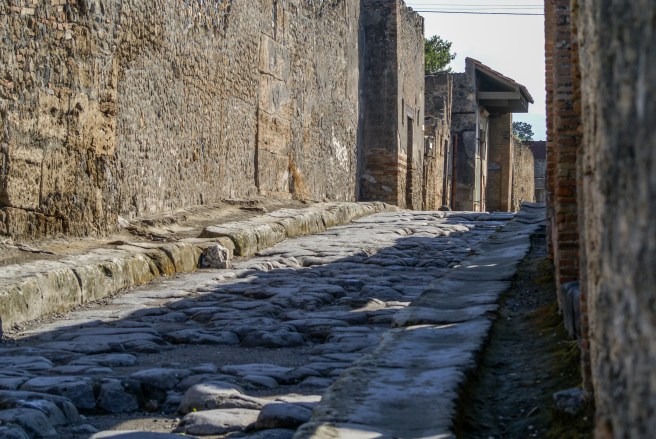
So, if society has ever safer, ever more powerful, ever bigger road behemoths, can we not take a page from the late senator’s book and reduce highways and byways to either dirt paths or the cobblestones of Pompeii? Lives would be saved because traffic would have to slow down. Counter programming through delayed maintenance: Inverse Safety Measures.

And so, while the gun chorus chants, “Guns don’t kill people, people do,” a suitable response to the petulant and self-appointed “special” drivers can be expressed as, “Cars don’t kill people, people do.” While cars are safer, guns are increasingly ubiquitous in Red/Blue angry America. And that truly is a recipe for death.

The Thrill Is Not Gone

Brian kicked the bass drum. His foot led the pace of the song. The sound transmitted itself through my chest, challenging my heart for dominance.  I watched Bob as he fingered a chord, ready to join the song. With the pick in his right hand, he raised it and strummed the strings. At the same time, I did the same. Instantly, I was in a band. Bobby launched into the vocals, enthusiasm pouring through the microphone and amplifier into the room. I stood nearest to my friend, Steve, the bassist.

Steve had introduced me to the band, inviting me to join him on a “Friends and Family” night when acquaintances could join the band onstage. That first night was the thrill of a lifetime. And instantly, I had the bug to do more.

I was nervous before joining them onstage that first night. When I’m anxious, I talk nonstop, trying to defuse the tension with humor. I offered to pay off the bartender to call out “last call” to avoid playing and potentially making a fool of myself. I playfully curse my sister-in-law, Steve’s girlfriend, for making me do this in the first place. Steve told me the three songs I would accompany the band with. I had practiced them incessantly for a week. Then, a few hours before the event, he texted me the songs again. Except they were different! I practiced the new batch until I had to leave. When I arrived at the bar, Steve told me the three songs I would be accompanying the band with. Two were different! I panicked. I had played them before but was not as comfortable with them as I was with the others.

And then something amazing happened. I joined the guys on stage, plugged in my guitar, the song began, and muscle memory took over. I did know the songs well enough to enjoy myself thoroughly. The other member of the band, Joel, is flat-out incredible. He plays the guitar (incredibly well), the violin, bass, and harmonica. There are cover songs the band plays where the original has no violin, and yet Joel can launch into a solo that catches your breath. He did that on one of the songs I was playing. Comfortable enough with the rhythm section I was playing, I found myself mesmerized by Joel’s violin. I thought to myself that I had the best seat in the house. When the song ended, I found myself applauding along with the audience.

The band practices every Monday night. I have not joined them as I am not a member. I can only imagine how fluid the band members become as they feed off of each other while playing, comfortable with their arrangement of any given song and working out any flaws. How powerful and collegial it must be.

In contrast, I have only played with Pink Floyd, The Beatles, The Rolling Stones, P!nk, Green Day, My Chemical Romance, Eric Clapton, and other bands. Well, not really. I play along with songs by these bands, learning chords, strumming patterns, and pretending I can solo.

I learned to play the guitar in college. I’m left-handed, and so was my roommate, Eric. He played and had a couple of guitars. He taught me a few chords, and I fiddled with them, eager to learn. Bill, across the hall, was a major Ozzy fan. More than once, upon returning from class, I would hear Randy Rhodes midway through a classically inspired solo in an Ozzy song, Bill attempting to follow along. Eric was excellent. I was not. I’m still not. I’ve learned many more chords and can play along with hundreds of songs. And that’s fine with me. Playing the guitar is relaxing. I can play along and forget the stresses of life for a while.

As someone who likes to write, the creativity bug bit me hard before playing with the band. Other than learning the circle of fifths, I churned out eight songs in a week without the benefit of any songwriting rules. Some were new, while others were old poems I put to music. I’m sure they are awful. I’ve played them many times in my office, trying to sing along. Learning to play and sing at the same time is a skill. I’m getting there. I have an audience of one, me, who is critical enough. I doubt anyone outside of my house will ever hear these songs.

Playing with the band has been a thrill. All of the guys are very kind and have welcomed me. They are Crazy Pete’s Band. And like Pink Floyd, none of them are named Pete. There’s a story about the name. Something about a character in their town everyone knew. They play every third Wednesday at the Common Pub in Bristol, Rhode Island. They’re great guys, the music is fun, and it’s a good time and even better when you play with them!

The Tu Quoque Mirror

The Tu Quoque Mirror: The logical fallacy of accusing your opponent of your offenses.

No one has mastered this logical fallacy more than the loser of the 2020 presidential election, Donald J. Trump.

Accused of tampering with an election: Joe Biden and/or Hilary Clinton did it
Accused of improperly handing documents: Joe Biden and/or Hilary Clinton did it
Convicted of falsifying records: Joe Biden and/or Hilary Clinton did it
Convicted of paying hush money: Joe Biden and/or Hilary Clinton did it
Accused of rape, sexual assault, and sexual harassment: Joe Biden and/or Hilary Clinton did it
Accused of witness tampering: Joe Biden and/or Hilary Clinton and/or Hilary Clinton did it
Accused of weaponizing political infrastructures: Joe Biden and/or Hilary Clinton did it
Accused of mishandling the pandemic: Joe Biden and/or Hilary Clinton did it
Accused of foreign misdealing: Joe Biden and/or Hilary Clinton did it
Accused of a porous border: Joe Biden and/or Hilary Clinton did it
Defending Putin, Orban, Xi, or other dictators: Okay, that one’s Trump alone.

And those are the ones that come to mind in 5 minutes. There is no situation where, when accused, Trump doesn’t (without any evidence) turn it around to be his opponent’s offense. 

It is an extension of the ad hominem logical fallacy “whataboutism.” In that simpler (but no less simple-minded) deflection, you turned the argument by putting your opponent on the defensive by eliciting an example of their misdeed—deflection as a defense. And in the age of bumper sticker philosophy and 5-second sound bites, it works. It’s a gotcha moment just waiting to birth a meme. Except it never answers the original charge. And that’s the idea. Cut to commercial. Print the t-shirts. Hang the flags (and the vice president).

The death of debate and the rise of Trump acolytes have resulted in a catastrophically divided country. It has spawned not a political movement but a cult. And like all cults, it is sick—sick from within and diseased at the head. Like their leader, they obfuscate with whataboutism, like “chosen one” like sycophants. But all cults thrive until they don’t. When is that tipping point? Time will tell.

The tu quoque mirror version takes it a step further. Now, you no longer need to research misdeeds by your opponent. You accuse them of yours. It would be elegant if it weren’t childish. It’s Dorian Gray’s portrait, except he does not see himself, and Mr. Gray puts it on display for his cult.

Oscar Wilde may have summarized Trump best when he wrote, “”You will always be fond of me. I represent to you all the sins you have never had the courage to commit.”

Short Cuts and Insults (or caveat emptor and cave familiam)

God, the Universe, Chaos Theory, or any deity you think is running things has a peculiar penchant for piling on. When one thing goes bad, seemingly, every other hanger-on in your life decides now is the time to make the wheel squeak. And the problems fall like rain.
 
I’ve written before about how no good deed goes unpunished. The ultraviolet bookend to that infrared light is that bad deeds also go unpunished. The guy who cuts you off in traffic and weaves in and out of traffic will have his feet up at home while you’re adhering to the rules of the road. He will also be responsible for an exponentially disproportionate number of accidents in which he will not participate.
 
When told the money promised to me was being taken away, I was given notice by an attorney to sign, notarize, and return a document giving away my promised portion. Not that it was a choice, but I “agreed” because it was the “right” thing to do, even if the execution/request was unbelievably insulting and hurtful, and contact with me was a mere afterthought. Still, I acquiesced. That is when God, the Universe, Chaos Theory, or your deity of choice decided to pour acid on the open wound.
 
Our house is 22 years old. In house years, that is young. However, when my wife and I noticed rotting OSB plywood under a window in the garage, we contacted our handyman friend to repair it. What we discovered can only be described as catastrophic. He chased where the leak originated and determined it began above the window. The decorative header above the window was installed incorrectly by the original builder. Nailed directly into the siding on top of the clapboards and without the standard spline of thick sticky tape placed around the window, the nails invited water into the OSB plywood and destroyed the wall from the inside. With that fixed (which involved removing the entire window and reframing the wall), he poked around other similarly constructed windows on the front of the house. Every window had the same rot and destruction. We are rebuilding the front of our home from the outside in. And when they cut out the old studs, they cut into the drywall inside the house, requiring that, too, to be patched and repainted. What started as a simple job now costs us tens of thousands.
 
Piling on is contagious. This week has been hot by Rhode Island standards (high 80s). We called the HVAC contractor when the downstairs air conditioning system malfunctioned. While 22 years is not old for a house, it is for HVAC systems. Replacing it will cost another $12,000.

I haven’t mentioned that the next year also includes us paying for a baby shower, a bridal shower, and a wedding—our fourth wedding in four years. Piling on is contagious.
 
I would not have received the amount I gave away for many years. Paying for the house problems now will cause us to tap into our retirement. The fact that I will not see that amount in the future compounds the insult without consideration by anyone involved. Indeed, the amount we will soon be out of pocket today, withdrawn from our retirement account, is equal to the amount I would have received in the future. It would have been an offset mitigating today’s hemorrhaging. Not having that amount in the future doubles the financial impact. God, the Universe, Chaos Theory, or your deity laugh while man plans. What a sense of humor. No good deed goes unpunished.
 
The only information I have regarding home building is from watching This Old House. With that limited knowledge, I know you use pressure-treated 2x4s on the sill plate (the wood placed on the concrete foundation. My house does not. Tommy Silva on TOH instilled in me that you always use the wide, sticky tape as a spline around windows and doors to seal disparate connections to prevent water infiltration. My house does not have this around any window or door. This begs several questions. Why would the home builder not use these standard building elements? How did the town building inspector not identify these omissions? Did money change hands somewhere to look the other way? We found a patch in three locations, indicating the previous homeowners knew of the problem. Why did they not disclose it when selling the house?
 
Ah, but there must be some recourse we can take to compensate us for this monumental cost! Alas, no! Our homeowner’s insurance policy only covers mold and mildew, not ridiculously poor construction. The statute of limitations against the builder expired ten years after construction. The town has immunity (nice!). Even the inspector we hired before purchasing benefits from a three-year statute of limitations (not that he would have seen anything behind the clapboards and shingles). We could go after the previous owners; however, considering the cost of attorneys and court fees, we would never be made whole or satisfied. There is no punishment for bad behavior. 
 
We have our health, save for the foot surgery I had at the end of May to place screws inside bones that did not heal from a break last October. The frustration, anger, and resignation we feel cannot be erased because we have our health. It is cumulative. We are frustrated, angry, and resigned, AND we have our health.
 
Nice guys finish last, and jerks succeed. And karma? The jerks invented karma as an empty promise to those upon whose necks they place their boot.

Writing is cathartic for me. I know the situation does not change when I vent on paper, but somehow, I feel better—a little better. If you can take anything from this story, all the better. Caveat emptor and cave familiam.

Twizzlers and Combovers

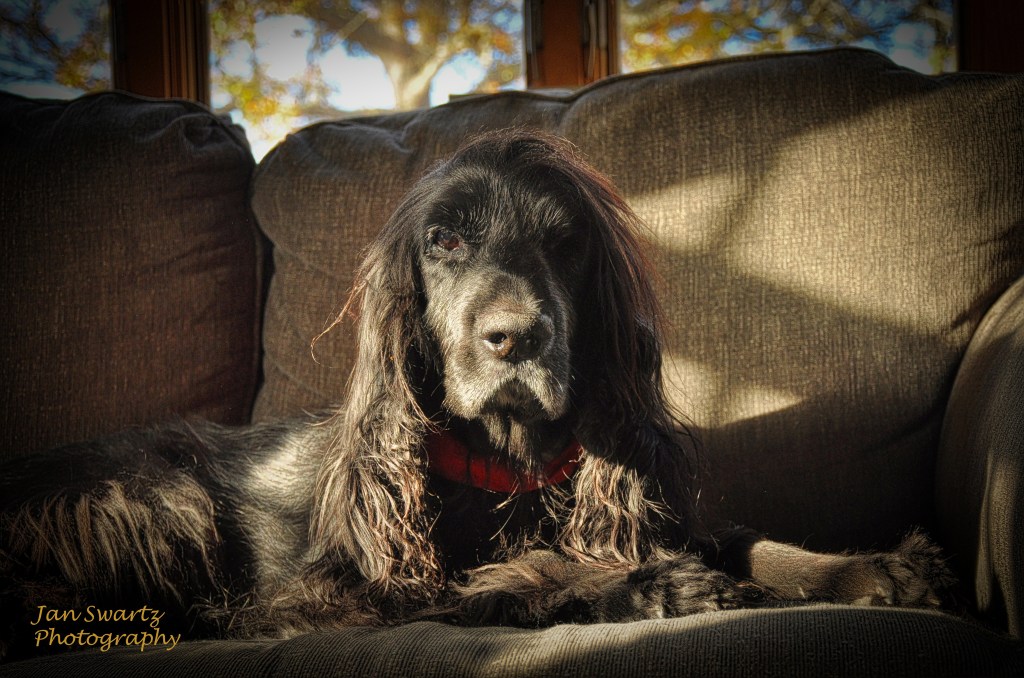
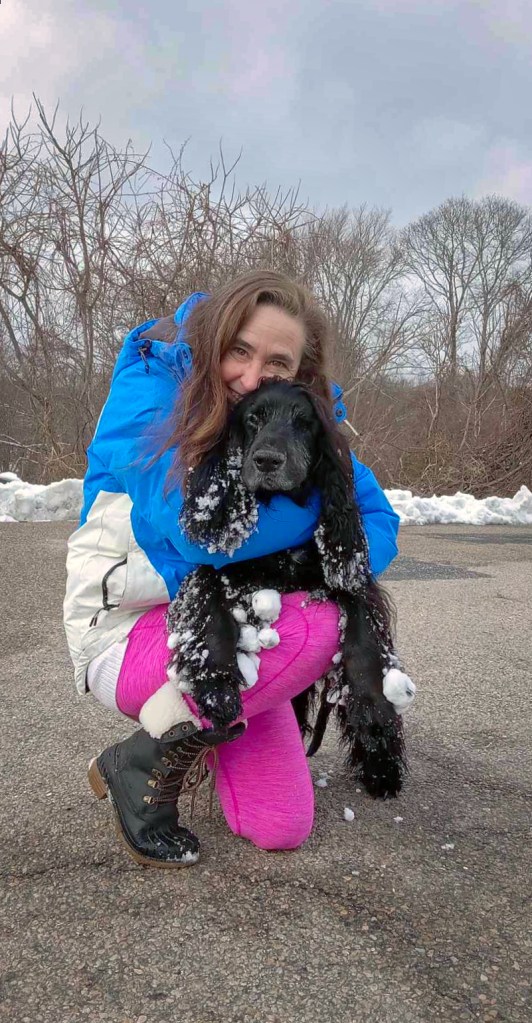
My sister has two children, a girl and a boy. But to be honest, she had three. Zodiac was her third. Zodiac was a Field Spaniel. Well, to be more precise, that was his breed. Zodiac was her child, friend, confidante, and roommate. My sister is a photographer, and by extension, Zodiac was the most photographed furry friend ever.

Gentle didn’t begin to describe him. Like most dogs, he had one mission: to love you. As a Field Spaniel, he had the traditional long ears and feathering on his chest, ears, and the back of his legs. He was all black but had gained some whisps of white as he aged. Years ago, like many Field Spaniels, he had ocular issues and lost one eye. But if you asked him (and if he could tell you), he’d have said it never bothered him to lose it. He just kept moving forward – and loving. The hair on his head was long and wispy and could be combed in any direction. His combover was always a source of entertainment over the years! Oh, and he loved Twizzlers. I bought them for him whenever I could, and my sister always had some on hand. She kept them in an upper cabinet in her kitchen. She has a two-step, painted wooden stool beneath the cabinet. Say the word “Twizzler,” and Zodiac would run to the step stool and stand on the top, patiently awaiting his treat. He’d help guide you to the location of the hidden treasures by pointing his nose at the upper cabinet. The paint had worn away on that step from his many trips there.

They say only the good die young. Perhaps that’s the price of loving. And since dogs always love unconditionally, their lives are shorter than ours. We’ve all heard the saying that a dog year is seven human years. Another way of thinking is that maybe they love seven times as much as we do in any given year. Either way, the cost of their loving is paid in shorter lives.
And we are left to carry the memories of their love with us through the remainder of our longer lives.

Zodiac crossed that mythical Rainbow Bridge tonight. And while I’m a skeptic, I’d like to believe in a place where our departed furry friends wait for us, their tails wagging out of control as we, at long last, approach. So, if you have a moment and are so inclined, have thought for my sister and her kids. If my theory’s correct, your compassion is a sign of sympathy, maybe empathy, and a form of love. It may cost you a moment of your life. And you may die a moment sooner because of it. But isn’t the love we give others, the love we give our furry friends, the love we have for nature, our garden, or our hobbies, isn’t that what makes our lives more than the total of our achievements, tasks, and obligations? If I must go sooner because I love, I will not fear the Reaper. And if I die at 99, I hope that means that without having loved, I would have died at 106. And when I go, please do me a favor, just in case. Stick a few Twizzlers in my pocket. Uncle Chris needs to be ready.

Everyone who ever knew you, Zodiac, is going to miss you. We’ll carry your memory.

The Stupid Factor

When, in the course of human history, people coalesce around a cause, invariably, it is the fringe and fanatical that visit shame and derision on said cause.

Case in point:

Climate change is real. To assume otherwise is to ignore both established science and our own eyes. Further, and this is also beyond argument, climate change is linked to humans—the extent to which that link is made, whether larger or smaller, can be debated. The fact remains that human action has influenced our climate; our climate is changing, and barring any technological leap in space travel, we have but this one planet on which to live.

There are several sources to this statement (Indian and Greek, among others), but the sentiment is the same:

“A society grows great when old men plant trees in whose shade they know they will never sit.”

Whether it is the group Just Stop Oil or Riposte Alimentaire, I believe in their causes. However, I also know that while fossil fuels are limited in their amount worldwide and the cause of enormous amounts of pollution, I also know that neither Van Gough, Da Vinci, nor Monet will be painting anything ever again. Throwing paint or soup at these masterpieces does two things.

First, it brings attention to the cause. I would argue in the wrong way. Again, I believe in their cause. However, their cause, while not getting nearly enough meaningful action from politicians and nations, is not a generally unknown niche item. Everyone has heard about climate change. You don’t need to draw attention to it as if it’s been wallowing in a distant dark corner. You are turning millions of like-minded individuals from standing with you. They want to crawl into a hole to avoid being associated with you and your idiotic stunt.

Second, I believe the attention you ultimately sought with your stunt had less to do with your cause and more to do with you having your picture taken standing next to a disfigured masterpiece covered in paint or soup while you gloomily pose, maybe glued to the frame.

Grassroots activism takes organization and time. It takes determination and persistence. Ultimately, it takes moving the Overton Window so politicians feel they must be part of your movement. And that comes from the inside. It comes from boldly participating in legislative hearings. It comes from lobbying legislators at all levels repeatedly. It does not come from petitions or stunts.

We need change on many social issues, not the least of which are climate change for the planet and gun violence in America. Mothers Against Drunk Driving set the template for success. Moms Demand Action, Everytown, and other gun violence groups have adopted that template. Just Stop Oil and Riposte Alimentaire may have arms of their organizations that attempt the same measures as these more successful organizations. All I know is what I see on the news. And the photos I see on the news, especially as an art lover, make me cringe. The tiny conspiracy theorist in the back of my head wonders whether these stunts because they are so antithetical to the genuinely just cause, are backed by the petroleum industry to discredit all climate change activists. I hope I’m wrong.

Either way, stop gluing yourself to paintings, throwing paint on masterpieces, and throwing food at art. You look like an idiot and damage your supposed cause. These masterpieces have survived (so far) because art restoration professionals consider it an honor and duty to protect and preserve the art. The activists should adopt that level of care and dedication, again, in whose cause I believe, before a masterpiece is lost because of their stunts. Passion alone will not win the day. It’s a marathon, not a sprint. One cannot plant a tree tomorrow morning and expect to sit in its shade in the afternoon.  

Bigger

The ride home was uneventful. Clark steered his new vehicle cautiously through traffic, feeling as though every eye was on him, every other vehicle turning into his, and his insurance premium atop his mind.

He maneuvered deftly down his street and turned smoothly into his driveway, feeling the bounce between the street and driveway. With an emphatic bump of his fist, he sounded the horn and awaited his family’s arrival and, more importantly, their reaction.

His son bounded out of the house first, smiling as he saw the new vehicle.

“Cool!” he said, seemingly capturing all his son’s feelings in one syllable.

His daughter came out next, still holding her cell phone and seemingly bothered by the interruption.

“What do you think?” Clark asked, eager for some acknowledgment of his latest purchase.

She responded, “Cool,” although this version seemed to carry disdain and judgment rather than excitement.

His wife arrived next.

“Seriously, Clark?” she said, more in the vein of their daughter than their son.  

As they all sat around the dinner table, passing the plate of DiGiorno pizza, corn, and macaroni & cheese, Clark began to explain the reasoning for his purchase.

“The evolution of self-propelled transportation, while still measured in “horse” power, began with the sedan. “Sedan” was named after litter. Can anyone tell me what a litter is?” Clark questioned.

The children bowed their heads as if their plates held mysteries of the universe previously undiscovered. They knew their father was about to go into one of his history lessons, and they wanted dinner to be history. Finally, with a mouth full of pizza, Clyde, the son, smiled and said, “It’s the place where the cat squeezes off a loaf!”

Karen, Clark’s wife, admonished Clyde while Clark attempted to stifle the smile the visual represented.

Caroline, their daughter, remained transfixed by her plate.

“A litter,” Clark continued, “is a box with extending poles a pharaoh or dignitary would sit in and then be transported by servants carrying the poles.”

“Like in Game of Thrones!” exclaimed Clyde.

“What are you doing watching Game of Thrones?” asked Karen.

“Oh, um, Kenny had it on at his house once, and I saw Joffrey being carried in one. A litter.”  

Sensing the conversation getting away from him, Clark recentered the topic back to automobiles.

“Well, yes, that is a litter. That’s where the term sedan originated. It was a sedan chair. As time went on, the size of automobiles grew and shrank with market forces and gas prices. However, in the last decade of the last century, people moved from sedans to SUVs. Some liked the size advantage for safety reasons, some felt they needed to keep up with the growing size, and some liked the aggressiveness of the size, likening it to the HUMVEES from the military. For example, do you remember what we had before the Grand Cherokee?”

“The Camry,” replied Caroline in her typical, disengaged drone.

“Right!” said Clark, “I sold the Camry because I didn’t feel safe driving in the sea of SUV’s! I couldn’t see around them, and their windows were too high (and too blacked out, don’t get me started on window tinting) to see through when I was behind them. I loved that Camry, but it would have been crushed in an accident with the SUV beasts everyone bought!”

Suddenly interested, Clyde asked, “So why did we get rid of the Jeep?”

“Because, again, sizes kept growing. To gain an advantage over the SUVs, I bought a pickup truck. And when that was no longer enough, I put the huge tires on it,” explained Clark.

And that explains the new one?” asked his wife.

“Exactly!” replied Clark, pleased the conversation was over. He missed his Camry. “I wanted the camo package, but the waitlist on that version was six months.”

“Seriously, tell me what you think of the new vehicle?” asked Clark.

“Is it big enough?” smirked Karen.

“I think it’s cool!” said Clyde.

“Yes, we’ve established that,” said Clark.

Before Caroline could reply, they heard a sound from outside, and they all went out to see their neighbor Bill pulling into his driveway with his new vehicle.

“Thoughts?” asked Karen.

“Damn it!” replied Clark, “And he got the camo package!”

Never Wasted Time

My late wife had a best friend whose friendship rivaled any as the benchmark of friendships. From elementary school through her death eight years ago, Naomi and Lisa were connected at the proverbial hip.

In the years since her death, Na continues to call me every few weeks to catch up. I’m pretty sure it’s the last act of friendship requested by Lisa and carried out by Na. She checks up on me, asks about the kids, and fills me in on her husband, son, parents, brother, and sister. I appreciate her calling. It’s as if she’s maintaining a thread through the universe and time whose story has expired, but no one told the cloth.

Two days ago, Na called to tell me her dad had died. I did my best to ask the right questions, say the right things, and console Na. Inside, I broke down, and despite my best efforts, some of it snuck through. The last thing I wanted on that call was for Na to console me. I did okay. At least until I hung up. I knew I now had two more calls to make. One to each of my children. They have known Na and her family their entire lives, and Na checks up on them as Lisa’s emissary, too. Those calls hurt even more. I know I didn’t do okay.

Na’s dad liked to talk. And once he started, short of a natural disaster, there was no way of exhausting the discussion. One of my memories of him was that at every party I attended at Na’s house, I always talked to her dad for hours. Everyone else seemed to drift away, leaving me alone. They chuckled. I was the fresh meat. Except I never felt stuck. There was never one conversation I had with him that I regretted. And I know why.

As the newcomer in a relationship as long-lasting and deep as Lisa had with Na (and her family), I was obviously the outsider. To be taken in by Na’s dad felt like acceptance. As if he thought, “If Lisa thinks he’s okay, he must be okay.” I felt like I belonged. Now, he may have been just as comfortable talking to a lamppost for hours on end, but I don’t regret those times talking with him. I have no idea what he thought of me, but he was genuine enough that even my dimwitted perceptive skills probably would have gleaned insincerity in him.

He was a bull who owned his own machinist shop. If asked, to a person, I know one of the first traits people would mention about him was how he was the hardest working person they knew. He would also do what he thought was right. Some would argue that his demeanor may have hindered his medical treatment over the past year. More likely, his hardheadedness kept him going. Let me explain.

Have you ever seen a football game where the running back is handed the ball, gains a few yards, and is tied up but not tackled by a defender? Then another defender makes a hit, and they still can’t take down the running back together. Then, two more join in as the running back’s legs keep moving him forward. Finally, either the pile collapses or the whistle is blown, ending the play. For Na’s dad, the play only ended when circumstances and the universe conspired to overwhelm him with too many medical priorities. He was a force any running back would envy.

As a hardheaded bull (like Lisa and her enormous personality), I know it was hard watching this once-strong man wither and finally succumb. I saw every decrease in Lisa’s health through the end. I did not see his decline. However, I know how hard witnessing it is and what a toll it takes on caregivers. He is at peace now, like Lisa. If there’s a heaven, Lisa greeted him with a smile, a hug, and a cutting joke. I hear him laughing, a cigar in one hand and a popsicle in the other.

If you’re so inclined, have a thought for Na and her family today. They lost a giant.

Peace on Earth, Good Will Toward Men

Christmas 2023 is two days away. Two days before the mania between Thanksgiving and December 24 relinquishes control of our lives and gives way to Winter’s solemn grip taking hold until Spring Training begins, the snow melts, and our thoughts return to warmer days.

In this time of rising nationalism, vindictive and dictatorial ethos, racist overtones, war, threats of civil war, and in an era seemingly allergic to personal responsibility, community, and accountability, here are my wishes for this Christmas season and 2024.

Number One: A return to civility. I joke that I can trace the downfall of society to the first “Casual Friday” at work. What began as a fundraiser and a sticker identifying us as having donated and, therefore, allowed to wear jeans at work devolved into wearing pajamas at Walmart. Casual Friday is now every day. When can we begin “Dress Up Friday?”

Manners and respect go a long way. Simply cordiality can do two things. First, it engenders a sense of community. We would recognize the other individual as a person, a fellow human being beset with challenges both seen and unseen. This alone can blunt the raging self-centeredness of Americans. Second, even in a tense situation, cordial interaction allows for a defusion of emotions. Perhaps it could help reduce road rage and the gun violence pandemic in America.

Number Two: A return to a sense of community. The world where employees spend a lifetime at one company is no more. The end of the pandemic saw the “Great Resignation.” Companies blamed employees. Employees blamed capitalism. And the stock market blamed the government. The only loyalty still in existence is the loyalty Donald Trump expects of everyone on the planet (without reciprocity).

Business claims to value people, their employees, as their greatest resource. That should tell you all you need to know about the state of American capitalism. Employees are not resources. Iron ore is a resource. Paper clips are a resource. Employees are people. By relegating employees to the inanimate, companies feel justified and vindicated when conducting mass layoffs (resource inventory reductions), demand more of those “fortunate” to remain (without any corresponding wage increase), and have their equally productive remote positions reallocated to “hybrid” or permanently reclassified as in-office only. If the stock goes up, the decision is correct. The greatest resource be damned.

Leviticus 19:18 reads, “… you shall love thy neighbor as yourself.” Matthew 19:19 says, “… love your neighbor as yourself.” Given how America has a “you first after me” mentality, this wish alone could alter humankind. By changing this aspect of society, selfishness would abate, civility would return, and manners would be insisted upon.

And Number Three: A return of respect. Do not expect or wait for me to apologize for your bad behavior. Seemingly gone are the days of respect for our neighbors, community, family, friends, strangers, co-workers, and countries. We would solve many of the world’s problems if only respect lived. We have chipped away at respect to the point where we do not even respect ourselves. Personal accountability no longer exists. We do our children a disservice when we tell them to respect others, be kind, and work hard, and success will follow. There is no longer any downside to bad behavior. Instead, it seems those who exhibit deviant behavior excel in life at the expense of every other person. This slide away from civility and toward self-centered American society began long ago, probably in the 1960s, when the youth dared question the government and demands for equality were met with violence.

Mafia movies and TV shows would have us believe that respect made for an orderly business and kept everyone in line. Fear may have been a better term. And that was until everyone flipped and became an informant to the FBI. The cause? See wishes Number One and Two above. Specifically, being self-centered. Self-interest is superseding the community. Sensing a theme? We were taught, “Respect is earned.” However, the default position upon meeting someone should not be disdain or an immediate dismissal. Perhaps we should alter the phrase. Instead of “respect is earned,” maybe it could be “respect is offered, maintained if reciprocated.”

That’s my list. Three items.

The King James Version (KJV) reads, “Glory to God in the highest, And on earth peace, goodwill toward men.”

The English Standard Version (ESV) (and most other versions I researched) is less global and more subservient, “Glory to God in the highest, and on earth peace among those with whom he is pleased!” Peace, but only for some. Got it.

I want civility, community, and respect. This does not make me a “Make America Great Again” acolyte devoid of compassion and a wish for a time that never was. In many ways, I would argue that what I wish for is the opposite of what the MAGA crowd expects. Mine is a wish to return to what was once respectful, but this time applied equally to all. Peace on earth, goodwill to all humankind. All humankind. Happy holidays, everyone.